

The One Thing You Need To Do With Your Tomato Plants In July
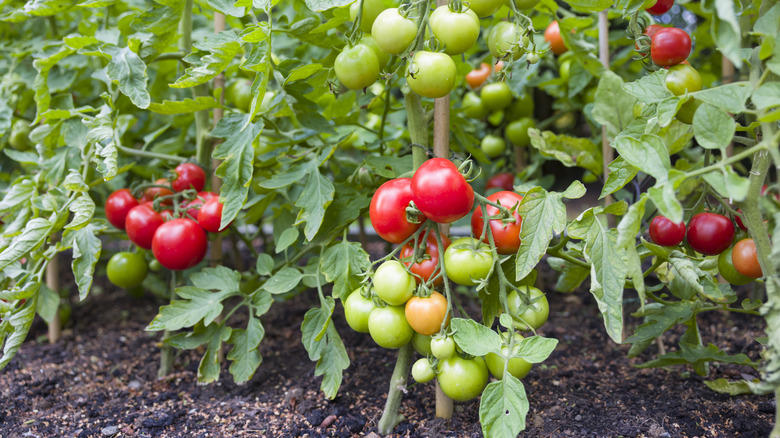
Tomatoes appear in more backyard gardens across the United States than any other type of fruit or vegetable, grown by 86% of those with vegetable gardens, according to the National Gardening Association. The fact that there are plenty of easy-to-grow tomato varieties helps as well, but proper care is vital once you've planted them. To increase your harvest throughout the season, one thing you need to do in July is lightly prune your tomato plants. While June is a great time to start culling new blooms when they're too crowded, it's a great time to prune some varieties starting around America's birthday party.
The caveat is that summer pruning only aids in more fruit production when dealing with so-called indeterminate types of tomatoes. That is because determinate varieties, such as roma or 'Gold Nugget,' only produce a single crop of tomatoes each season, so pruning does not spur additional fruit production. Indeterminate varieties, on the other hand, continue growing and producing fruit all season long, with the proper care.
Pruning certain tomato plants helps direct nutrients toward fruit production instead of growing excessive foliage. This results in not just more, but also larger tomatoes. These tomatoes will ripen faster since they are exposed to more sunlight throughout the day, making room for another round of fruit. Additionally, it helps ensure a plant's health by allowing for better airflow and removing diseased or damaged branches, suckers, or leaves. This is why pruning can also help bring a dying tomato plant back to life.
Pruning indeterminate tomatoes for better harvests
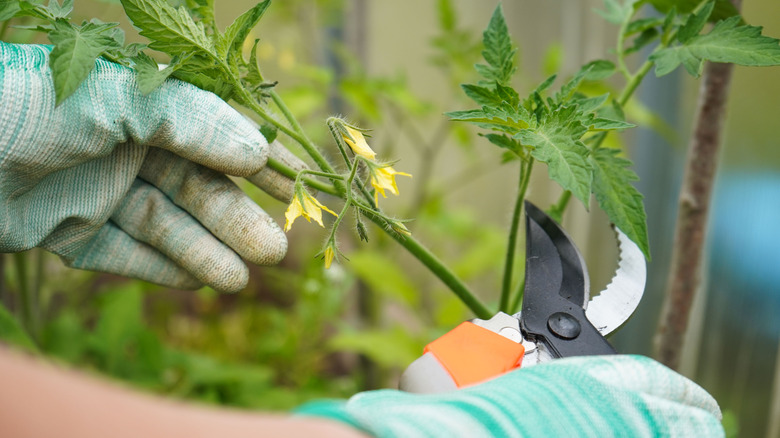
When it comes to pruning indeterminate tomatoes, it is actually good to prune them throughout the growing season, even every other week or so. As early as June, prune or pinch any flowers off the plant until it is at least a foot tall, allowing it to focus on building a strong root structure. Continual pruning of damaged branches and/or leaves that drag the ground is also helpful. However, when it's time for July pruning aiming at better fruit production, suckers should be your primary target.
By July, plants are typically at least 12 to 18 inches tall and producing flowers. At that point, they are also producing suckers — the small shoots that grow at the elbow or joint where a branch meets the stem or leader. While suckers can bloom and grow fruit later in the season, having too many on your plant results in energy being diverted to excess foliage, producing smaller fruit. The best practice is to prune or pinch off every sucker above the lowest batch of flowers or fruit, leaving only the lowest sucker below. Typically, this one is strongest and has a better chance of becoming a viable fruit producer.
In addition to removing suckers, also remove any yellow, dead, dying, or diseased stems and leaves. Limbs that are touching the ground should also be removed to avoid rot or pests. This process should be repeated every couple weeks until about a week before your first batch of fruit is almost ready to harvest. In order to prevent disease, it is important to clean both your hands and tools prior to pruning, and sharpen your pruning shears to ensure a clean cut.