

Not Red Or Green: Wearing These Colors Attracts Wasps The Most
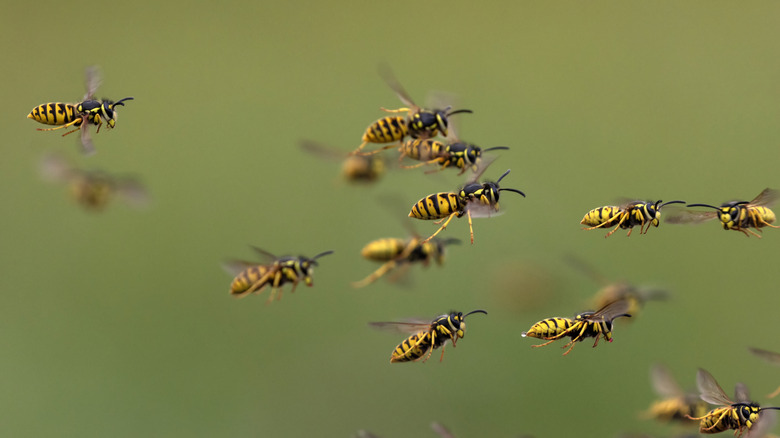
Although many species of wasps are considered beneficial insects and good pollinators, most people don't want to encounter them. As a result, people go to great pains to keep wasps from nesting in their yard. However, there is more to steering clear of these mini fighter jets than just preventing the mistakes that are attracting wasps to your yard. You should also take steps to make sure you are not attracting them to yourself. To that end, it is important to consider the colors you wear when you are outdoors, as wasps are attracted to bright, vivid hues. Oh, and both ends of the visible light spectrum. In fact, it might be easier to list what colors wasps aren't attracted to.
When it comes to colors and pollinators, while red attracts hummingbirds, it is not the most attractive color to wasps. Though they are occasionally drawn to red, the colors wasps are most attracted to include yellow, white, and light blue. As a result, if you happen to be wearing clothing in these colors, wasps are likely to come check you out. If decorative items around your outdoor living space, such as chair cushions, have these colors, wasps may be attracted to them as well.
Watch what you wear around wasps
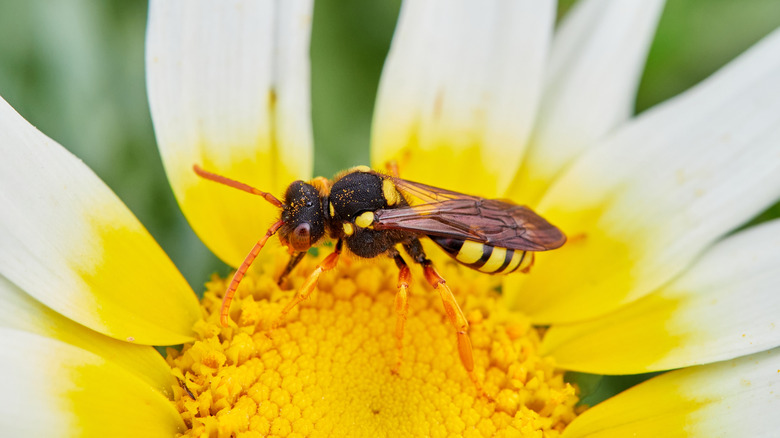
Wasps are actually attracted to yellow, white, and blue for a couple of reasons. Shades of yellow and blue are indicators of pollen and nectar sources that they love. Not only do wasps find these colors attractive, they see these shades exceptionally well thanks to photoreceptors that have evolved to suit their ecological needs. White, meanwhile, attracts wasps because it is an efficient reflector of ultraviolet light. The same way that bees and hummingbirds can see colors we can't, wasps are able to see UV light, so white clothing stands out, catching their attention.
The exception to the vivid color rule is on the other end of the pigment spectrum: It is also a good idea to avoid very dark colors, such as navy or black. The reason for this is that wasps sometimes interpret darkly colored items as a threat. In this instance, the response may not be attraction — wasps may come at you in full attack mode. Though there is some supportive research, not everyone agrees that dark colors trigger aggressive behavior. However, if there are a lot of wasps in your yard, it may pay to be better safe than sorry.
The safer choice when it comes to colors and avoiding wasps tend to be muted, neutral shades and earth tones. Olive, tan, brown, khaki, and green are just a few examples. These colors are not recognized as food sources by wasps and sort of blend with the surroundings. As a result, wasps often just bypass them. Essentially, you're wearing camouflage in their very attuned compound eyes.