

Say Goodbye To Cracks In Your Concrete Driveway With This Budget Solution
We may receive a commission on purchases made from links.
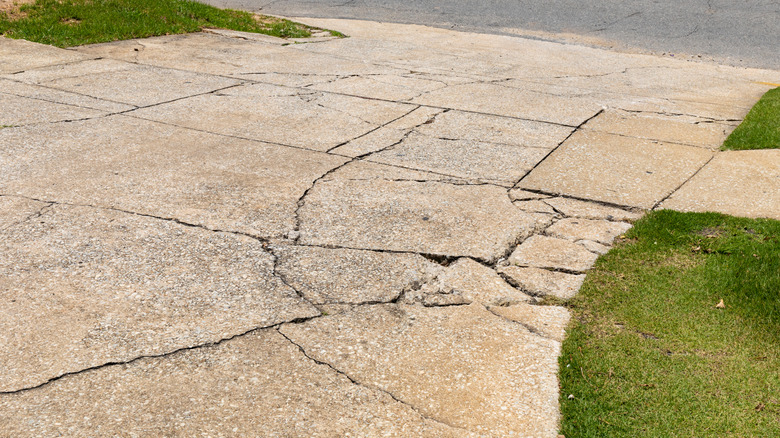
If you have a concrete driveway, it's going to crack. As harsh as that sounds, it is an inevitable part of life with a concrete drive. It may be due to improper installation, soil shrinkage as a result of dry conditions, fluctuating temperatures, tree roots growing beneath, mistakes made when shoveling snow, or any number of other causes. Regardless of what causes cracks to appear in your concrete driveway, you don't have to look at them forever. Nor is it always necessary to mend them with expensive repairs. Depending on the type and severity of the cracks, you may be able to solve your problem with concrete caulk.
Silicone and latex concrete caulk products such as DAP Concrete Watertight Filler and Sealant or Quikrete Concrete Repair are inexpensive and generally easy to apply. However, they each do have limitations. Typically, they are not considered the best choice for filling wide gaps or holes. They are also not as durable as another budget-friendly way to fix driveway cracks — polyurethane sealant. However, when it comes to small cracks and repairs that you want to fix quickly and cheaply, concrete caulk can be the solution.
Using concrete caulk to fix driveway cracks
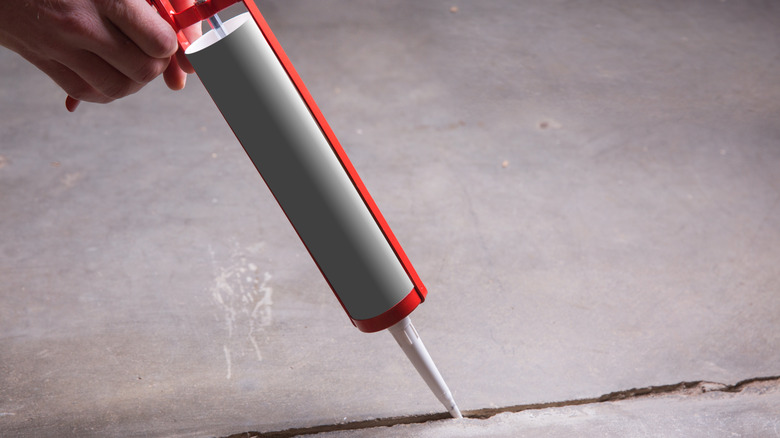
To use concrete caulk to fix driveway cracks, first calculate how much you'll need, using the specifications on the label. For instance, a tube of DAP watertight filler and sealant is supposed to yield 55 linear feet at a 3⁄16-inch diameter. Keep in mind, you may need to fill a greater depth or width, factoring those variables into your calculations. Next, gather the rest of the supplies, including a hammer, chisel, caulk gun, gloves, and rags to wipe off any excess. Since most silicone and latex caulks are not self-leveling in the way many sealants are, you will also need a putty knife, scraper, or spatula to smooth it out.
Start by chipping away loose or compromised concrete from along the edge of the crack with a hammer and chisel. Next, make sure the opening of each crack is at least ¼-inch wide, widening as necessary with the chisel. Next, remove weeds from the cracks, along with any loose debris. Once that is done, cut the tip of the caulk tube at an angle, the same width as the cracks if possible. Begin slowly filling the cracks with caulk and smooth with the putty knife or spatula.
It should be noted that while filling small cracks in your driveway with concrete caulk is a fairly simple DIY repair, it is important to address the underlying cause. Unfortunately, some of those issues are jobs that require a professional. However, if those issues aren't taken care of, not only will your driveway continue to crack, but eventually it could fail completely.