

The Easy DIY That Can Turn Your Yard Into A Private Escape
We may receive a commission on purchases made from links.
From apartments to fenceless yards, balancing outdoor activities with privacy is always a challenge. Whether you're starting a balcony container pumpkin garden or you want to find cheap renter-friendly privacy solutions for your balcony or yard, one major upgrade you can cook up on a budget is a movable privacy screen. With little more than one or two wooden frames and a sheet of weather resistant fabric, this DIY can be a game changer for outdoor enthusiasts, creating a quiet retreat for reading, relaxing, or gardening.
Even if you're not working in a tight space, a privacy screen can elevate the look of any yard with added warmth, texture, and color, while delineating activity spaces. Outdoor woven rugs make for colorful, water-resistant screens, and offer plenty of variety. Alternatively, you could treat a sheet of fabric with Scotchgard or a similar waterproof treatment. Once constructed, a privacy screen will offer a polished look, custom-made to your space at a fraction of the price of a traditional fence or store-bought outdoor partition.
The best part of these DIY privacy screens is that multiple frames can be connected with hinges to create a larger structure. This means that large screens can be folded up and packed away when not needed, and you can take them with you when you move. For anyone searching for a simple trick to add more privacy to your yard, this easy, customizable DIY is really a no-brainer.
How to construct your outdoor privacy screen
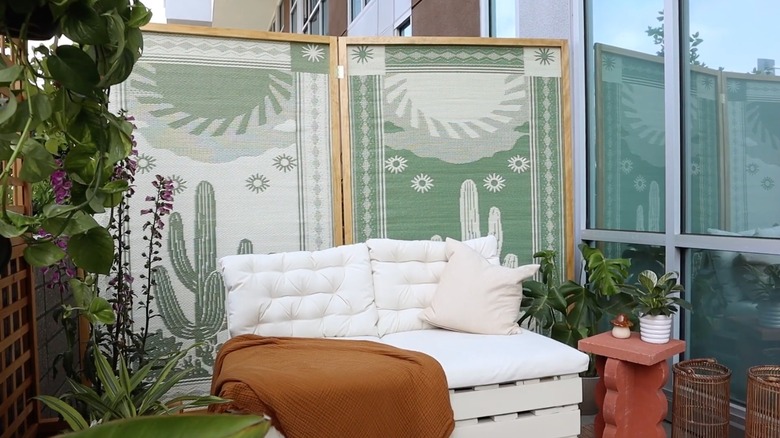
Thanks to TikTok users like tinalemac, we have a simple blueprint for crafting DIY privacy screens at home. To get started, assemble your supplies, including some pressure-treated wooden boards and a pleasing sheet of fabric. In Tina Le Mac's video, she utilizes a set of 1-inch by 2-inch select pine boards (an 8-foot length costs about $8 at Home Depot) and a couple of 6-foot by 4-foot woven mats ($20 each, but often on sale) from World Market. Obviously, your dimensions may vary based on your design, but common 2-inch x 4-inch planks might be a little bulky for this lightweight setup. Either way, once you've got your boards, chop them down to size using a circular saw or miter saw, securing them using wood glue and a few screws. You'll want to make sure these are prepared to stand up to the outdoor elements, and sized for your fabric to be pulled taught.
Affix the fabric screen using a staple gun. As the video points out, you'll want to pull and staple opposite sides of the screen all the way down, to ensure it's tightly attached to the frame. If woven outdoor mats aren't your thing, there are plenty of other popular privacy screen materials to consider.
@tinalemac If you're looking to add some privacy to your outdoor space this summer, this project will only take you a weekend and won't cost you a small fortune in lumber! I wanted to find an easy solution for my patio that was lightweight enough to move around. So when I saw these woven mats at World Market, I had the idea to use them vertically and worked out even better than I thought!! It also doesn't hurt that it makes such a backdrop too 😍🌵 #diyhomedecor #balconymakeover #patiomakeover #privacyscreen #foldingscreen #diyhomeprojects
A single frame won't stand on its own, so be prepared to connect two or more screens using butt hinges on the interiors. Depending on your needs, you could even suspend your privacy screens, securing them to posts along your balcony using screws or zip ties.