

What To Do If A Neighbor's Grass Is Creeping Under Your Fence
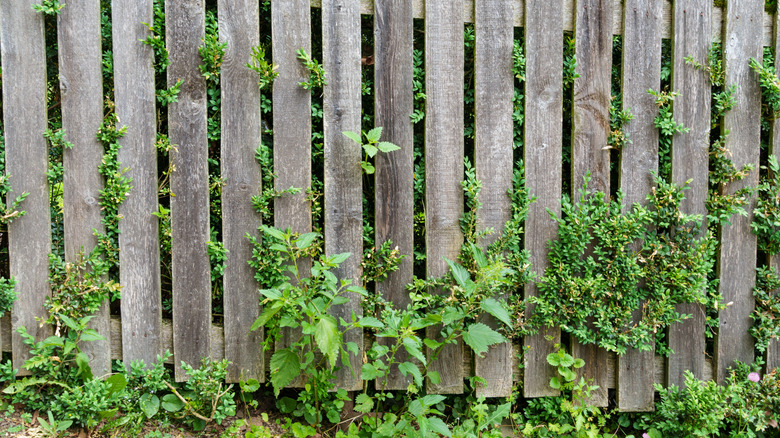
There is a certain satisfaction that comes with a well-kept lawn. That's why so many people spend time on maintenance, fixating on the proper length to cut their grass or the best time of day to water the lawn. If you count yourself among the lawn perfectionists, it's easy to understand how disheartening it can be if a neighbor's grass and weeds are creeping under your fence. But, what can you do to prevent it without causing drama or tattling to the HOA? Turns out, you have a few options, most of which involve creating some sort of barrier.
While it may seem that the fence is the barrier, it obviously is not enough, or you wouldn't have grass growing through it. That's because the gaps under your fence and between pickets allow weeds and grass to push through relatively unencumbered. It's also possible your neighbor's grass is spreading to your yard via airborne seeds blowing through these same spaces in the fence.
To that end, your own lawn can actually be the best barrier you have. If your grass grows thick and dense, it helps prevent invading grasses along the sides and keeps freshly blown seeds from taking root. A lush, healthy lawn is a strong lawn. With that in mind, it's important to patch bare spots in your lawn as soon as possible, and continue good watering and fertilizing routines so you develop a dense, solid turf.
Make it physically impossible for your neighbor's grass to breach the boundary
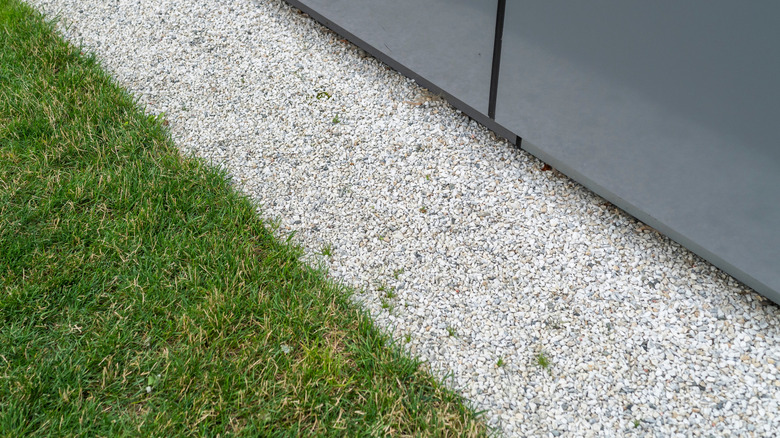
There are a number of steps you can take in order to make it physically impossible for your neighbor's grass to take root in your yard. One is to create an area or zone along your fence in which no grass grows — yours or theirs. This can easily be done with a border of mulch or gravel. For the best results, remove any existing grass or plants in a narrow strip along your fence using a shovel and trowel. Then, cover that area with landscaping fabric or black plastic sheeting, and top with mulch or gravel. After that, the area can be easily weeded or treated with herbicide if grass or weeds do poke through.
Another option is to use a physical barrier that prevents grass from spreading. You can use lawn edging strips or larger, decorative items such as bricks or pavers. In order for these barriers to be most effective, they should be buried a bit below the surface of the soil. For edging strips, about 4 inches is necessary, both to stop root growth and to stabilize the edging. When using bricks, pavers, or similar objects, leave about ½ inch exposed above ground.
Not only do mulch borders and lawn edging help prevent unwanted grass and weeds from your neighbor's yard, they're an aesthetic upgrade. Both techniques provide a clean, well-defined boundary to your lawn, making mowing, trimming, and edging easier.
Fight growth with growth
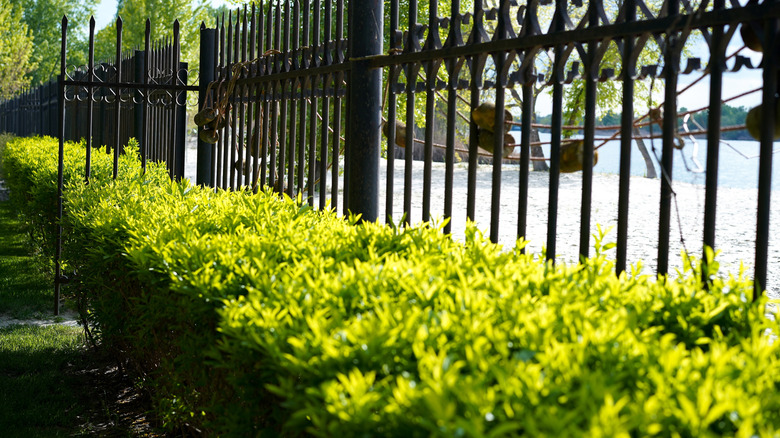
One final method for blocking your neighbor's incursive grasses is the opposite of the above techniques: Grow something along your side of the fence. Plant a dense row of bushes, flowers, ground cover, or ornamental grasses along the fence line. The type of plants you choose will determine the kind of protection this barrier provides. In fact, ground cover will keep your yard weed-free much the same as a dense lawn — it crowds out any grasses attempting to breach the barrier, blocking access to soil, sunlight, and nutrients.
Taller foliage such as hedges, bushes, and various flowers help stymie windblown seeds from finding their way into your lawn and can create a shade barrier for encroaching, sun-hungry grasses. The denser these plants grow together, the more effective they will be at blocking unwanted seeds, spores, and rhizomes from entering your yard. While this method isn't a 100% guarantee, it certainly can help. These tactics can be even more effective when used in conjunction with one another. Consider laying a bed of gravel under your flowers or hedges, or planting a combination of ground cover and hedges.