

How To Stop Ants From Damaging Your Plants' Roots
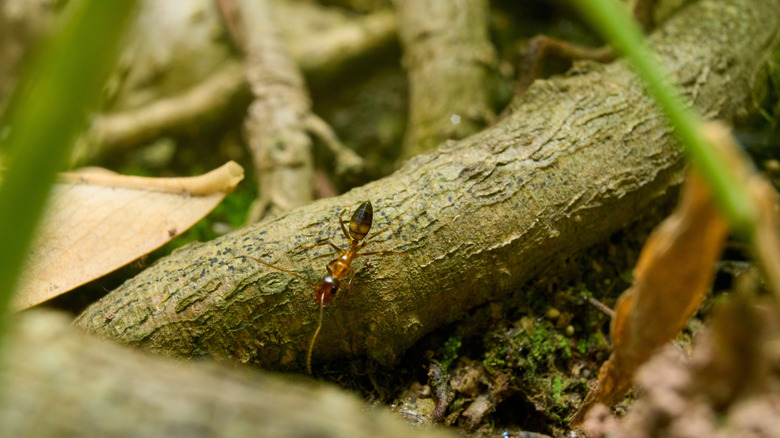
Ants can be a nuisance in lawns and gardens. For one, they protect aphids — the bane of gardeners and landscapers everywhere due to their ability to severely harm a variety of plants. However, ants themselves can also damage plants in a variety of ways, which is why so much time is spent attempting to deter them from gardens, plant containers, and flower beds. If those efforts fail, and ants begin colonizing around your plants' roots, they can cause severe damage and are a hassle to eliminate. At that point, the best ways to deal with ants in your plants involve using repellents and relocating the impacted plant.
Although some plants attract ants more than others, ants can invade the roots of any plant. This applies not just to those in your garden, but also plants used to landscape around your lawn and even potted plants. For ants, the base of a plant is the perfect homesite, as it provides not just shelter, but also access to moisture and a ready food source. Typically, ants don't directly target the roots, but their extensive tunneling can disturb roots and compact the soil around them, affecting drainage. That said, there are times when ants will cut through roots, particularly if they are trying to expand their nesting area. So, if you notice an ant hill next to your plants or in a container garden, deal with it immediately.
Saving your plants' roots from ants
If you discover ants, tunnels, or mounds near your plants, there are a few ways to handle the situation. However, keep in mind that killing the queen is the only way to completely get rid of a colony. You can try and end this garden insurrection by drenching the mound in an eco-friendly ant control solution, by using a blend of orange oil, molasses, dish soap, and water. Using a commercial pesticide, such as permethrin, to saturate the soil around the colony is another option. Diatomaceous earth sprinkled around the tunnel entrances can also work.
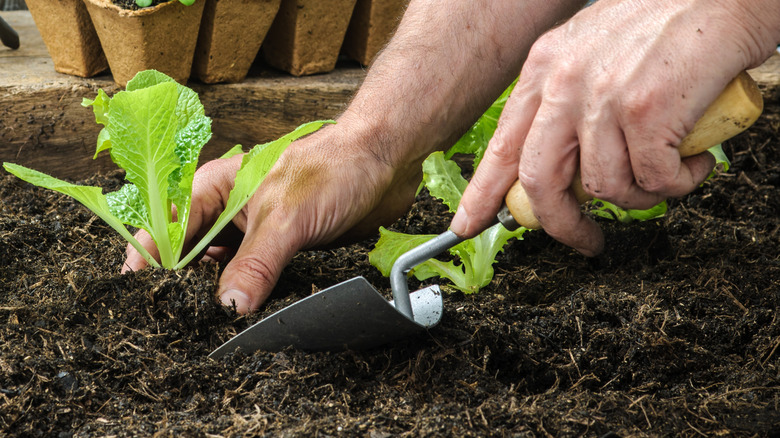
If none of these solutions eradicate the colony, your best bet may be to dig up and relocate the plant or, in the case of a container plant, repot it. When doing this, it is best to wear gloves and long-sleeve clothing, especially if you are dealing with dangerous types of ants, such as fire ants. Once the plant is excavated, carefully rinse the roots in fresh water to ensure there are no ants remaining, then plant it in a new location or in another pot with fresh potting soil. You can also spray the whole plant down, gently, with a hose.
Even when the plant is relocated, you'll still need to deal with the colony. If it's in your yard or garden, you can try pouring a couple gallons of boiling water into the tunnels. You can utilize bait traps made from sugar and boric acid, deployed around the garden or in containers and pots. With pots and container gardens, once the plant has been relocated and the ants removed, dump any remaining soil and thoroughly wash and clean the container before using it again.