

The Crucial Lawn Care Step You Should Start In May
We may receive a commission on purchases made from links.
As spring continues to tumble towards summer, temperatures continue to climb, and grass begins to emerge and grow. By mid-spring, even grass in yards throughout the northern portion of the country have come out of their winter dormancy. This means a lawn full of green grass could be just around the corner. It also means it's time to get back into your lawn care routine and, if you want to make sure you have a lush, green lawn during the summer, there's a crucial lawn care step you should start in May.
In order to give your grass the best chance to grow in full and thick, you should scarify your lawn during spring. Scarifying is beneficial because it removes the dead grass and roots, or thatch, that can keep your grass from getting the elements it needs to grow: water, air, and nutrients. A layer of thatch can also block new grass growth, cause areas of standing water on your lawn, and provide a home for pesky insects. Because it retains moisture, thatch also promotes fungal growth and can result in issues such as dollar spot disease.
While this may sound like dethatching your lawn, scarifying is slightly different. Although both scarifying and dethatching are meant to remove thatch, scarifying is a much more intense process. Dethatching involves using implements fitted with springy metal tines that remove light layers of thatch without disturbing the lawn or soil. This can be done throughout the mowing season. Scarifying, on the other hand, uses solid metal blades that are meant to cut through the thickest layers of thatch and into the surface of the soil. Because your lawn needs recovery time after scarification, it should be done before the growing season hits its stride and only once or twice per year.
Two ways to scarify your lawn
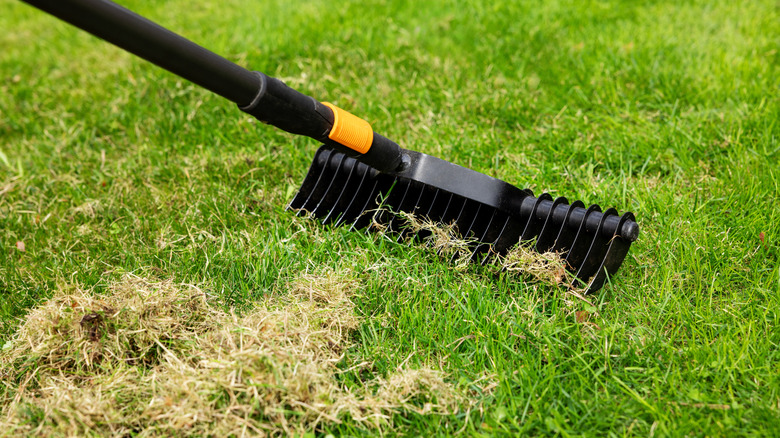
When it is time to scarify your lawn, there are two ways to do it: by hand or with a machine. Regardless of which method you choose, you should first mow your grass using a low setting on your mower. This will make it easier to both reach and remove the thatch. Then, remove any surface debris such as grass clippings or leaves. It is also important to not water your lawn before scarifying, as wet soil can be easily disrupted.
If using a handheld scarifier such as the BlumeTrec Heavy Duty Steel Thatching Rake, you should rake your entire lawn in straight rows. Be sure to apply enough pressure so that the tines are scratching into the soil's surface. Then, collect the debris from the initial pass, change directions, and rake the lawn once more going the opposite way. If you are using a mechanical scarifier, adjust the blades to where they barely cut into the soil. Then, make long passes over your lawn in one direction, using a quick, even pace. Finally, go back over the lawn in the opposite direction.
Because scarification rips out deep layers of thatch and even cuts into the surface, once you are done, it may appear as if you've completely destroyed your lawn. This is why the recovery process is so important. Water and fertilizer will help your lawn mend. With the thatch removed, it is also a good time to aerate or overseed your lawn, but it's best to wait a few days before doing so as to not put additional stress your existing grass. If you wish to stratify again during the year, you should wait until fall. However, you can perform light dethatchings throughout the growing season.