

Say Goodbye To Stink Bugs In Your Yard With The Help Of A Little-Known Trick
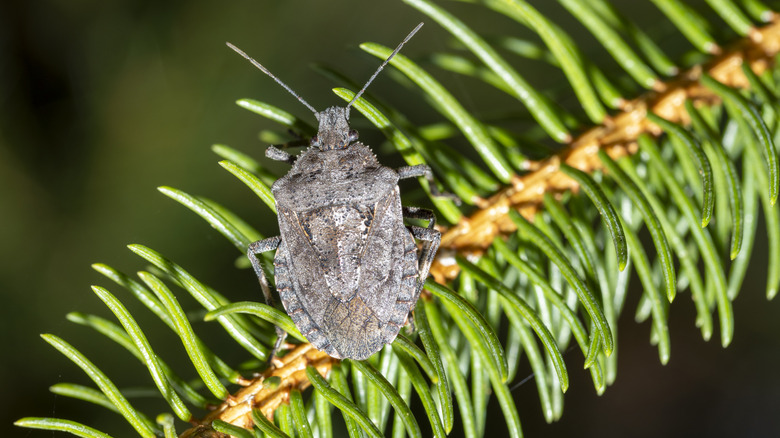
If you've spent any time gardening or working around the yard in spring or autumn, you've probably had a few unwelcome interactions with brown marmorated stink bugs (Halyomorpha halys). These shield-shaped bugs have a habit of feeding on a wide variety of plants and releasing a pungent, unpleasant odor when disturbed. Beyond the foul smell, stink bugs can damage plants in your garden beds. The creepy crawlies are known to chew through fruits, vegetables, and ornamental plants, leaving them discolored and weakened, so you probably want to get rid of them.
For many homeowners, the immediate reaction is to reach for a harsh chemical spray. Unfortunately, these chemical solutions often do more harm than good, especially if you're trying to maintain a balanced, eco-friendly garden. Luckily, there are alternative solutions to naturally repel stink bugs from your garden that are safer for your yard when employed properly. One of the most overlooked options for stink bug removal is neem oil, a plant-based treatment that's been used for generations for pest control.
As its name might suggest, neem oil is sourced from the seeds of the tropical neem tree, a native across the Indian subcontinent. As an insecticide, it disrupts the natural life cycle of garden pests, impeding their ability to grow, feed, and reproduce. When employed properly, neem oil can be an effective approach to fighting stink bug infestations. Though some homeowners sing the praises of neem oil, it isn't a perfect one-size-fits-all option. Timing, application, and consistency all play a role in how effective this natural repellent can be. Still, when applied thoughtfully, neem oil may give you a fighting chance at managing stink bugs.
How to use neem oil on stink bugs effectively
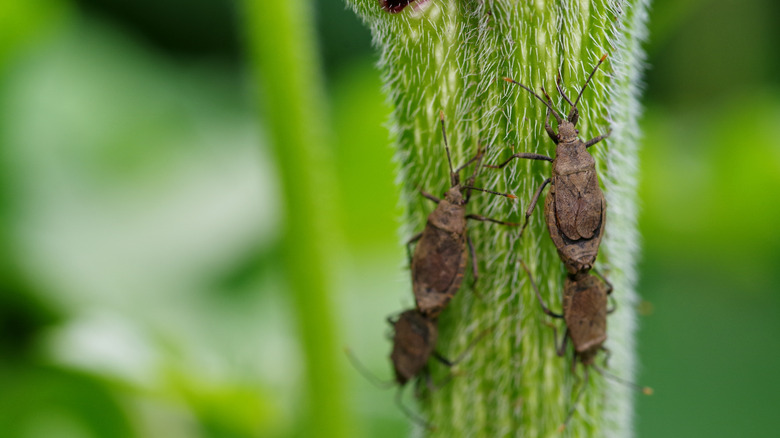
Unlike commercial pesticides, neem oil doesn't deliver immediate results or completely eliminate pests on contact. Instead, this natural solution targets stink bugs gradually, and functions as an antifeedant and growth regulator. The active component present within the oil is called azadirachtin. This compound causes pests to stop eating after ingesting it, and disrupts their hormonal system to prevent bugs from reaching maturity. The EPA has even recommended insecticides which use azadirachtin as a key component for eradicating stink bugs across the United States. In general, neem works best on larvae and eggs, so if you spot stink bug eggs or nymphs in summer, you're ahead of the game.
Start fighting stink bugs by diluting one to two teaspoons of concentrated neem oil in a liter of warm water. Next, add in a teaspoon of dish soap, and shake well. Spray affected plants lightly, making sure to drench the topsoil. Then, reapply as needed over the course of a few days, and you should see a notable drop in stink bug populations. With any luck, the neem oil method will also fight against mites, aphids, and fungal diseases.
For best results, apply your neem oil mixture early in the morning or late at night. As the sun comes up, the oil should disperse fairly fast, so there's little risk of burning leaves. While neem oil is largely considered to be a safe alternative to chemical pesticides, it isn't a miracle cure, and there is some evidence it can be harmful to humans in certain cases. Depending on how children play in your yard or garden, you may want to reconsider using neem oil. Avoid making direct contact with bees or other pollinators for the same reasons.