

Don't Throw Out Aluminum Foil: Repurpose It Into The Perfect Campfire DIY

We may receive a commission on purchases made from links.
A simple, inexpensive windscreen for cooking in camp is one of 11 ways aluminum foil comes in handy while camping. While there are plenty of lightweight options on the market, store-bought shields like this Toaks titanium windscreen cost almost $11. Plus, even though it's made with lightweight yet durable titanium, it weighs 0.5 ounces. For comparison, a sheet of heavy-duty aluminum foil roughly the same size would weigh about 0.2 ounces. Even better, a homemade windscreen might cost you nothing if you have a roll of foil already in your kitchen cabinet or camping bin. Windscreens are often an overlooked but essential piece of backpacking gear: A backpacking stove or small campfire will struggle to remain lit in severe wind or rain. Importantly, cooking on a backpacking stove without a screen can lengthen your boil time and waste precious fuel. Blocking that wind will get you your meal faster and save both fuel and money.
To make a small backpacking stove windscreen, cut a large rectangle of heavy-duty aluminum foil slightly longer than the circumference of your biggest cook pot or can. Then fold the sheet in half lengthwise for extra strength. Next, fold down the outer edges to reinforce the screen and reduce the risk of it tearing. Crimp the edges like a hem, so the screen holds its shape when you wrap it around your stove. Poke air holes along the bottom. That's it!
While some camping gear is a waste of money and pack space, some items, like an insulated package mailer turned food warmer, or a chunk of aluminum foil, are inexpensive game-changers for keeping backpack weight low while upgrading comfort and function in the backcountry.
Safety tips and tricks to improve your homemade windscreen
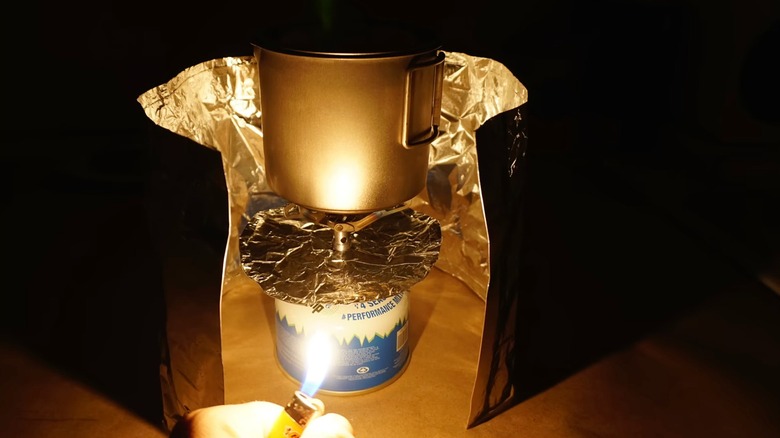
This kind of windscreen works best with liquid-fuel stoves like the MSR Whisperlite or alcohol stoves like the Redcamp mini. With canister stoves, where the stove screws directly onto the fuel canister, it's important never to fully enclose the canister. Too much trapped heat can make the canister overheat, limit oxygen flow, and become dangerous. Simply block the prevailing wind direction, and leave one side slightly open so heat can escape. Never walk away from your stove; they like to tip over and blow out. Also you can poke small holes in the screen along the bottom to improve airflow, especially when using a stove that requires more oxygen. Alternatively, you can raise the whole thing off the ground slightly to create airflow underneath.
For the homemade windscreen to work best, increase stability by bracing it with rocks. Over time and use, the aluminum will tear and weaken where it's repeatedly folded and unfolded, so it might not be the longest-lasting option — heavy duty foil will work better and last longer — but another one can easily be formed throughout your backpacking season. If you're wrapping any meals or other gear in foil, cut pieces to the size of your screen in advance, so they can serve double duty.
One Redditor on the backpacking forum r/ultralight took this hack a step further for a more long-lasting version. Xscottkx suggested, "go to the dollar store and buy a disposable aluminum cookie sheet and make one from that. Just as light, but a bit more 'structure' to them." You can also craft small windscreens from aluminum cans, or strengthen a screen by wrapping foil around wire mesh (though it will weigh more).