

The One Direction Your Owl Nesting Box Should Never Face
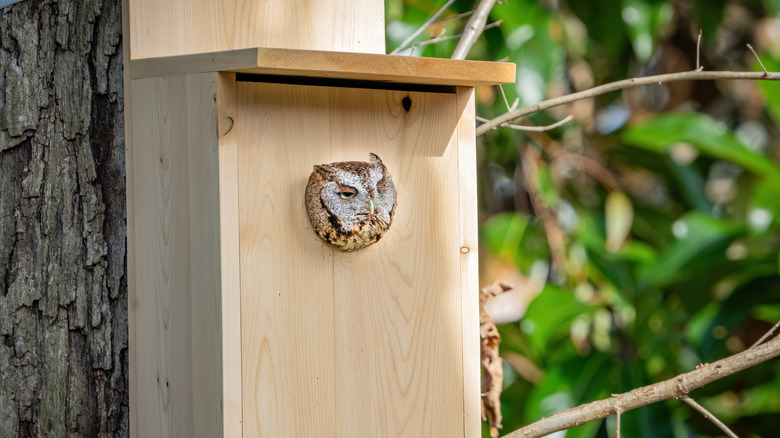
If you're an owl enthusiast, you might be interested in hanging up a few owl boxes of your own. Whether you're looking to invite more owls to your yard for their pest control skills, or you just want to provide safe harbor, it's important to position your box just right. Owls can be sensitive creatures of habit, so there's a lot to consider, like how far to hang your owl box from your house, how high up the perch needs to be, and what direction the whole apparatus should face. Owls may refuse to nest in boxes that are too low to the ground, too close to light sources, or facing north, where they'll be exposed to high winds and cold rain in many parts of the United States, as well as a lack of direct sunlight. That's right: Nesting owls like sunlight.
Even though owls are nocturnal by nature, many still enjoy sunbathing, particularly in the late afternoon. This isn't just a preference for comfort either, as owls derive plenty of health benefits from spending time in the sun. A north-facing owl box could deprive your feathery friends of vitamin D3, which keeps their feathers healthy and aids in staving off parasites. In addition, east or southeast-facing boxes can help keep baby owlets warm with each rising sun.
Beyond the raptors' propensity for sunbathing, nesting boxes also provide a respite from harsh winds. When a box is tilted north, it funnels strong winds directly into the perching zone, especially during the winter months. This can significantly impact an owl's ability to perch, and locate prey. In extreme cases, owls exposed to significant winds can die of starvation. These silent hunters need to consume ten to fifteen percent of their body weight daily, so anything you can do to help them stay comfortable and safe can help!
What direction should you point your owl box?
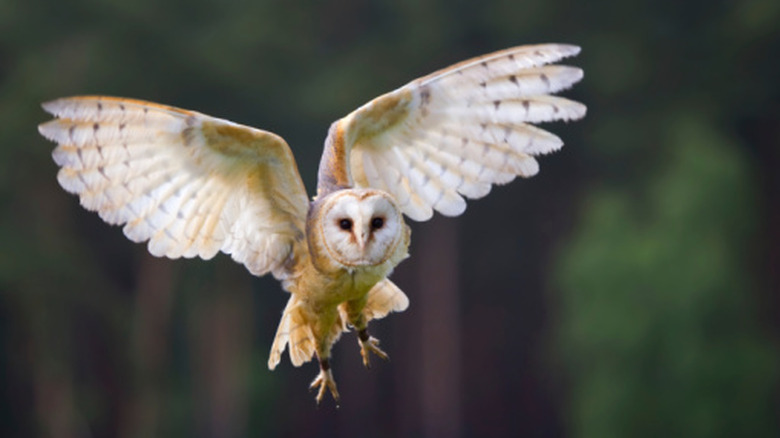
But if you shouldn't be pointing owl boxes north, how should they face? Luckily, there's no completely wrong answer among the remaining cardinal directions. West-facing boxes allow owls to soak up some crucial vitamin D in the early evening as the sun begins to set. Still, some experts recommend that this orientation be avoided in favor of a southeast-facing box. The southeast orientation is often cited as being ideal for nesting boxes, as that angle should provide morning warmth without affecting the hottest afternoon sun. Essentially, any direction but due north should be fine.
However, there's an exception to the rule here. You also want to ensure that the exit and perching space of the box faces a clear and open flight path. Many owls use their superior senses to spot prey from above, before swooping down and snatching mice, voles, and other rodents from the ground below. If their flight path is impeded by thick tree branches or structures, it makes it more difficult for the owl to find and intercept food. If north is the only option for a clear path, north it is.
Generally, the best orientation for your owl box largely depends on your area, the specifics of your yard, and the kinds of owls you're hoping to attract. If angling your box further north to give your owls the best chance at hunting, that might outweigh any negative side effects. In addition, large trees that block northern winds and rain in your yard can make prevailing weather concerns moot. If this is the case, orientation may be less important, as long as you give your owls ample sunlight, and an overgrown space in your yard to hunt for vermin.