

Think Twice Before Planting This Shade-Loving Ground Cover In Your Garden

Gardeners in need of hardy, shade-tolerant plants may find themselves drawn to low-maintenance ground cover such as goutweed, especially popular cultivars like 'Variegatum.' The densely growing plant, also known as bishop's weed (Aegopodium podagraria), may appear to be an ideal solution for parts of your yard shielded from sunlight. Once planted, goutweed blooms into clusters of delicate leafy flowers. Some seed varietals produce white flower petals, earning the nickname snow-on-the-mountain. Part of the Apiaceae family, goutweed is closely related to many herbs and vegetables including carrots, parsley, and celery. Unfortunately, goutweed comes with its fair share of drawbacks, beginning with the fact it grows aggressively, and spreads out of control quickly.
Though it is visually appealing, goutweed is considered highly invasive in many areas of the United States. The aggressive ground cover originated in Europe and Asia, and was probably first introduced to North America via early colonists as a medicinal plant. Once introduced, goutweed spread rapidly to the Northeast, mid-Atlantic, and Pacific Northwest, where it began outcompeting native species for nutrients, and choking out natural ornamental ground cover like Pennsylvania sedge (Carex pensylvanica) or Allegheny sedge (Pachysandra procumbens). Today, goutweed is said to be present in at least 29 states.
The seemingly uncontrollable spread of goutweed is largely due to the way that the plant expands, both above ground via seeds, and below the soil. Goutweed utilizes a system of underground roots known as rhizomes. These stems allow goutweed to propagate laterally beneath the soil, where they form dense mats that become extremely difficult to eradicate. Over time, even a tiny patch of leafy goutweed can grow to overtake entire garden beds, snuffing out your intended perennials at their roots, and even covering portions of your lawn.
Why goutweed is so difficult to control once it takes hold
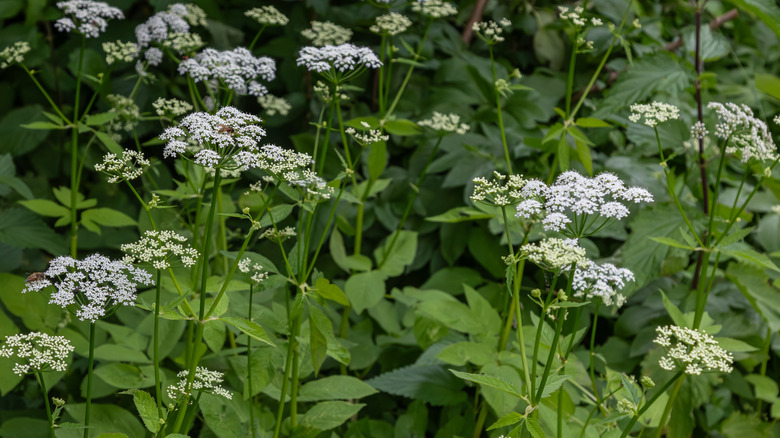
Those who have tangled with goutweed before will be quick to let you know that even a small patch of the invasive weed can spread fast. The rhizomes make it nearly impossible to rid yourself of the relentless weed. Pulling up leaves and stems by hand might appear to eradicate a patch of goutweed, but the underground network of stems can be difficult to tackle, and they can wrap around the roots of plants you want to keep, choking them off. Once the rhizomes regenerate, new goutweed growths pop up all over the surrounding area, leaving you with a bigger headache than before. Some homeowners have had luck digging out entire rhizome systems using garden spades and other tools, but the process is arduous, requires a lot of patience, and it's easy to miss pieces that break off and can still wreak havoc.
A more successful approach is a targeted herbicide. However you risk impacting other plants in your garden. If you want to go a poison-free route, cover the entire area in black plastic in early spring, leaving it in place through the summer.
After you've removed every last inch of goutweed, you'll need to properly dispose of the materials. While it may be tempting to compost the organic matter, doing so will allow rhizomes to re-root, so goutweed remnants should always be bagged and trashed to prevent further infestation. For gardeners looking to avoid this headache altogether, your best bet is to prevent goutweed from taking hold in the first place. Weirdly, it's still available in nurseries, so the best prevention is not buying invasive plants when shopping at garden stores. Instead, opt for shade-resistant, native ground cover that's right for your climate.