

The Sweet-Smelling Herb That'll Make Your Garden A Hummingbird Hotspot
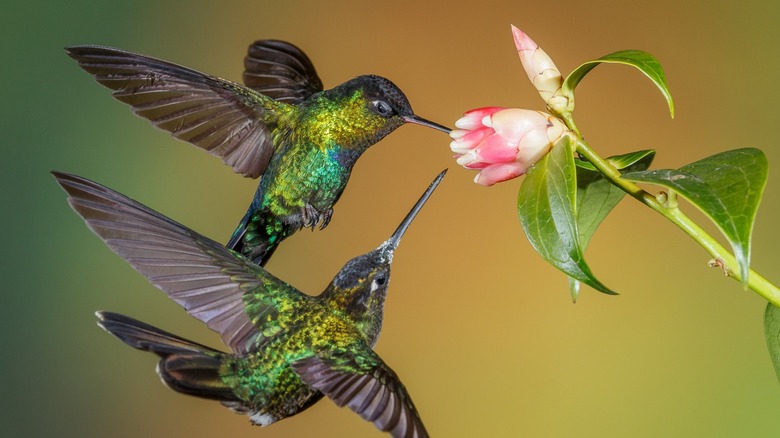
The perfect hummingbird haven features a lot of elements. Perhaps you've already added feeders and an adorable DIY hummingbird swing. Now it's time to look to the plants: Bright, showy flowers are an ideal way to catch the attention of these fast-flying birds, and pineapple sage (Salvia elegans) is one of their favorites. Despite its popularity in the United States, pineapple sage is not native. Instead, it grows wild throughout Central America. Thankfully, it is not an invasive plant and is hardy in zones 8 through 10 in the U.S. A type of salvia, its vibrant red, late-season blooms attract hummingbirds and are ideal for providing nourishment just before fall and winter migrations.
Getting its name from its sweet scent — crush the leaves between your fingers and you'll smell pineapple — this plant is a great garden herb for many reasons. While pineapple sage is a stunning plant that attracts hummingbirds to your garden, it also welcomes bees and butterflies with its sweet nectar. It is also an edible (for us) variety of salvia. The flowers themselves are tasty, with a fresh, fruity flavor. People use this herb in teas and jellies, and it's a popular folk medicine for anxiety.
Pineapple sage loves sun and moist soil
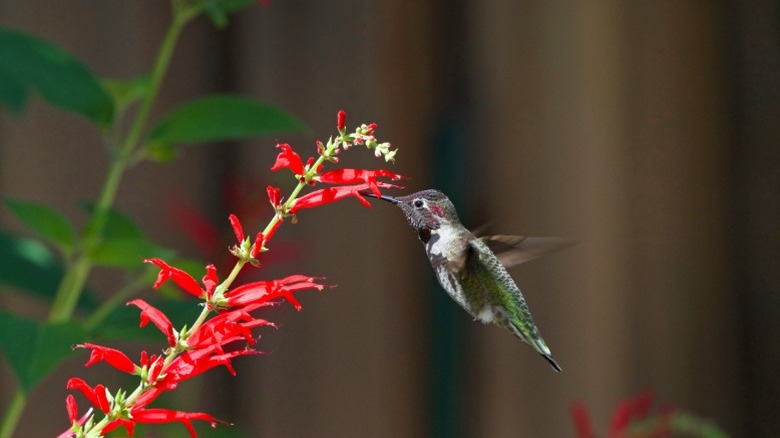
Pineapple sage does well when grown in sunny conditions, thriving when it gets both morning and afternoon sun, though it tolerates partial shade as well. Plant it in areas with well-draining soil with a neutral pH. This herb prefers rich organic matter, but can handle growing in poor soil. It is a drought-tolerant plant once established and pest-resistant, but needs moist soil to prevent wilting and leaf drop. Be aware of its cold sensitivity and do not attempt planting it before last frost in cooler climates.
Being native to warmer areas of the world, pineapple sage is typically grown as an annual in containers for most northern regions of the U.S. However, it is also a very quick-growing species, capable of reaching heights of 3 to 5 feet tall. There are several cultivars, including 'Honey Melon' which is a little smaller and blooms a bit earlier in the summer, ideal for planting farther north. It's easy to add pineapple sage to an herb garden or as a border plant in a garden. Plant it along your patio or flower garden to get a close-up view of your hummingbird guests. Growing pineapple sage alongside other nectar-rich plants in a clustered planting can be an eye-catching trick that'll have hummingbirds flocking to your yard. Try pairing the bold red of pineapple sage flowers with yellow and purple blooms, which also attract these tiny birds.