

Forget A Fishing License — Here's How You Can Fish For Free
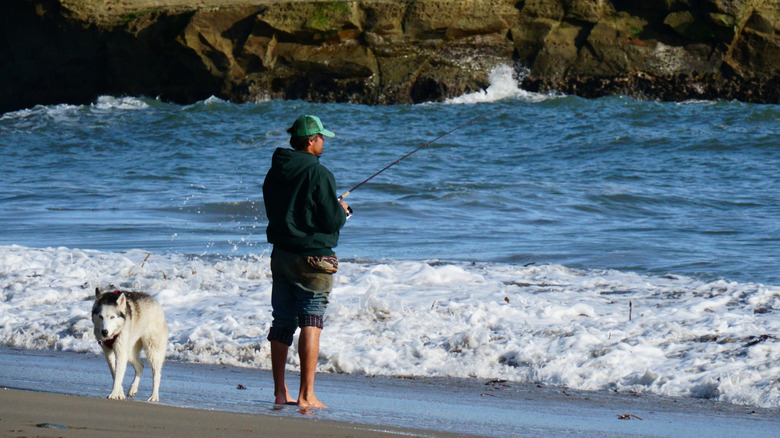
As you begin prepping for your next fishing adventure, you undoubtedly have a checklist of things you need. You'll want to make sure your have the right bait for your trip, rod, tackle, and accessories, as well as determine the best time of day to fish where you are setting up. You also need to make sure you have a valid fishing license. Or, do you? Turns out, depending on when, where, and how you fish, among other things, you may be able to forget the fishing license.
When it comes to recreational fishing regulations, every state government sets its own rules, including license requirements, so the details vary from state to state. But, one thing they have in common is that at some point in the year, every state holds what are termed Free Fishing Days. Most take place over a single weekend in late spring or early summer, though a few states offer Free Fishing Days towards the end of summer. This is one of the most common ways to fish without a license. You can find a state's free fishing days by contacting the appropriate state agency in charge of recreational fishing or visit the website. You can also utilize online resources such as the free fishing days calendar on TakeMeFishing.org.
Other ways you may get to fish for free
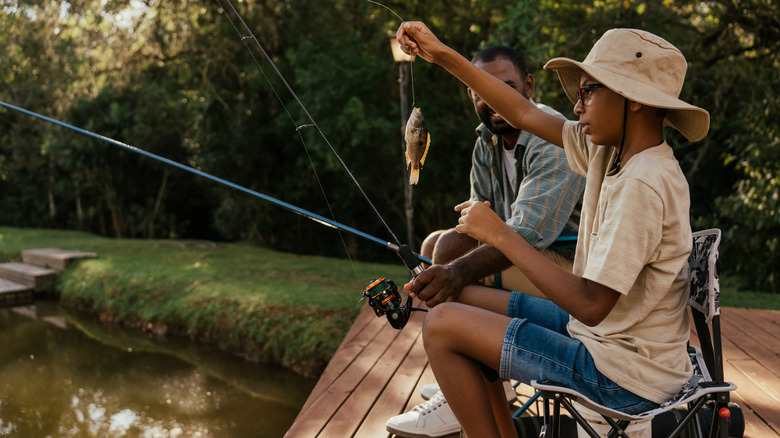
Each state generally requires some sort a fishing license. In fact, some states require more than one, depending on the type of fishing you are doing (this is most common where both salt and freshwater opportunities exist). This is typically the case even if you plan to release the fish you catch. However, almost every state has a variety of exemptions. These may be based on things such as where you're fishing, your age, whether you are fishing on a guided charter, or other conditions.
Many states do not require anglers below or above a certain to obtain a license. Most often, this includes minors under 17 or 18 years of age and seniors beyond retirement age. Additionally, many states do not require a fishing license if you are fishing on a body of water that lies completely within private property. Other states, such as California, make exemptions for fishing public spaces such as when fishing in saltwater from shore or a pier or breakwater, or, in Florida, if you are fishing with a licensed guide.
While you may find yourself not needing a license because of these or other exemptions, you will most likely still be required to follow all pertinent size and bag limits. As with licensing requirements, fishing rules and regulations vary by state. Remember to check before each trip, even to locations you have previously visited. Rules can change, as with fishing the best spots in Hawaii, where a saltwater fishing license just recently became required.