

The Common House Feature That Scares Away Owls (& You Had No Idea)
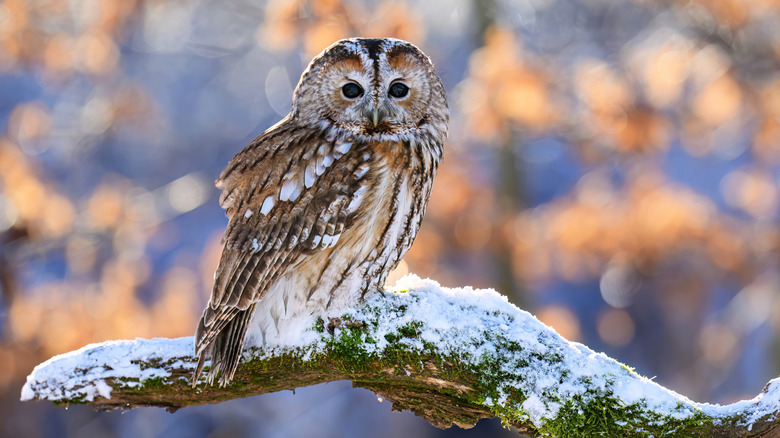
If you've been trying to get more owls to flock to your yard, yet striking out at every corner, there might be a simple reason: Too much light. This includes, perhaps surprisingly, motion-sensitive lighting that spends most of the night in the off position. It may sound like a no-brainer, but actually your outdoor lighting is a reason owls might not be coming to your yard. Once you've established plenty of places where they can perch, installed a nesting box, and stopped mowing your lawn long enough to invite local prey animals, you'll want to make sure your outdoor area is nice and dark. By powering down any outdoor light sources, including lights that might suddenly flash on as an owl is gliding past, you're creating ideal conditions for the birds.
For owls, light sources, including those that suddenly turn on, can be quite disorienting while hunting. They also expose smaller owls to other predators. The good news is, flashing lights, like those found in motion-activated lamps, tend to be less of a disturbance to owls than constant light, but it's still an issue. We can see this exact thing at play out on certain farms, where farmers deliberately use motion-sensitive or flashing lights to deter owls from attacking baby chicks or other small livestock. If encouraging owl populations, rather than scaring them off, is your motive, simply turn down the lights and you may soon see an uptick in nocturnal activity.
Entice owls with complete darkness
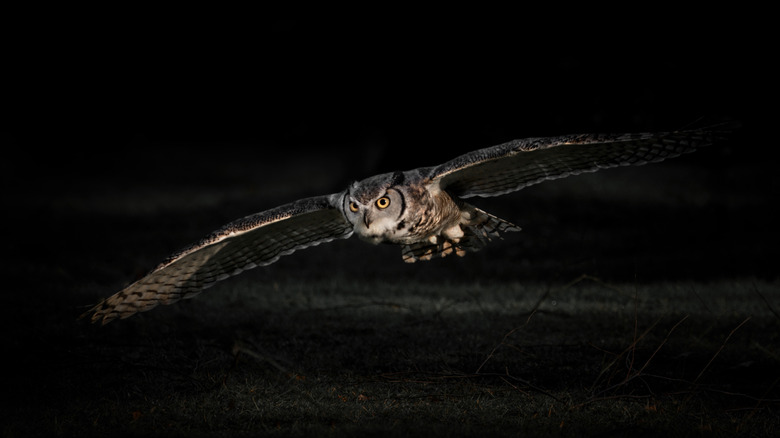
Of course, there are numerous reasons why a homeowner may require a bit of illumination outside, lighting up walkways or for an element of safety. If you do require an outside light source, consider placing it on the front door or one side of the house. You can also help to reduce light pollution by using a relatively dim light, or employ a motion-activated light that is on only when someone is stepping outside. Some people point their motion lights outward and upward to deliberately ward off owls, so you could go the opposite way, shielding the light so it only illuminates down and onto the sidewalk or door you want lit up. With a bit of luck, you might still be able to light up your walkway while keeping your backyard dim enough to replicate the natural hunting grounds for local owl populations.
Keeping the lights off should also encourage more rodents to roam freely, making for an ideal owl buffet. Wild owls need to consume roughly 20 percent of their body weight daily. This usually means snatching up 4 or more mice, voles, or similar critters every night. Encouraging mice on your property might not sound like an enjoyable experience, but it'll go a long way toward keeping your owls happy, healthy, and primed to come back for more.
Interestingly, some wildlife specialists say that motion-sensitive lights don't have much of an impact on many four-legged visitors, like deer, bear, or raccoons. They all get used to the on-off of sensor-driven lights pretty quickly. But there's another nocturnal flying species that may be even more affected by motion-sensitive lights than owls are: bats. The high-intensity floodlights found in most motion-sensitive lamps stun bats and prevent them from hunting. One option that can help both owls and bats is to program shorter lighting times when possible.