

Create A Layered Look In Your Garden With A Tall Must-Plant Flower
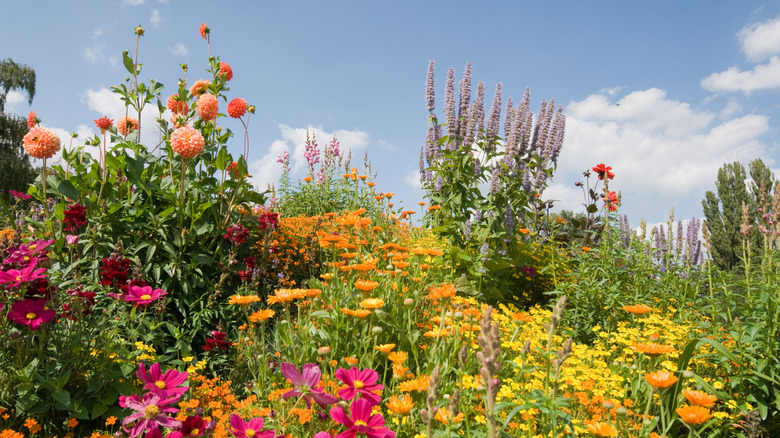
Tall flowers can make a statement in your yard, especially when you place them behind shorter plants. The height contrast in this type of layered landscaping creates visual interest, which you can raise even further by incorporating various flower colors and shapes. One example, giant scabious (Cephalaria gigantea) brings ruffled petals and a lemony yellow hue to flower beds (one cultivar is even named 'Lemon Queen'). Sometimes called giant pincushion flower or yellow scabious, this showy and statuesque perennial is native to the meadows of Siberia and the Caucasus Mountains. In the United States, it's typically found in carefully designed gardensand borders. It can also be naturalized when grown in a field of wildflowers. As you may have guessed from its name, giant scabious is a relative of smaller pincushion flowers, such as the Scabiosa atropurpurea flower that Joanna Gaines loves to grow.
Giant scabious performs best in USDA hardiness Zones 3 through 7, and is very cold hardy, tolerating temperatures as frigid as -40 degrees Fahrenheit. This plant needs plenty of space since it can grow as wide as 4 feet and likes to form clumps. It may reach as high as 8 feet when it's flowering, typically in June, July, and August. If you're eager to attract a diverse variety of pollinators, giant scabious is a must-have for your layered garden. Bees and butterflies are especially fond of its large, midly fragrant blossoms filled with tasty nectar.
Helping giant scabious thrive and stand out
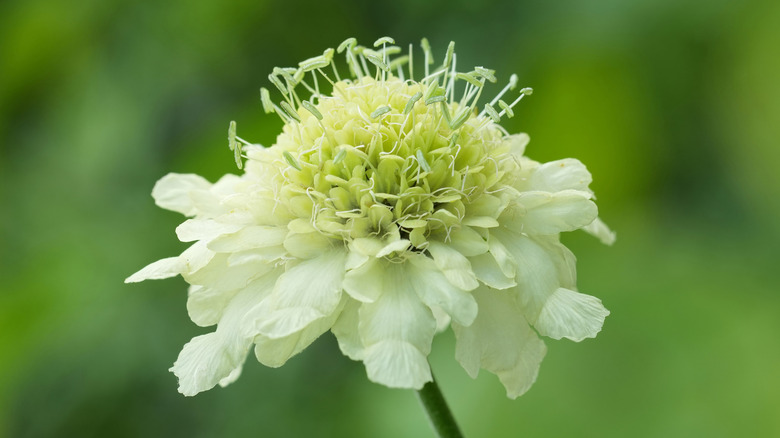
Giant scabious is a nice, low-fuss plant for gardening beginners because it seldom struggles with pests or diseases. Its care needs are minimal, though it generally prefers nutrient-rich soil that drains well and doesn't get waterlogged. To encourage lots of flowers, give giant scabious as much sunshine as possible and cut the blossom-holding stems down to the ground once they're done showing off for the summer. If you don't snip off spent flowers, seedheads will form, sowing some of their contents in your garden and offering the rest to visiting birds. You can keep your giant scabious from flopping over by installing stakes or trying a pool noodle trick for supporting tall plants. Moderately moist soil also helps the stems stay upright, as does growing the plant in full sunlight.
The versatility of giant scabious gives you lots of options when designing new plantings from cottage gardens to prairie-inspired wildlife havens in your yard. It can also shine in more formal settings: The color of the flowers really pops when the plant is grown as a border or in front of a dense green hedge. Giant scabious's sparse foliage makes it a good choice for growing between medium-height plants, in the midsections of border plantings, or in the back rows of many flower beds.