

How To Successfully Grow The Popular Herb Oregano In Your Garden
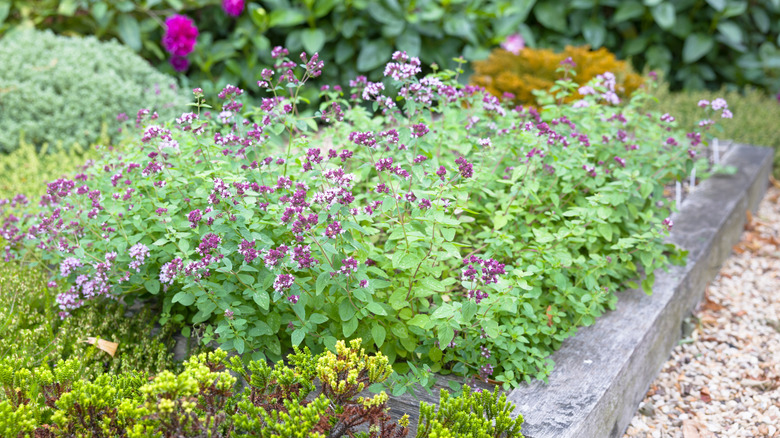
Oregano (Oreganum vulgare) is one of the most well-known and most-loved herbs for the garden and kitchen, commonly used in cuisines around the world. Some varieties, like golden oregano, are better used ornamentally as a ground cover, serving as a clever alternative to grass for a no-mow garden. While it's fairly easy to grow, there are still steps to take to get your oregano patch to thrive. To grow this magical herb, you'll want to plant seeds or cuttings in the spring, or consider starting indoors before spring officially begins. Within a few months, you'll be ready to begin harvesting and enjoying your oregano.
It's best to wait until well after the last frost, when the soil has reached about 70 degrees Fahrenheit, to begin planting. When you're ready, choose a spot in your garden with plenty of sun, which will help boost the flavor. Choose a bright spot with well-draining, ideally sandy or rocky soil. You will also want to plant your oregano seeds or cuttings 8 to 10 inches apart so they have room to grow. Before you plant, add compost to the soil to give your oregano a nutrient boost.
How to care for and harvest your oregano
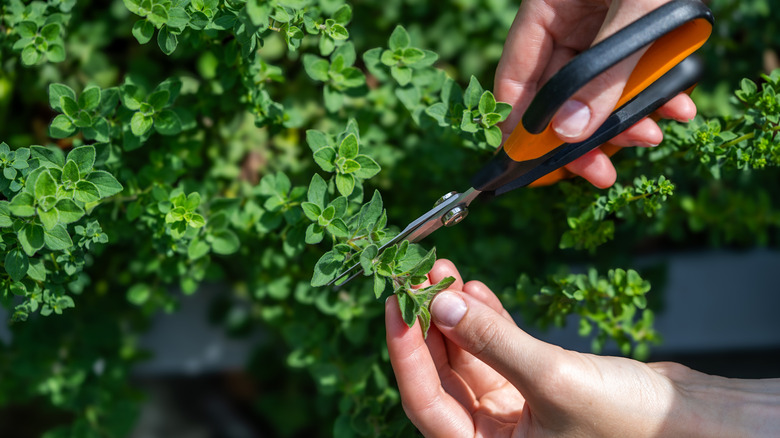
Oregano is a low-maintenance plant, requiring much less attention than some fussier plants and herbs in your garden. Additionally, oregano naturally repels pests from your garden while attracting pollinators such as bees and butterflies, making it a perfect addition to promote a healthy garden ecosystem. One thing oregano doesn't do well is deter deer, though it's often claimed it does.
When it comes to water, the biggest challenge you'll face is overwatering. Unless the soil is dry to the touch or the leaves are browning, you shouldn't need to water your oregano. Typically, watering once a week is enough, less if it's raining. Similarly, you shouldn't need to fertilize your oregano as long as you added a bit of compost to the soil beforehand. A top-up of compost every few months should suffice.
The primary care that the oregano in your garden will require is pruning and harvesting. Begin pruning once your plant reaches about 4 inches tall. Any dead or yellowed leaves should be removed and disposed of; otherwise, all cuttings are for your enjoyment in the kitchen. Make sure to either pinch or cut with sharp shears, never removing more than a third of the plant at a time. Harvesting regularly in this manner will encourage your oregano to grow more fully, developing into a bushier plant with more leaves for you to harvest. Oregano may lose its leaves in winter, but the plant will return year after year in USDA hardiness zones 4 to 9, where they are winter-hardy.