

The Only Way You Should Be Storing Your Sleeping Bag
We may receive a commission on purchases made from links.
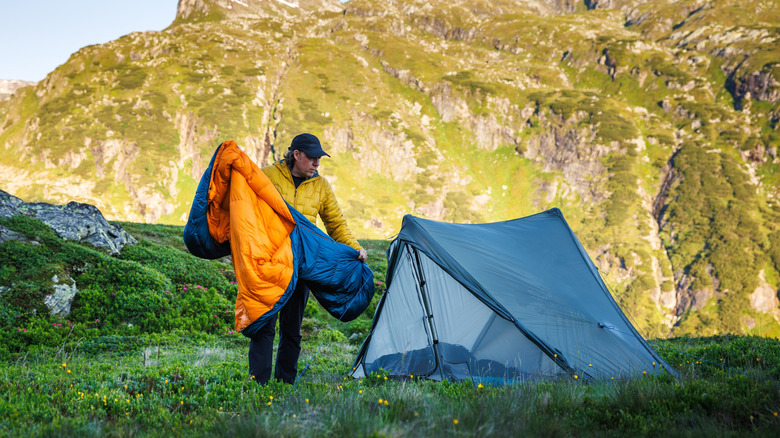
Even though a stuff sack or compression sack makes packing your sleeping bag for a road trip or a camping adventure more convenient, it's actually not meant to contain your sleeping bag long term. Storing your bag in too small a sack when it's not in use could even be ruining the loft, and that fluffy filling is what keeps you comfy and warm on chilly nights. Essentially, your bag needs to be stored loose for it to retain its ability to insulate and preserve the manufacturer's temperature rating. Storing the bag in a large, breathable mesh sack — and in a temperature- and moisture-controlled environment — is ideal, but there are other options. Just as long as it's not jammed into a tiny nylon bag all year long.
The large cotton or polyester mesh bag included with many newer sleeping bags is often ideal for long-term sleeping bag storage. If you don't have such a bag, you can order one like the Cocoon two-in-one packing cube, or use a cloth laundry bag or large pillow case. Hanging the sleeping bag over a hanger in the closet also works (that's what the little loops on the bottom of the bag are for). Storing a sleeping bag in an uninsulated shed with your other camping gear is also not ideal and could affect the life of the bag. Instead keep it indoors, where it can stay warm and dry.
Why your sleeping bag storage choice matters
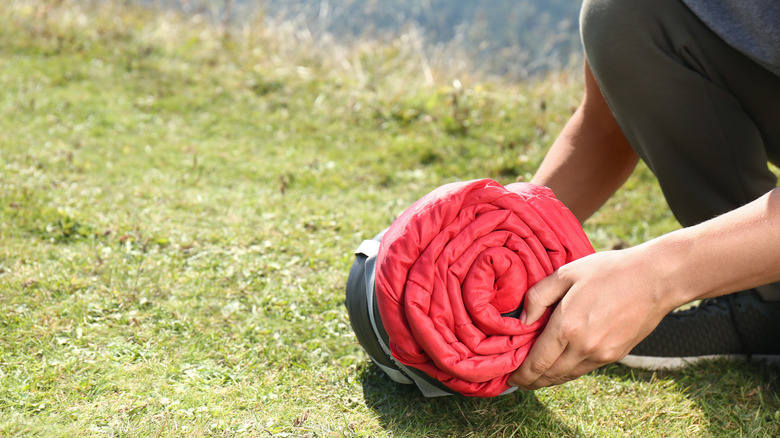
Storing a sleeping bag smashed down into its stuff sack compresses all the filler material inside the sleeping bag. While that's probably not a problem when you're toting your bag on a trip, it can be a major issue during long-term storage. When a sleeping bag is compressed for too long, the filler material loses its ability to spring back to its full fluffiness. While down fillings can eventually be revived, synthetics may experience permanent damage and never recover. This effectively negates the temperature rating of your bag: Even if the bag says it's good down to 20 degrees Fahrenheit, it may no longer be and you'll find yourself layering on clothing to get through a cold night. Even if you exercise before getting into your sleeping bag, that won't be enough to help you stay as warm as before if the stuffing is compressed or damaged.
Jamming the bag into a stuff sack immediately following a camping trip also doesn't give it a chance to air out. It's best to hang your bag, unzipped, over a clothesline to prevent mildew or mold. Avoid direct sunlight, however, as this can weaken seams and break down synthetic materials. This is also a good time to inspect the bag for wear or properly wash your sleeping bag and dry it (again) before putting it away.
When you're ready to stash the sleeping bag for a while, gently put it into a breathable cotton or mesh bag, or hang it on a hanger. You can also stick it in a plastic or cardboard box, but that won't let it breathe as much. Store your bag in a cool, dry closet where the temperature stays constant, and you'll be ready to hit the trails and sleep comfortably.