

If You Want Bigger, Better Hydrangea Blooms, Try These Soil Tricks
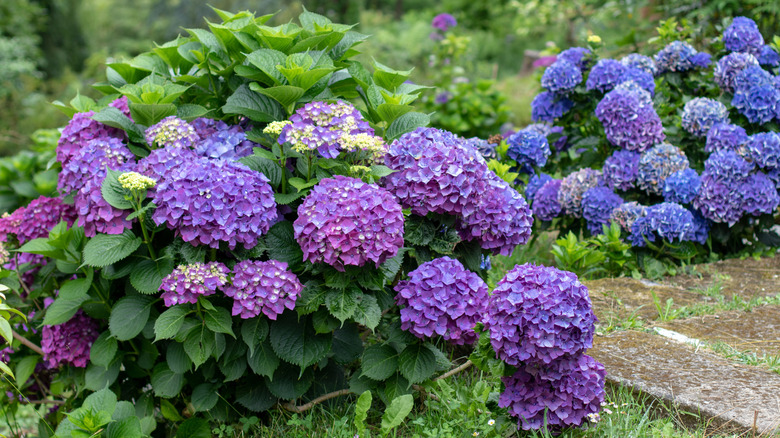
The reason most people grown hydrangeas is for their large, showy blooms. So it's only natural to be a bit disappointed if you hydrangeas aren't the show-stoppers you were expecting. This can happen even if you choose the right hydrangea for your yard. In that case, if the blooms are not meeting your expectations, the issue could be your soil. With that in mind, if you want bigger, better hydrangea blooms, you need to make sure the soil composition and moisture level are consistently correct.
The best soil trick for ensuring big hydrangea blooms is to make sure the soil contains lots of organic matter. Adding compost, manure, or other organic matter to your soil can benefit hydrangeas in a few different ways. For one, it provides them with a healthy dose of nutrients, necessary for both growth and flower production. It also ensures that the beneficial microbes in the soil are well fed. Finally, it creates air pockets and improves soil structure, particularly in compact soils such as clay. This promotes better soil drainage.
Test soil regularly and don't go overboard with nitrogen
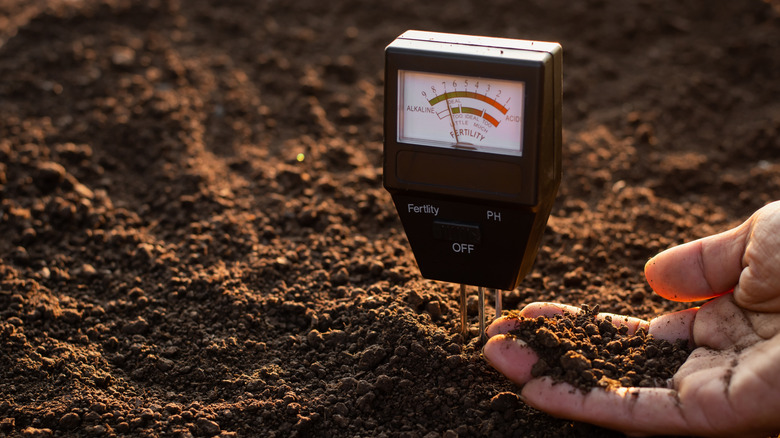
The right soil pH is also important when it comes to seeing maximum blooms on your hydrangeas. In order to make sure your soil is consistently at the correct pH, test it regularly and amend as necessary. For overall health and growth, hydrangeas prefera soil pH ranging between 4.5 and 6.5. However, not only will the pH level affect the amount and size of blooms, it can also dictate their color depending on the variety. With bigleaf and mountain leaf varieties, a low or acidic pH level (under 5.5) can result in blue blooms. High or alkaline pH, above 6.5, will give you pink blooms. Purple blooms appear with soils exhibiting a neutral pH level. So, if you are looking for a certain color, you may want to manipulate your soil's pH, which you can do using several spring fertilizing tips for hydrangeas.
The other thing to monitor when testing your soil is the nitrogen level. While nitrogen can make soil more acidic, which you might want for blue blooms, it can also limit bloom production on hydrangeas, giving you gorgeous, green leaves in spring and summer, but no flowers. When you fertilize hydrangeas, be sure not to use an NPK fertilizer heavy in nitrogen. However, make sure it has plenty of phosphorous, which helps the plants bloom. Alternatively, if you are hoping to increase the acidity of your soil, you may be better off using mild fixes such as orange peels, coffee grounds, or compost. These choices also help increase organic material in your soil, as mentioned above.
Make sure soil stay moist but drains well
In order for optimal growth and bloom production, hydrangeas require moist soil. So, it is important to water your hydrangeas regularly, but it's equally important that any excess water drain away. Overwatering, or too much water retention following heavy rains, can also lead to fewer blooms and, even worse, root rot and mold. To help avoid this, it is critical the soil be well-draining and not overwhelmed with too much water, too quickly. A soaker hose is a good way to prevent the latter. Paying attention to soil conditions and hand watering (rather than automatic systems that can't tell if the surface is dry or not) is another solution.
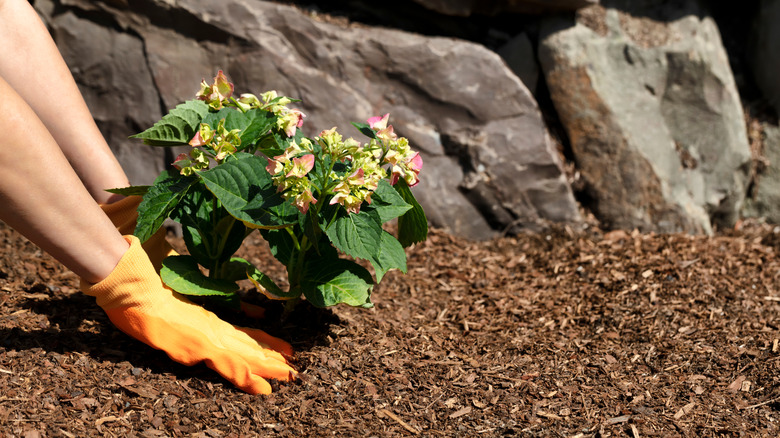
While you're avoiding overwatering, it is still important that the soil remain moist. One way to help is by mulching around the base of your hydrangea plants. This helps the soil retain moisture and continuously replenishes organic matter and nutrients in the soil. Mulch also works to prevent weeds, which can also rob soil of moisture and nutrients. To that end, any weeds you do find in your hydrangea beds should be pulled as soon as you see them.