

Attract Hummingbirds And Pollinators To Your Garden With A Pretty Purple Flower
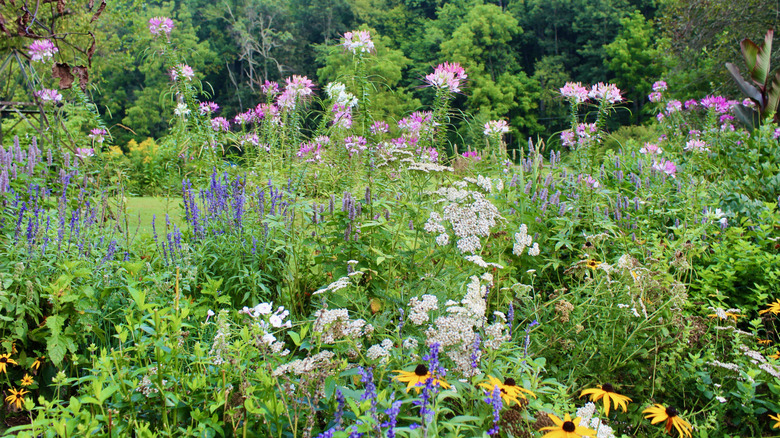
There are few better sights than a garden alive with hummingbirds, bees, and butterflies. Pollinators don't just make your garden prettier; they are crucial to the earth's environment. There are a number of beautiful flowers you can plant to attract pollinators. One particularly striking flowering plant is the passionflower. While some plants specifically attract hummingbirds, it's helpful to provide flowering plants that also attract various pollinators, bloom at different times of the year, and serve multiple functions for visiting wildlife. In this regard, the passionflower and its striking blooms perform marvelously.
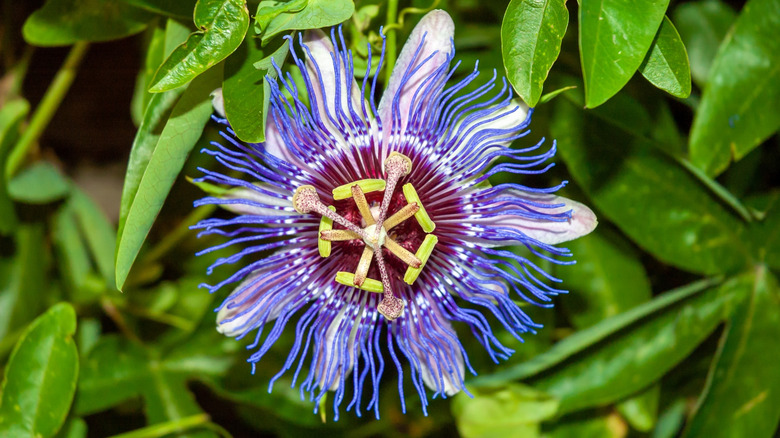
Passionflower (passiflora incarnata) — also known as maypop and passion vine — is an easy-growing, spectacular climbing vine that thrives in USDA hardiness zones 5 to 9, but can be grown in slightly warmer climates as well. The vines grow up to 20 feet, however the main attraction are the beautiful blooms, composed of vibrant purple shades with white sepals, and wildly patterned stamens and styles. Depending on the variety, these dramatic flowers will attract more or fewer butterflies, bees, hummingbirds, even bats.
What's more, the caterpillars of several species of butterfly love to munch on the plant's stems and leaves. Some people specifically plant passionflower as part of a caterpillar garden to encourage butterflies. Passionflowers also bear edible fruits called maypops, aptly named for the way they burst open when stepped on. Songbirds love the fruit, so you could consider this plant another simple hack to get birds to flock to your yard.
Growing passionflowers in your garden
Passionflowers, thrive in full sun to partial shade, and require something to climb, like a fence or trellis. If you don't already have something, you can build a DIY, budget-friendly trellis. Training the plant to grow vertically provides better airflow for the plant. It also means you, songbirds and other critters can harvest fruit more easily, while hummingbirds gain easier access to the flowers.
If you're growing the plants as caterpillar food, you can look forward to seeing several kinds of butterflies both laying eggs and emerging from cocoons. Among the species that specifically use passionflora as host plants, you may witness the zebra longwing or Julia, and it's the only host plant used by the Gulf fritillary butterfly.
Passionflowers prefer slightly acidic, well-draining soil, although they grow well in a variety of soils, including sand, loam, and silt, as long as it drains well, avoiding root rot. For maximum effect and to give both the plants and their visitors room, place the plants about 3 to 5 feet apart, planting seeds or seedlings in spring or fall. When starting from seeds indoors, harden off plants for about two weeks, offering gradually increasing sunlight. They can be fed each season with general purpose fertilizer or some compost.
One big caveat is that the plant propagates rapidly via runners and root suckers, particularly if it isn't trained vertically. To the point it can be considered sort of invasive in a garden, despite being a native plant. To prevent wild growth, regularly trim to keep your passionflower vines where you want them, and pull any suckers reaching into the ground or around trees.