

The Blue-Green-Leaved Herb That'll Bring More Pollinators To Your Yard
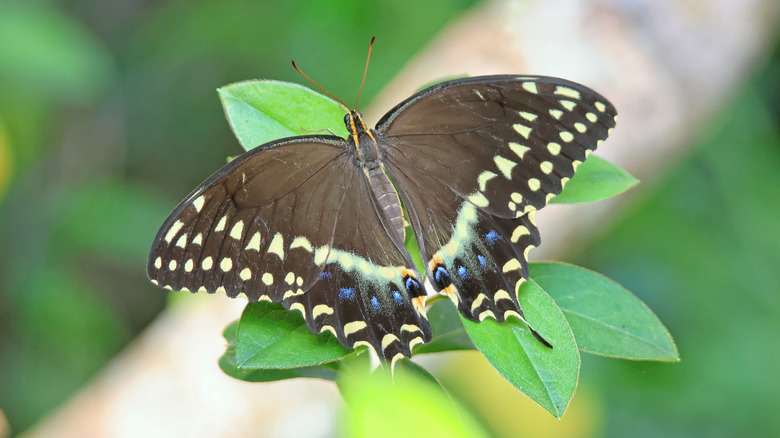
If you're an avid gardener, you may already know that part of the fun is sharing your outdoor space with beneficial insects. From bees to butterflies, your smaller neighbors add life and vibrancy to your backyard, keeping plants alive and thriving. As a result, when planning your next garden layout, you may want to add specific plants to create a pollinator-friendly garden. One particularly verdant choice is common rue (Ruta graveolens): The plant's colorful blooms are a favorite among many pollinators.
Rue is native to the Mediterranean, with unique blue-green leaves and stems. It blooms during the summer and fall with delicate, brilliant yellow flowers. These characteristics make it a popular ornamental plant for landscaping, especially because it can lure in a variety of butterfly species, including several swallowtail species. In fact, it serves as a host plant for giant swallowtails to lay their eggs.
While the plant is attractive, it's important to keep its toxicity in mind. Ingestion can be dangerous, especially in abundance, and direct contact can lead to skin irritation. As a result, if you have curious children or pets in your yard, you may want to opt for other pollinator-friendly flowers, like goldenrod, marigold, and snapdragon.
Low-maintenance rue thrives in many environments
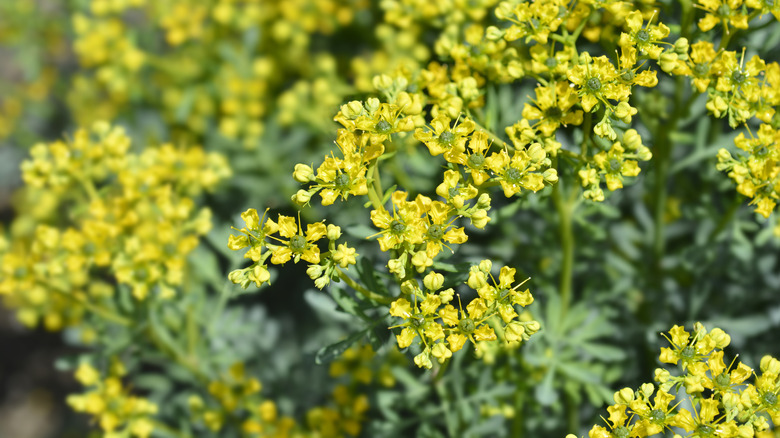
If you want rue to successfully attract butterflies and other pollinators, it helps to grow it in conditions similar to where it thrives naturally. This blue-green herb can thrive in USDA zones 4 through 10. It's drought-tolerant, and larger pests like rabbits deer avoid it, making it a relatively fuss-free option for beginners. Rue isn't picky when it comes to soils. It can handle most soil pH levels and types, as long as there is good drainage. Soils that remain too wet can lead to root rot. As for sunlight, rue can thrive in both partial shade and full sun, giving you flexibility when it comes to choosing the right location.
There may come times when you need to trim or prune this plant. Or it's time to remove its seed heads to prevent uncontrolled growth in your garden, since rue can reseed itself. Do this after butterflies and bees are done visiting, and the blooms are just starting to wilt, before they go to seed. Because of rue's ability to cause irritation on contact, always wear gloves and long-sleeved shirts while handling the plant, and avoid contact with uncovered skin. It's also best not to work with this plant during the middle of the day, as its sap can blister affected skin when exposed to sunlight.