

The Beautiful Ground Cover That You'll Regret Planting In Your Yard
When choosing the best ground cover for your landscaping project, there are several factors to take into consideration, like what thrives in your climate, sun exposure, and the plant's overall effect and aesthetic. Italian arum (Arum italicum) checks almost all the boxes for a perfect ground cover. Its distinctive, green-and-white leaves are stunning, and it's hardy in USDA zones 5 through 9 under a wide range of soil and sun conditions. In late spring, Italian arum grows white or pale green flowers, resembling other members of the arum family like peace lilies, followed by stemmed clusters of fiery orange or red berries later in the year. Unlike peace lilies, however, Italian arum is incredibly invasive. Once established, it spreads easily and is difficult to control.
In addition to spreading through corms on its roots, birds eat the berries, inadvertently dispersing seeds throughout the surrounding area. Part of what makes Italian arum so good at outcompeting native plants is its foliage habits. The leaves wither during summer, but regrow in fall when other plants are going dormant. In mild climates, it can remain green through winter into spring, giving it a head start over other plants when it comes to hoarding light and energy.
Alternatives to Italian arum and how to remove it from your yard
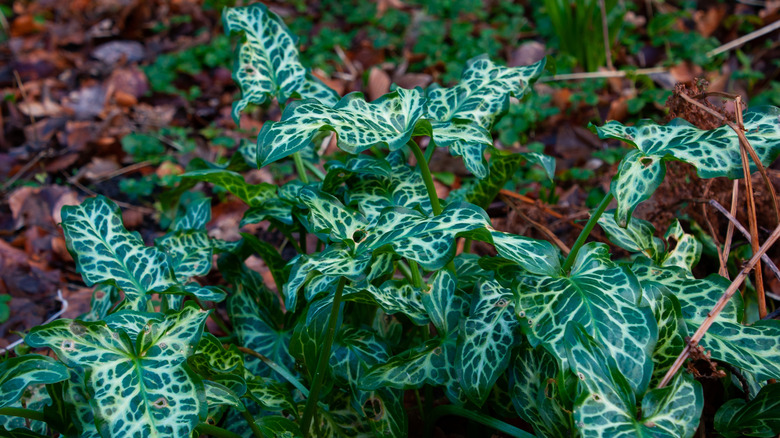
If you haven't put Italian arum in your yard yet, you're in luck. Instead, consider native ground cover options like Virginia creeper, clover, or using moss in your landscaping. These make for particularly easy-to-care-for alternatives to grass and no-mow lawns. Bring interest and novelty to your yard by including Jack in the pulpit (Arisaema triphyllum), alleghany spurge (Pachysandra procumbens), or wild ginger (Asarum canadense). If you want to enjoy Italian arum's beautiful leaves, grow it in a container to confine the plant, removing berries as they appear.
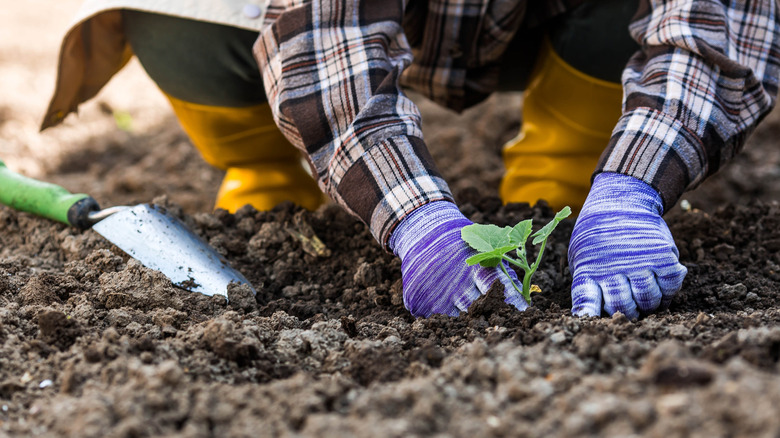
If you've already planted Italian arum, you might find it challenging to get rid of. While some herbicides can eradicate the leaves, the roots are resistant to chemical control. The only option is to dig it up as thoroughly as possible. Wear gloves when handling this plant, as all parts are considered highly toxic to humans and pets, and even contact can sometimes cause skin irritation. Remove as much of the plant as possible, and turn the soil to look for any root pieces you may have missed. Bag everything and dispose of it properly, and don't add it compost. Keep a close eye on the area for any signs of new growth, digging them up as they emerge.