

Help Container Hostas Thrive With A Simple Yet Unconventional Trick
We may receive a commission on purchases made from links.
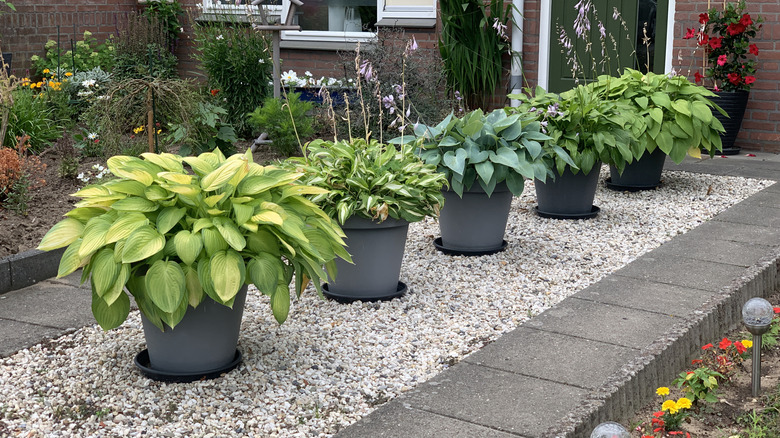
Hostas are simple to grow and incredibly versatile, acting as ground covers for shady yards and ornamental specimens for rock gardens and flower beds. Though hostas are a popular choice for landscaping, don't overlook the possibilities of container-grown varieties. The plants' fancy leaves are more eye-catching than ever when they pop out of pots and planters. If you grow hostas in containers, be aware that their care needs differ from in-ground plants. Hostas grown in the earth don't need much fertilizer. Compost made from dead flowers, pruned-off foliage, and other garden leftovers will usually do the trick when added to their soil once or twice a year. Potted hostas require a bit more nutrition, which you can provide with diluted tomato fertilizer.
Potted hostas have higher nutrient needs because they have limited access to decomposing leaves. Their wilted leaves often drop to the ground or get removed by gardeners who like tidy-looking container gardens. Plus, they don't get surrounded by many of the leaves that fall from nearby trees. All of this means that less organic matter is being produced near their roots. Without this natural nutrient source, hostas can become deficient in key minerals. There are several ways to prevent this problem in container-grown hostas. Surprisingly, Feed designed for tomatoes is one of the best. It provides a broad range of nutrients these plants crave, and it couldn't be much easier to apply.
Feeding liquid tomato fertilizer to potted hostas
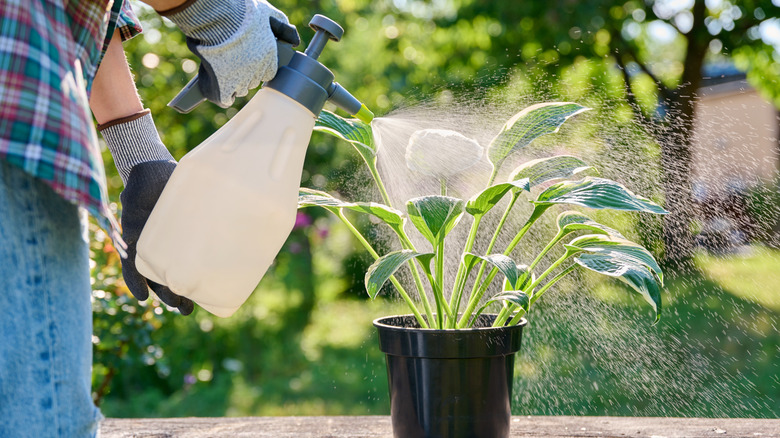
Liquid fertilizer is ideal for potted hostas because it doesn't need to be mixed into the soil as dry formulations do. Thoroughly blending granules into the potting mix is difficult and may be too disruptive for the roots of tender young plants. Liquid plant food also works better than dry formulations when the soil is chilly. Plus, it delivers nutrients fast, which is useful if your hostas are looking lackluster. Hostas respond well to fertilizers that feature some balance of nitrogen, phosphorus, and potassium, and liquid fertilizers formulated for tomatoes offer just such a blend. Of the organic options available, Bloom City tomato & vegetable plant food, a 4-2-3 blend, stands out because it also has health-supporting calcium, magnesium, iron, and sulfur. If you'd prefer a synthetic fertilizer, Miracle-Gro LiquaFeed plant food 9-4-9 is a solid choice since it's formulated for container-grown plants. If you're unsure of your soil's specific nutrition needs, a 10-10-10 balance is good. You don't wan't much more nitrogen than that, unless your soil is particularly nitrogen-deficient.
When preparing liquid tomato fertilizer for your potted hostas, dilute it with twice as much water as the label recommends to avoid over-fertilizing. Since hostas can be sensitive, it's better to err on the side of under-fertilizing them. Apply fertilizer no more than twice a year. Hostas can react poorly to compost that contains food additives, so if you brew compost tea, use decomposed garden scraps rather than food-waste compost. You could even feed them a DIY fertilizer made from pulled weeds and water if you're confident they're not severely lacking in nutrients. As always, the best way to determine your plants' nutrient needs is to perform a soil test.