

Add A Bright Pop Of Yellow Flowers To Your Beds With This Ground Cover
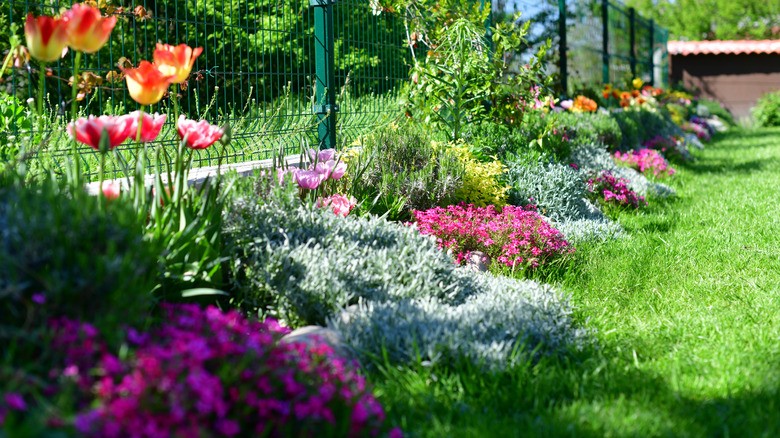
A lot of planning and hard work goes into creating a beautiful yard and garden. Most gardeners take care to choose the right combination of flowers and plants that will add color, texture, and beauty to their outdoor spaces. Ground cover plants are a nice addition to any garden or yard and can be used in many different ways, from hills and sloping areas to along walkways or fence lines. You can even use ground cover plants in your flower beds instead of mulch. Add a bright, sunny pop of yellow to your flower beds by planting yellow alyssum (Aurinia saxatilis). Also called basket-of-gold, this evergreen perennial produces a dense canopy of bright yellow flowers against gray-green leaves for about a month in the spring.
This vibrant, cascading perennial looks stunning in any garden, but yellow alyssum particularly shines as ground cover. The low-growing plant gets 6 to 12 inches tall and spreads out a foot or more, so you'll cover a lot of ground by planting several of them close together. Yellow alyssum is easy to grow and care for in hardiness zones 3 through 7, making it a great fuss-free plant that's easy for gardening beginners. They will grow in hot, humid climates, but expect to plant them as annuals, as they likely won't make it through the summer.
How to care for yellow alyssum
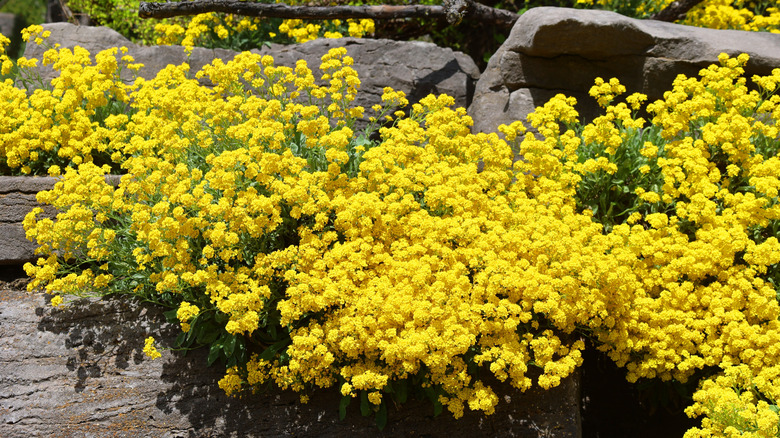
Plant yellow alyssum where it can get lots of direct sunlight. It does well in moderate temperatures with full morning sun and afternoon shade during the hottest parts of the year. Plant in well-draining sandy or rocky soil: Yellow alyssum doesn't do well in clay soils or poorly draining soil. This deer-resistant plant provides nectar for a variety of beneficial insects, particularly bees and butterflies, that help your garden. A lot of fertilizing is not necessary, although if you choose to, you can add a slow-release fertilizer in early spring every other year or so to give the pretty yellow flowers a nice boost. Pruning isn't necessary, unless you want to shape it: Then use clippers to cut about half the plant back in the late fall. If you prefer the mat-forming look, you don't need to cut it back. You can also deadhead spent blooms in the spring to encourage another round of flowers.
You may have some problem with aphids, but overall yellow alyssum does not have issues with pests and diseases unless the plant is watered too much — then it can develop root rot. You can pair yellow alyssum with a number of plants, include creeping or moss phlox, evergreen candytuft, and bleeding hearts, to create depth, complexity, and layers in your garden.