

Plant These Trees To Turn Your Yard Into An Inviting Oasis For Owls
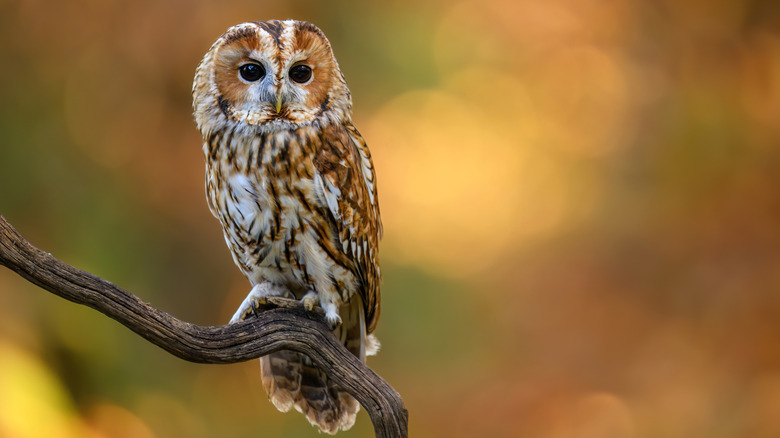
Our native owls play a vital role in our ecosystem, but it isn't always easy to see them at work. This is especially true if you live in a more suburban or urban environment, where owls may struggle to thrive. Luckily, there are several ways to attract owls to your yard: Many owls love to perch or nest in high places, so growing tall native trees is one approach you may already be taking or considering.
Some of the best trees to plant for owls, throughout much of the United States, include oak (Quercus spp.), beech (Fagus spp.), juniper (Juniperus communis), spruce (Picea spp.), and pine (Pinus spp.), but confirm which trees are native to your area. In northern California and western Oregon, for example, trees like Douglas firs (Pseudotsuga menziesii) and redwoods (Sequoia sempervirens) are favored by the northern spotted owl for nesting and living in.
Native trees are best: Growing conditions are, by definition, ideal and you don't have to worry about hardiness zones or adverse weather. They also provide food and shelter for the insects, small mammals, and birds that local owls love to eat. Tall trees offer a good vantage point for owls to look for food and danger, while a thick trunk and dense branches offer shelter from wind and rain.
While dwindling old growth forests best suit an owl's needs, you can still help out in your own yard. They especially love trees that are a little more secluded, away from human traffic, structures, and busy roads. The downside is that it can take trees a long time to grow to the heights owls prefer. There are trees that grow more quickly, but they tend to be fast-growing, exotic trees you should avoid planting.
How to plant trees to attract owls
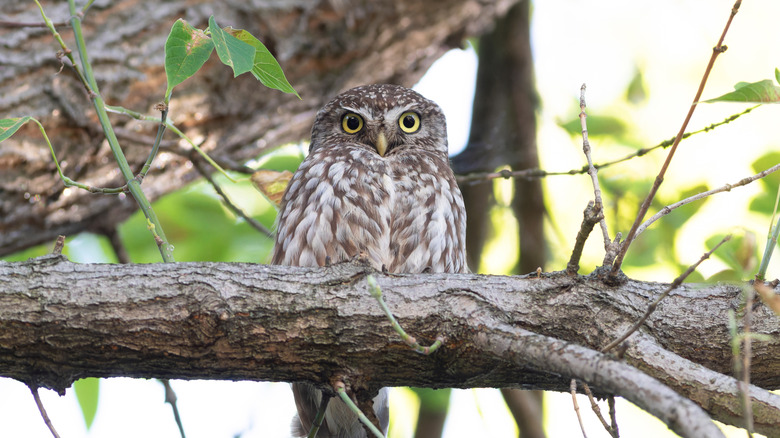
While some details vary by species when planting trees for owls, there are a few general things to keep in mind. Choose a location as far away from structures, power lines, and roads as you can. This is important for both the health of the tree and the safety of the owls. The nocturnal birds of prey can be struck by cars while feeding. If you live near a busy freeway, or where a lot of pesticides are used, it may be best to not encourage owls to stick around.
Trees need consistent nutrients in order to grow to their full height, so choose a site with rich soil. This is particularly important when trees are young and getting established, as recently planted trees shouldn't be fertilized. If the soil in your yard is low on nutrients or is overly acidic or alkaline, amend it with compost or organic matter before planting. You can use a soil nutrient test kit to determine if your soil needs extra amendments or not.
Finally, consider how much sun your tree species needs. Spruce, juniper, oak, beech, and pine trees all grow well in full sun to partial shade, so avoid planting them in deep shade. If you live somewhere with a lot of reflective buildings, keep in mind that your trees may be getting hit with reflected heat and light. In hotter areas or parts of your yard, saplings may need extra water. Once they're planted, all there is left to do is wait. A Douglas fir will take about five to seven years to reach 10 feet, and 40 or 50 years to get to its full height. To host owls a bit sooner, consider making a DIY owl perch.
Maintaining mature trees
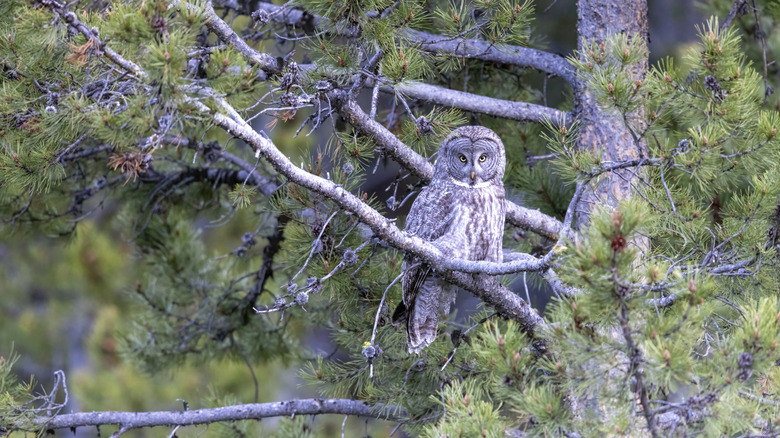
If you already have large trees for your local owls to roost in, you may be wondering how to keep them in the best shape. Older trees grow and heal more slowly, so it's important to watch for damage from storms or pests. Regularly prune damaged or diseased branches to keep your tree healthy. It's a good idea to rely on professional arborists for this, as they have both the tools and knowledge to prune your tree safely. They can also give your tree a general check-up to see how healthy it is overall. Don't over-prune: Many owls use the crevices and cavities created by dead and dying branches as nesting spots, and debris on the ground from fallen branches make convenient hiding spots for tasty rodents and insects.
Native, older trees are generally more resistant to drought, since their roots stretch further and can access deeper water reserves. However, it's not a bad idea to water your tree deeply and slowly during long-lasting or intense droughts, to keep its leaves or needles green and provide shade for your feathered friends. Likewise, native mature trees may not need yearly fertilizer, but if you notice your tree looking pale and weak it may appreciate a boost.
No matter how well-cared for your tree is, it isn't immortal. As sad as it can be when a tree dies, it doesn't have to mean eviction day for neighborhood owls. Owls will roost in dead trees as well as living ones, so leave your old tree in place if you can. Of course, if it's is a hazard and seems likely to fall, or it's diseased, it should be cut down.