

Say Goodbye To Garden Pests With The Help Of A Common Kitchen Scrap
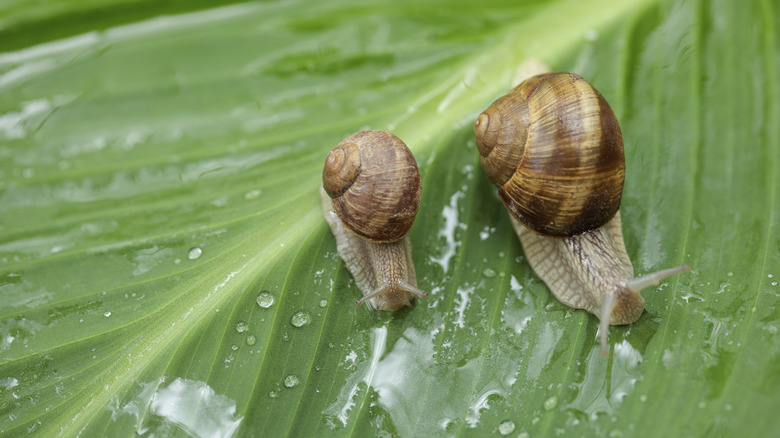
If you frequently find yourself battling pests in the garden, you're probably willing to try anything to get rid of them. Store-bought sprays offer a chemical solution, but those can sometimes be harmful to plants. They also pose a risk to bees, butterflies, and other garden pollinators. Luckily, there are several home remedies worth trying, some of which require little more than basic kitchen scraps. Potato peelings are one scrap in particular you've probably been throwing in the trash or compost without a second thought. As it turns out, discarded potato skins actually have properties which make them highly effective in the battle to eliminate slugs and fungus gnats.
Unlike chemical pesticides or various pest deterrents, potato peelings are a natural remedy designed to lure pests into traps, making it easier to dispose of them. Slugs and other common garden pests find themselves irresistibly drawn toward potato scraps, which release a particular scent as they begin to decompose. When placed strategically under boards or in shallow containers away from vital roots, they should lure in slugs and beetles, allowing you to easily collect and dispose of them in one fell swoop.
This clever hack to banish pests works because it turns the natural behavior of pests against them. Rather than investing untold sums into chemical poisons, you're drawing them into a controlled trap using simple materials you likely already have on hand. This not only saves money, but allows you to squeeze additional value out of one of your kitchen's most common staples.
Fresh potato peelings make a tempting treat
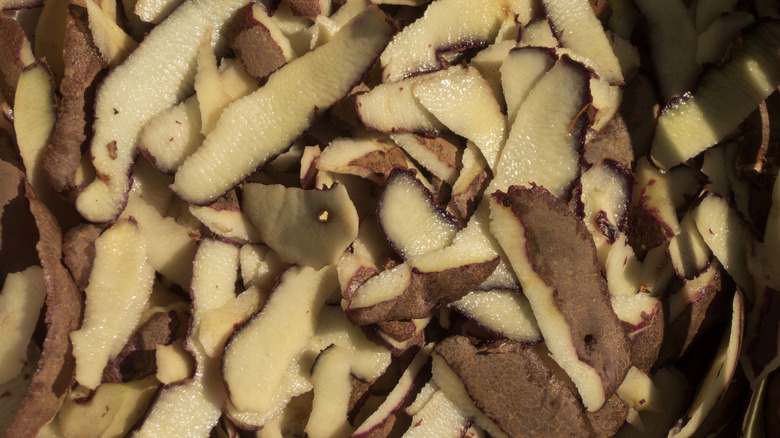
Though using potato peelings as bait in your garden is fairly straightforward, there are a few key factors that make a major difference. Firstly, you'll want to use fresh potato scraps, placing them in shallow containers or jars. This will make it easier to round up your pests in one place and quickly dispose of them. Alternatively, stash peelings under an old board. When you flip it over, they'll be right there, but you'll need to pluck them up manually.
Next, position traps in the late afternoon or evening when slugs are at their most active. This is especially true on cool, rainy, and foggy days, as the slugs thrive in moist and humid conditions. Spreading your traps around the perimeter of the garden during dusk is a great way to ensure the slugs make their way to your potato feast, which you can discard in the morning before work.
If fungus gnats are a particular problem in your garden, you'll find that the gnats are also drawn to the beloved starchy food. They'll begin using the potato peels as a home for their eggs, since they enjoy nesting within organic matter. You'll want to be diligent about emptying your traps and discarding the potato scraps every morning or two, otherwise you'll wind up exacerbating the gnat problem (fungus gnat eggs hatch in about three days). Repeating this process as needed should help reduce and eliminate pests and let you enjoy your gardens and flowerbeds in peace.