

How To Save Your Hydrangeas After Winter Frost Damage
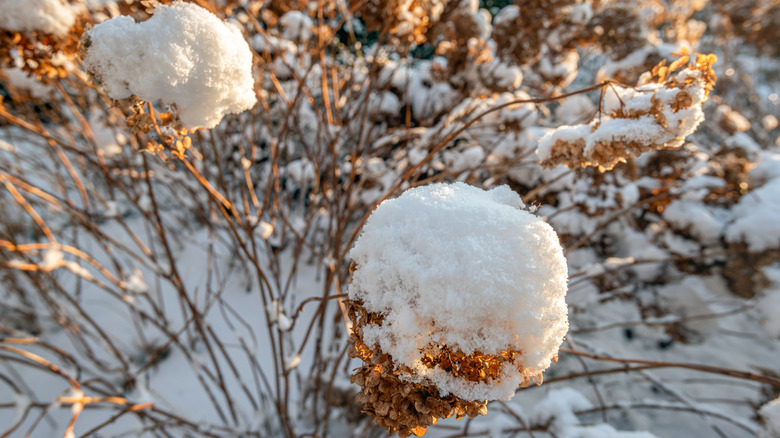
Hydrangeas are typically cold-tolerant plants. Even so, whenever there are freeze warnings or frost advisories, it is still advisable to take action to help prepare your hydrangeas. Unfortunately, even if you've done what you can to protect hydrangeas from harsh winter weather, there is a still a possibility they could sustain frost damage. Should that happen, however, there is a good chance you can save your plants. What you do and when you do it will usually depend on when the frost damage occurs, and if it was after young shoots or buds have already appeared.
Regardless of when the damage occurs, the first step is taking stock of the damage. Frost damage occurs when the water inside a plant freezes, killing cells and tissue in the process. As a result, portions of the plant that have suffered frost damage will have tell-tale signs. Areas that have been damaged turn reddish-purple or even black, wilt or droop, or appear dry. Foliage can become curled and wrinkled, and woody shoots are not green underneath the bark.
Given the unsightly effects of frost damage on hydrangeas, once you've inspected your plants you may be tempted to grab pruning shears and start cutting away. However, if this happens during late fall or winter, it is best to hold off on pruning until spring arrives and the plant emerges from dormancy. This will prevent additional frost damage to newly pruned areas, and allow you to get a better idea of which portions of the plant are still alive. If the frost damage happens during spring, you should prune the shoots back to the first set of healthy buds beneath the damaged area.
Warmth, water, and fertilizer help hydrangeas recover
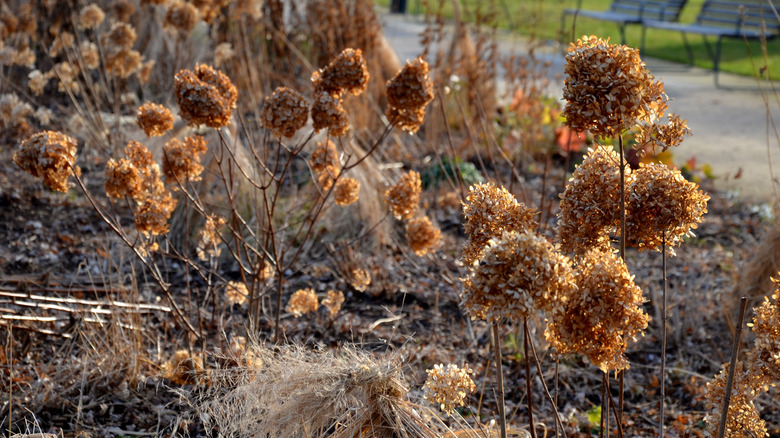
If harsh winter weather still has a grip on your area, there won't be much you can do to help your plant recover until things start to warm up. In that situation, the best bet is to continue to care for your hydrangeas in winter as you typically would. Take steps to protect the plant from future frost damage and freeze events by adding a fresh layer of mulch around the base of your hydrangea, which helps insulate the plant's root system and provide some valuable nutrients.
However, once the weather is warm enough, give damaged hydrangeas a thorough watering. At this point, it is also a good idea to provide the plant with a bit of fertilizer (not too much). Then, reassess the damage and continue to monitor the plant as the weather warms and your plants begins to leaf out again. If you decide to prune, it is important that only the portions of the plant that are completely dead be pruned away.