

How To Tell The Difference Between Annuals And Perennials In Your Garden
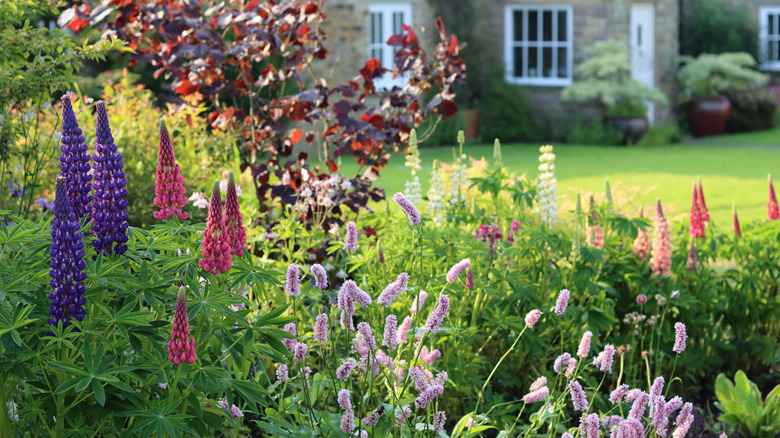
Annuals and perennials have distinctly different life cycles and growing habits. They both have a worthy place in your garden, but serve different roles. Most annuals complete their life cycle (germination, vegetative growth, flowering, seed production, and death) in a single season. Their growth is rapid, and their flowers are often showy and vibrant. They depend on their seeds for propagation and cannot handle harsh winters or freezing temperatures. Gardening with annuals generally requires starting seeds indoors in late winter or early spring, purchasing plants from nurseries, or directly sowing seeds in the garden.
Perennials, on the other hand, live through at least two growing seasons. They are suited to their location's winters and live season after season. Even though their above-ground vegetative growth may die off in fall or winter, you plant perennials once and they will come back in the spring. The term perennials includes everything from an oak tree in New England to flowering ground covers like golden star, and an agave in the Southwest. The key variable for a perennial is its adaptation to the climate. Some plants are perennials in the tropics or higher USDA hardiness zones, but function as annuals in colder climates. They are called tender-perennials because they die in the cold. Examples include marigolds, begonias, ferns, peppers, and geraniums. Some tulips are perennials, while others are annuals depending on the climate.
Finally, lest we forget the middle child of the plant categories: biennials. Biennials grow foliage the first year and flower and seed the next. Popular biennials are foxglove and hollyhock. Some vegetables, like spinach, are technically biennial, doing what's called bolting in their second year, during warm weather, before going to seed.
Tips and tricks for identifying annuals and perennials

Nurseries categorize their plants into annuals and perennials. Walking through the nursery and seeing which plants look like those in your garden is often an easy way to know what's what. Another convenient tool is using one of the best plant identification apps. Just point it at the plant and let your phone do the rest.
To identify annuals in the fall, wait for a hard frost and look for damaged plants. These will appear as if they spent the night in your freezer, their color and structure turned brown and mushy. They also pull up easily because annuals tend to have tender stems and shallow root systems. Perennials might lose their greenery in the fall, but their stems are often woody or at least quite sturdy. You can try digging and scratching around their roots to confirm this. Perennials will either have a woody root ball or a fibrous web, tubers, or bulbs. Other perennials, like gardenias and camellias, are partly or completely evergreen.
Springtime identification is easier because perennials will start growing as spring or summer arrive. Come spring, annuals will be long gone, a bare earth spot or scraggly stems the only indication it was ever there. Some gardeners use tags to mark those perennials that shed their above-ground vegetation in winter, so they know what's coming up the next year. Others use photographs to make an image map of their slumbering perennials.
How to support annuals and perennials in your garden
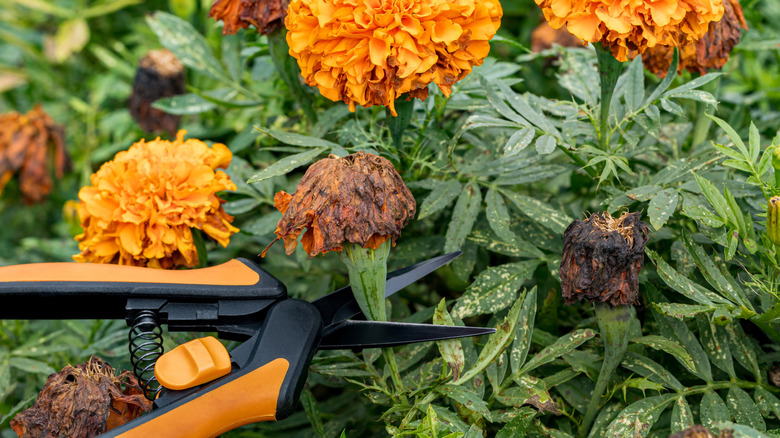
Because annual plants are the "burn hot and die fast" type, they benefit from a little TLC to slow down and extend their life cycle, including proper watering and feeding regimens. Otherwise, relying on annuals gets expensive. Bring potted plants inside, or drape a garden cloth over your annuals if you know a cold snap is coming. You can also extend their flowering cycle by deadheading and removing finished flowers. This will encourage the plant to make more flowers before going to seed.
While some perennials stay green year-round in mild climates, most die back to the ground when cold weather strikes, storing nutrients in their roots through winter before reemerging amid warmer temperatures. You can prune the dead vegetative material and compost it. Some perennials benefit from fall pruning of dead limbs, opening up the center crown for better circulation, or removing spring suckers to encourage more flowering and fruiting. Perennial flowers might be more understated, and they might not even flower in their first season. You can also often divide perennial roots to improve plant health, create space in your garden, or to replant elsewhere in your yard.
Perennials might cost more initially and may take longer to establish, but their long-term investment pays off by bringing consistent beauty and structure to the garden. They are often the backbone of your garden, and annuals are the adornments.