

A Lesser-Known Hydrangea Variety That'll Thrive In Your Clay Soil Garden
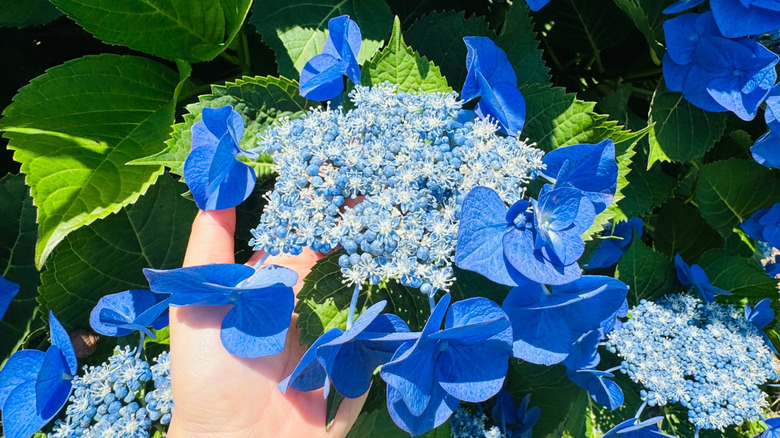
If you're a gardener who lives in a cooler climate and deals with clay-heavy soil, you might have trouble growing standard hydrangeas. Wonderfully colorful flowers that prefer lots of sun and acidic, well-draining soil, hydrangeas will often struggle to bloom if they are planted in thicker, clay-based soil. However, there is a lesser-known variety, called the mountain hydrangea, that actually thrives in cooler climates and clay.
This shrub flower (Hydrangea serrata) is native to the mountainous regions of Korea and Japan. A smaller shrub standing between 2 to 3 feet tall, it's notable for its lace cap flower structures that bloom in midsummer and come mainly in light pink or purple. Thanks to their native adaptability to rockier soil, the clay soil of your garden will be perfect for growing this particular hydrangea variety.
Mountain hydrangeas will easily grow in USDA hardiness zones 5 to 9. They grow best in cool climates, but will tolerate the higher summer temperatures of the higher zones if they are planted in the right spot. While it can be tricky to find in a nursery, you can purchase these flowering shrubs online for shipment directly to your waiting garden.
Planting and pruning your mountain hydrangea
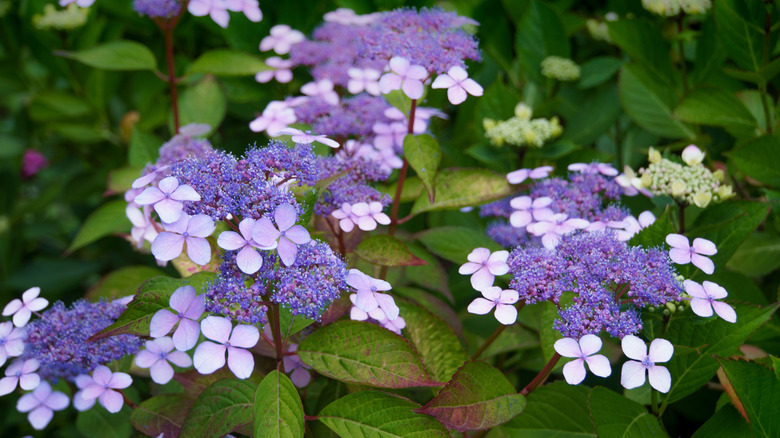
Because extreme heat can stress mountain hydrangea, it is best to plant them in early spring or late fall in a spot that gets sunlight throughout the day. In hotter zones, they need partial afternoon shade to avoid foliage burn.
Now, just because the mountain hydrangea will grow well in clay soils, that doesn't mean you should not do some adjustments before planting. In order to make sure that the soil drains well, which is essential for all hydrangeas, mix compost and other organic fertilizers into your soil. This will allow air into the soil and prevent the roots from getting waterlogged. Dig a hole that is twice as wide and slightly deeper than the root ball of the plant. Mountain hydrangeas should be planted 3 to 6 feet apart.
Once the plant is established, there are a couple of ways you can help keep your mountain hydrangea blooming for years to come. Any dead wood should be eliminated to maintain plant health, but otherwise it's best not to prune your plant if you can help it; if you have to, do so immediately after it blooms. Hydrangeas bloom from old wood, and poorly timed pruning, especially in the fall, can kill off any new growth. Lightly fertilize your hydrangeas in the spring. They don't need much, and if you've already pruned them correctly, you should see beautiful blooms that last all summer.