

How To Grow Thriving Sweet Potatoes In Your Vegetable Garden
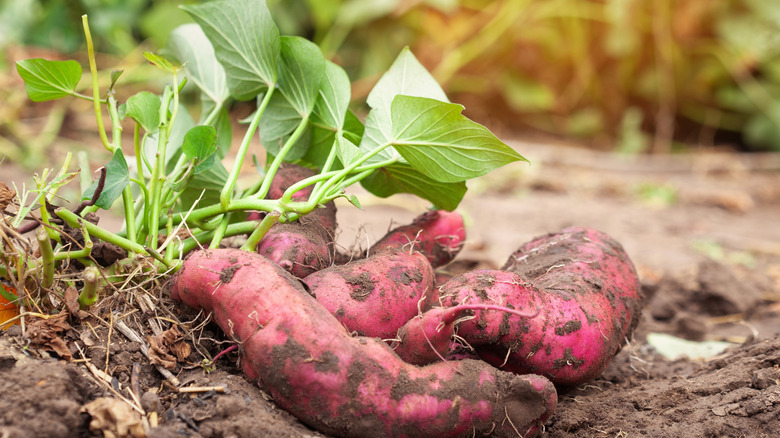
Sweet potatoes are a delicious root that, despite sharing a name, are not botanically related to white potatoes. The much sweeter tuber belongs in the morning glory family, while the potato belongs in the nightshade family. But both are known for their flexibility in the kitchen, and sweet potatoes are great roasted, boiled, baked, or fried. While they're one of the best plants to grow in your greenhouse, sweet potatoes also make a great addition to your garden because they're easy to grow and offer a long and abundant harvest time.
The first thing to know about sweet potatoes is they grow from sweet potato slips, not seeds. Slips are sprouts of other sweet potatoes you can buy from a variety of locations including the farmer's market, local garden centers, and online. Depending on the variety of sweet potato you grow, they can take between 90 and 135 days to mature, so timing your planting is key. Sweet potatoes require warm weather to grow, and frost, or any temperature below 50 degrees Fahrenheit, can damage their roots. Your soil should be at least 65 degrees Fahrenheit before you begin planting. Choosing the best layout for a thriving vegetable garden is key, so you will want to choose a spot in your garden with slightly acidic, sandy soil in full sun.
Planting, growing, and harvesting sweet potatoes in your garden
Once you have picked the perfect spot to plant your sweet potatoes, you will want to prepare the soil by adding compost or fertilizer. Create mounds in the soil about 6 to 8 inches tall and about 3 feet apart to provide ample space for growth. Place the slips deep into the mounds so just the leaves are sticking out of the ground. If you wish to use your sweet potatoes as companion plants, plant them with petunias as a low-maintenance flower and plant combo ideal for your container garden.
You will want to feed the slips with a high-phosphorus, liquid fertilizer a week after planting, and continue watering frequently after that. Consistently keep the ground moist at first, but reduce waterings as the season progresses to avoid root cracking. To prevent unneeded competition, frequently weed and use mulch to allow your sweet potatoes the best conditions to grow unabated. About three to four weeks after transplant, you can also side-dress your sweet potato plants. If you top-dress, you may interrupt root formation.
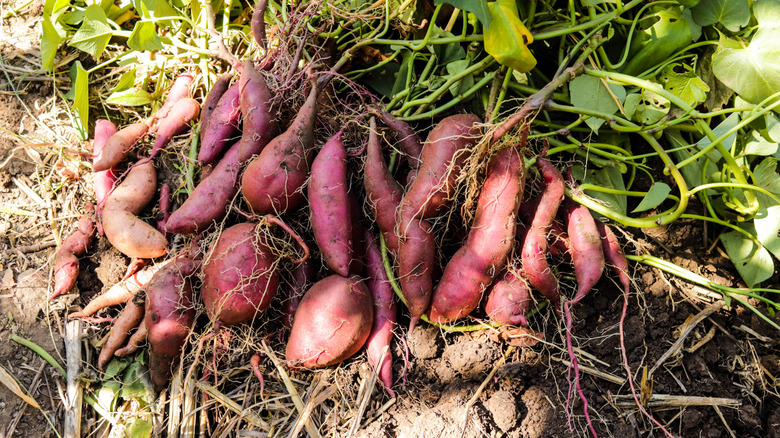
Once the leaves on your sweet potato plants start to yellow, they are probably ready for harvest. This should be about 100 days after planting, depending on the type of sweet potato you chose. To begin, loosen the soil around the plant and pull the plant's primary crown. This will allow you to dig up the roots by hand and pull the sweet potatoes out, handling them with care so as to prevent bruising. To cure them, you can leave the potatoes on a table outside in the shade for about two weeks with their roots still attached, as this will give them an even sweeter taste.