

Plant This Stunning Flowering Tree And Watch Cardinals Flock To Your Yard
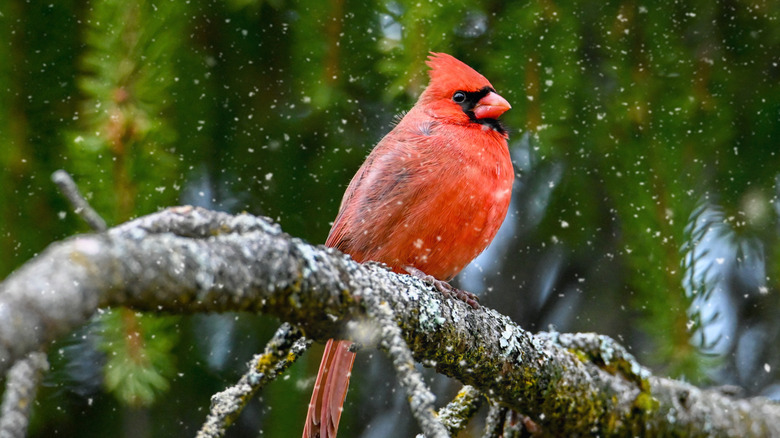
If you're interested in turning your backyard into a magnet for feathery friends, the right tree can make all the difference. Many ornamental trees are known to draw in specific kinds of birds and pollinators, thanks to their vibrant blooms, bountiful fruit, and penchant for housing acorns, bugs and other natural food sources. If you're looking specifically to attract cardinals to your yard, one tree stands as the clear choice: crabapple. Crabapple trees (Malus spp.) consist of about 50 different species, hardy from zones 3 to 9, known for their breathtaking spring blossoms and colorful fall fruit. These trees can elevate curb appeal, provide critical food sources for cardinals, pollinators, and local wildlife, and even offer tart fruits for anyone looking to create their own jams and preserves at home.
As summer shifts into fall and then winter, many natural food supplies dwindle. This causes cardinals to flock to reliable berry and fruit sources, such as the crabapple. The small, hardy fruits produced from this towering tree can often remain on the branches well into the winter, creating a buffet that attracts a variety of species. Furthermore, the crabapples' bright red-and-yellow sheen often remains visible against the backdrop of bare branches and white snow, signaling an easy meal for winter weather birds such as northern cardinals.
Needless to say, cardinals aren't the only birds attracted to crabapple trees. Cedar waxwings, robins, and bluebirds will also flock to your yard over the course of the year, and especially as winter approaches. Plus, crabapples tend to soften and sweeten after a frost, making them especially appealing as the winter season progresses.
Choosing and caring for a crabapple tree
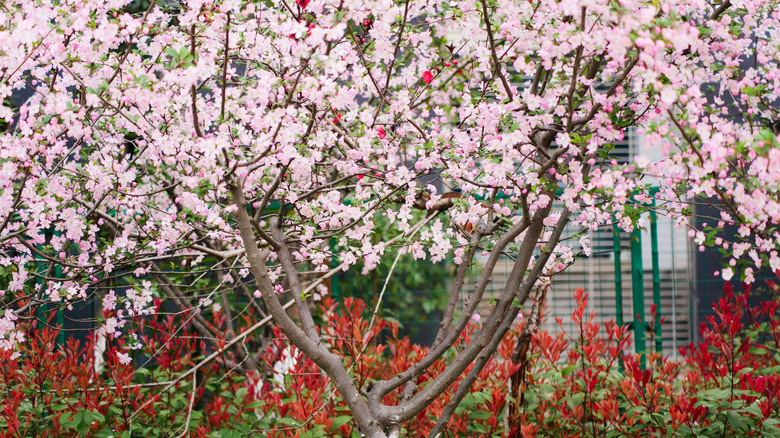
Once you're committed to picking up a crabapple sapling for your own yard, you'll still have to perform a bit more research to ensure that you wind up with the right tree. Some varieties of crabapple tree are bred for primarily pollinating purposes, and produce more showy flowers and fewer fruits. While these trees may be gorgeous in their own right, they'll do very little to invite cardinals to your yard. Some small-berried cultivars, like 'Red Jewel' and 'Adams' retain fruit all winter long, but the birds don't seem to care for them. Consulting a professional arborist or nursery employee should get you pointed in the right direction. If attracting cardinals is your main goal, you should focus on crabapple trees that produce abundant, small fruits that are easy for birds to eat. Different cultivars bloom and fruit at different times, meaning you can provide cardinals with yummy crabapples from early fall through late spring if you plant multiple trees.
In general, regardless of variety, crabapples thrive in full sun, well-drained soil, planted 15 to 20 away from other trees as the canopy spreads a great deal. Sunlight will be the number-one determining factor for bearing fruit: Crabapple trees that receive too much shade are yield less fruit, and run a greater risk of disease. Once your sapling is established, you'll find the trees are generally low maintenance unless pests are an issue for you. Water regularly during the growing season, perform light pruning in late winter, and mulch your tree once a year. Early spring is generally the best time to mulch your plants. Doing so is integral for retaining soil moisture and protecting against rot. When your trees are bare of fruit, you can bring cardinals to your yard by filling their feeders with sunflower seeds.