

Save On Water With A Clever Gardening Trick From Martha Stewart
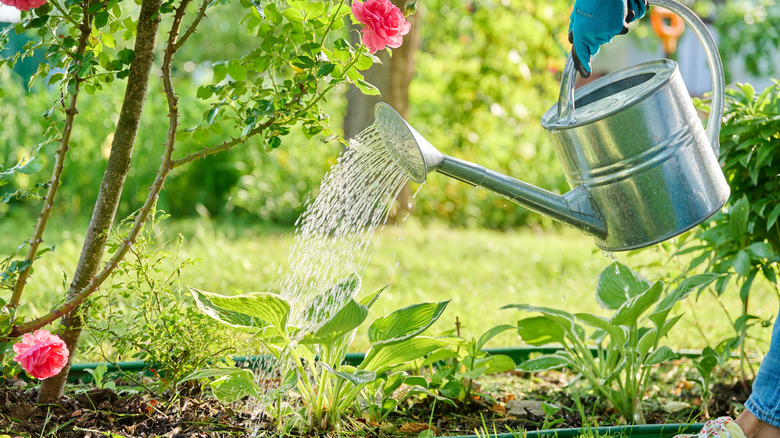
Keeping your garden lush and green requires careful watering, but responsible use of this vital resource is also important. Watering your garden during a heatwave or drought can make it tricky to balance the needs of your garden with those of the environment. Martha Stewart has a simple suggestion to help with this — use a moisture meter.
Moisture meters detect how much water is present in the soil. Some have extra capabilities, such as reading the soil's pH or temperature, while more basic ones focus solely on moisture content. By using the meter to detect how much wetness is in the soil, you can limit your watering to when the soil is dry, rather than when it looks dry. Even if the soil feels dry to the touch, there may be plenty of moisture deeper down where the plants' roots grow. You can even compare the readings across different parts of your garden, helping you water more efficiently where it's needed most.
Moisture meters not only reduce waste but also help you avoid common watering mistakes, like over- or underwatering, by providing precise readings. While scheduled waterings help you remember this important task, your plants do best when you water them only as needed. Rather than guessing which plants are wilted from heat or thirst, a moisture meter tells you exactly how dry the soil is.
How to use a moisture meter in your garden
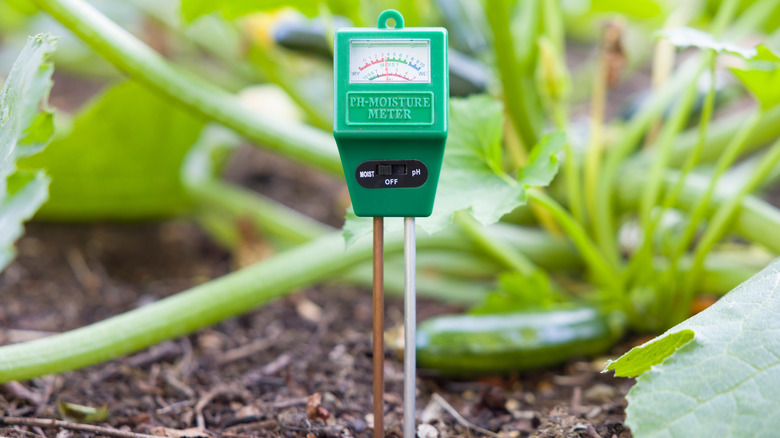
The first step is to make sure your moisture meter is meant for use in soil. There are other types of moisture meters designed to detect water in walls or floors, but they won't help you much in your garden. Soil moisture meters typically have a prong or probe that is designed to be pushed into the ground. This is attached to a screen, gauge, or dial that displays the results. If you aren't sure, check the packaging or product listing for mentions of soil specifically, as well as additional features.
Once you have your meter, it may be tempting to simply shove it into the soil, but there's actually a better way! Loosen the soil gently first with a garden fork or other tool so the prong can reach the proper depths and take accurate readings. Be careful not to disturb the plant's roots, but get as close to the roots as you can. The moisture content near the roots matters more than that found in nearby soil, since that's the closest water accessible to your plants. If you're using the meter for a shallower garden, such as this DIY kiddie pool container garden, keep in mind that the prongs may not need to go as deep.
Depending on the type of display, you may see the moisture content as a rating between one and 10 or as a percentage. The instructions for your specific meter will help you determine what each number means, but in general, higher numbers signify more water in the soil. Most plants will prefer moisture content in the middle range, but aim for the lower half of the scale if you have water-sensitive plants like cacti and succulents.