

Clever Tricks For Keeping Squirrels Away From Your Tomato Plants
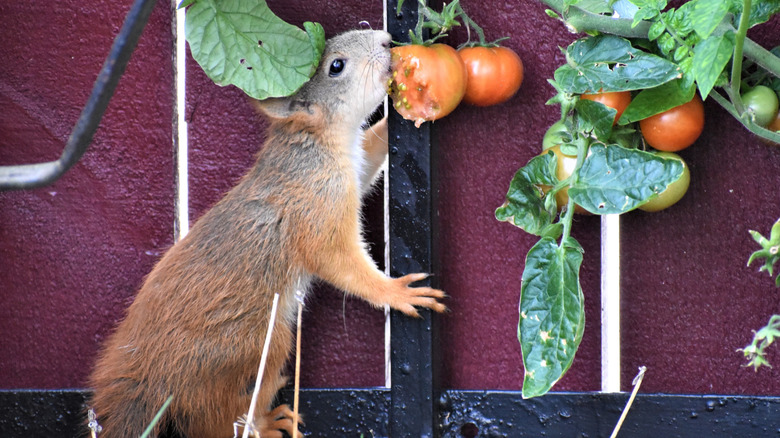
Have you spotted half-eaten tomatoes or other signs of squirrel damage in your garden? If so, you're not alone. Squirrels have a diverse diet, one that can often include various fruits and vegetables like the tomatoes in your garden. Thankfully, there are several tricks you can use to save the fruits of your labor, and it can be as easy as setting up decoys in your yard.
Although it can be easy to feel otherwise, squirrels aren't eating your tomatoes out of malice. Instead, these hungry critters are just looking for a quick meal, and your tomatoes are a delicious target. As a result, if you want to keep squirrels from eating from your garden, you can set up decoy feeding stations that they're encouraged to eat from. You can take a low-maintenance approach by adding squirrel-friendly plants to your yard, or you may choose to build a DIY squirrel feeder. Providing an alternative food source meets their needs and helps keep them from raiding your garden.
However, feeding stations take time to establish and may not fully stop squirrels from visiting your garden. For faster results, consider physical barriers as a form of protection for your precious tomato plants.
Try wildlife netting for longer-lasting protection
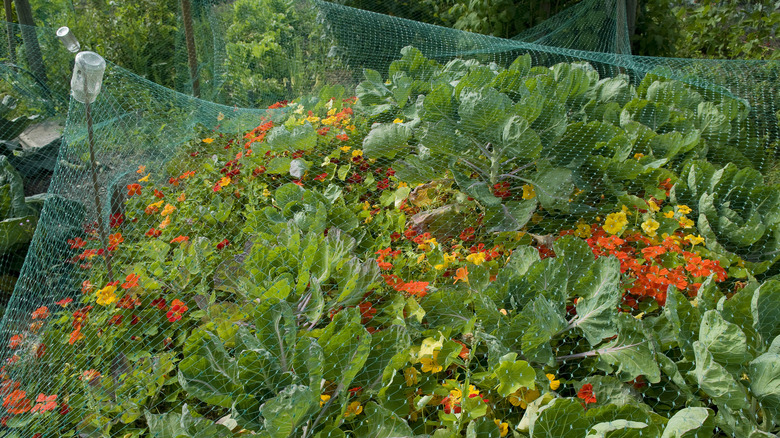
Wildlife netting is a staple tool for many gardeners. Not only can it be helpful in preventing squirrels from accessing your tomatoes, but you can also keep your garden safe from other hungry thieves, like birds or deer. So if squirrels keep stealing your tomatoes, wildlife netting can be an easy, effective solution.
Wildlife netting comes in two different forms. You can purchase netting that covers the entire plant, which is often used on fruit trees for protection against larger insects. Alternatively, smaller mesh bags protect just the fruit while keeping the rest of the plant accessible. Both options are effective for protecting fruits and vegetables; the right one just depends on your plants, pest type, and personal preference.
Although netting is a great way to keep unwelcomed guests from your produce, mesh that is too large can pose a hazard for wildlife. Before making any purchases, it's essential that you first check if the wildlife netting you have is safe for birds. You want to opt for netting with a smaller mesh to reduce the likelihood of birds becoming tangled. With the right mix of decoys, feeders, and wildlife netting, you can enjoy fresh, squirrel-free tomatoes all season long.