

The Common Yard Waste That Helps Attract More Owls To Your Outdoor Space
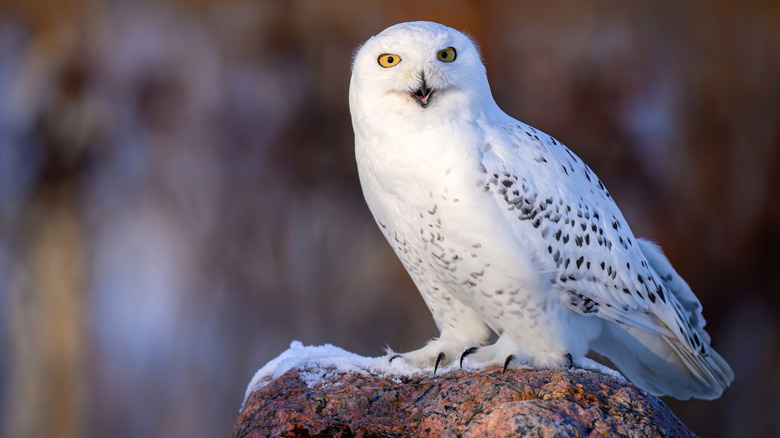
Whether you're attracting owls to your yard for natural pest control or simply because you enjoy seeing and hearing them, knowing what they're after can help draw them in. Mostly, they're after those things that help them thrive: food, water, and shelter. They also need places to rest and observe their surroundings. Large trees that are dead or dying are a favorite hangout spot for many owl species. In some cases, they may roost or hunt from branches high up in a tree. Cavity nesters such as Eastern screech owls, saw-whet owls, and barred owls often nest within the holes and crooks in old trees, so these trees are of crucial importance to owls and other wildlife like bluebirds, bats, and flying squirrels.
If you have a large property with trees in varying states of decay, leaving them up is bound to bring in owls, if they're not already present. Many owls are nocturnal so it's possible you just haven't seen your feathered neighbors yet. You don't need to keep the trees that pose a risk if they fall. But consider keeping dead and decaying trees that stand where they're unlikely to cause harm to people, structures or property, including neighboring properties. Likewise, diseased trees that can't be pruned or have certain easily spread ailments like Dutch elm disease or an emerald ash borer infestation should be properly removed.
Benefits of leaving dead trees on your property
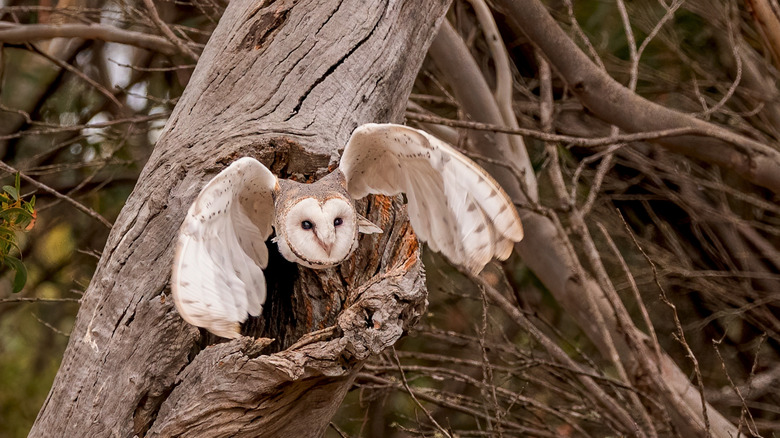
Leaving dead trees stand in an area where they can safely decay provides so many benefits to owls, as well as other tree-dwelling wildlife like smaller birds and squirrels. Dead trees are also home to all sorts of insects and rodents that end up being food for other wildlife, and ultimately potential food for owls. It's a food chain and ecosystem in action, all within a single dead tree.
The benefits don't stop with snags and cavities. As trees limbs fall from decaying trees, they also create a wildlife haven in your yard. This area can be a habitat for small creatures such as mice, which owls eat. Such debris is also helpful to other ground-dwelling creatures. You could even build a winter habitat for pollinators and other wildlife by leaving fallen tree limbs, logs, and decaying leaves in place to slowly return back to nature.
Even as a dead tree comes to the end of its usefulness for owls, it's still helpful. fungi and bacteria break down dead wood, that organic matter eventually turns into a compost-like material that nourishes the soil. Those nutrients feed plants, including other trees, that may be growing in the soil. In general, it's far better for the ecosystem to leave dead and dying trees in place and in peace.