

How To Combat Bermuda Grass When It Starts To Take Over Your Lawn
We may receive a commission on purchases made from links.
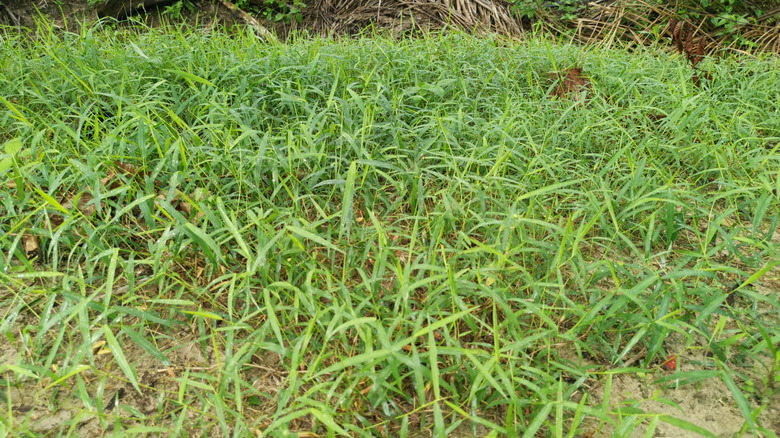
It can be difficult to choose which type of grass seed is best for your lawn, and Bermuda grass is one that tends to cause mixed emotions. People usually have one of two reactions: they either love it and consider it a great grass for the lawn, or they hate it and consider it a weed. Which side of the fence you're on usually depends on the region where you live. Since Bermuda grass is a warm-season perennial grass, you will see it used more often as a lawn grass in southern states like Georgia, the Carolinas, and Florida. It is also a popular choice for livestock pastures and golf courses in the south. As you move north, you will notice a transition in opinion from viewing Bermuda grass as an optional turf grass to seeing it as an invasive weed that needs to be removed from the lawn.
If you have a lawn that's being invaded by invasive, fast-growing Bermuda grass and you want to get rid of it, there are a few things you can do. These include using special herbicides or combinations of herbicides containing glyphosate, hand pulling the grass, or digging it up with a tool. Certain mowing techniques can also be an effective way to control pesky weeds like Bermuda grass, along with this must-try removal tip to prevent weeds from taking over your lawn. Several homeowners stated on Reddit that it took them years to control or eliminate Bermuda grass but that determination and persistence worked eventually. Meanwhile, others simply threw up their hands.
Best methods to get rid of Bermuda grass
The method you choose to eliminate Bermuda grass has a lot to do with how much grass you have, how established it is in your yard, and how much physical work you're willing to do. If you're not averse to using chemicals, you can use a glyphosate-containing herbicide to kill the grass. But if you hate using poison, read on.
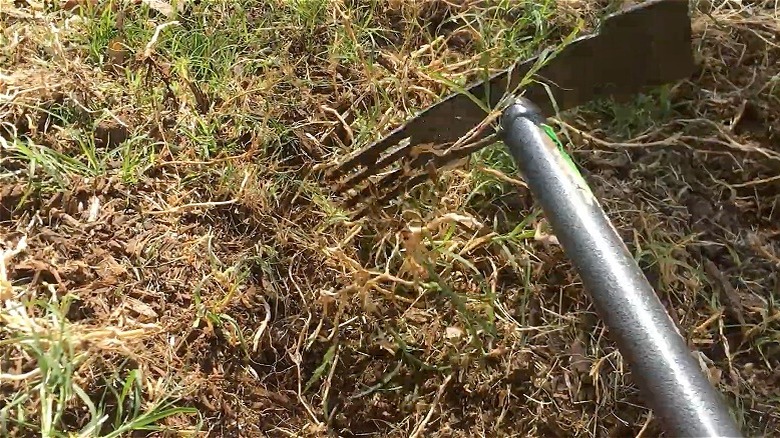
If the grass is a relative newcomer to your yard and still scant, you can employ easier methods like hand pulling or tools, such as this WORKPRO Hoe and Cultivator Garden Rake that effectively digs the Bermuda grass up by its roots. As you dig up the weeds, be sure to put them in a wheelbarrow or trash bag and dispose of them properly to prevent them from reseeding wherever you are digging. Digging up the weeds is a more physically intensive method, but it works very well, especially if you are careful to get the roots too.
Smothering involves placing heavy cardboard or thick mulch over the offending grass, leaving no spaces or holes. This deprives the grass of sunlight, which prevents it from photosynthesizing, causing it to die eventually. With smothering, it is possible for the Bermuda grass to make its way through or around the covering. So, you may want to try this method in a small area first to test its effectiveness and make note of the length of time the grass needs to stay covered for the method to work. Another approach, solarization, can only be done during the hot months. This involves placing clear plastic over the patches of Bermuda grass, which intensifies heat and sunlight, killing the weeds underneath. You can expect the solarization method to take a few weeks of consistent coverage to be effective.