

Don't Throw Away Old Potting Soil, Use It To Attract More Pollinators To Your Yard
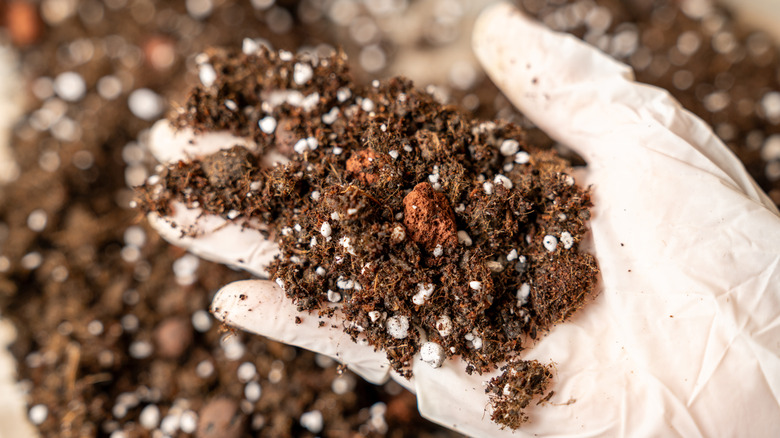
Old potting soil, whether it's still in a pot or sitting in a partly used bag in the shed, isn't entirely useless. There's no need to toss it when it could actually come in handy for some beautiful, beneficial plants that attract pollinators to your yard. Even if that old or used potting mix is depleted of nutrients and has lost its porosity, that's not necessarily a bad thing: Certain pollinator-friendly flowers thrive in just about any soil conditions. Flowers such as bee balm (Monarda didyma), yarrow (Achillea millefolium), and goldenrod (Solidago spp.) attract all sorts of pollinators and aren't fussy about the soil they grow from.
You can also use old potting soil to improve clay-heavy soils before planting pollinator-friendly flowers. Mixing the two makes the clay less compact, improving drainage. It can also be used as a top dressing to add more growing medium in a space where perhaps there's not quite enough soil, such as in a container garden designed for pollinators.
Note that, if your old potting soil held plants that were diseased or riddled with pests, you may want to skip reusing it, however: It's best to not pass along problems from plants of the past to the plants of your present and future. If you really want to use it, you can sterilize diseased soil — heating it up through solarization. That technique also happens to be a great way to repurpose old soil and mulch bags, too.
Using old potting soil for pollinator-friendly plants
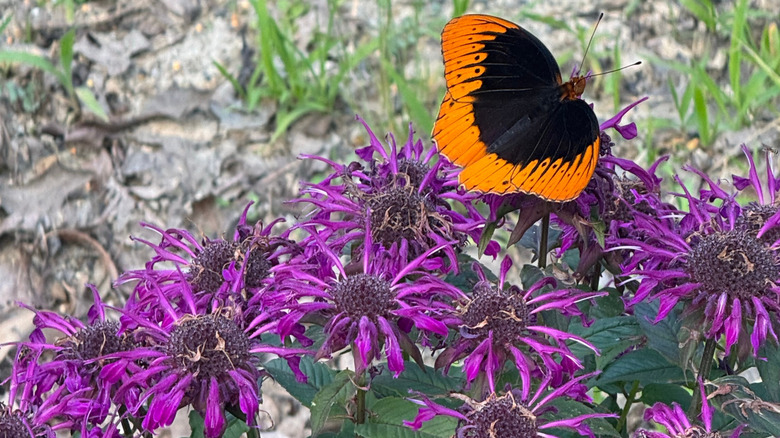
Using old potting soil for fuss-free flowering plants that actively attract butterflies, humming birds and other pollinators is a win-win. It's making use of something that might otherwise get thrown away, and it can even improve particularly poor soils. But it's important to prepare it properly before planting.
If you have a lot of old potting soil, as might be the case with last year's container garden pots, dump it out on a tarp and spread it out, ensuring there are no pests burrowing within it or mold that needs to be dealt with. If it's really dry, moistening it first will help keep dust to a minimum and let you break up any clumps. If you've poured out several partial bags, soil from various containers, mix it all together so it's a fairly consistent blend. You can then blend this mix with new potting soil, or sprinkle it on top of your flowerbeds or container pots, directly around pollinator-attracting plants that aren't particular about their soil conditions. If the old potting mix contains perlite, that can help improve soil structure a little if you mix that into compacted soil before adding new plants.
If you're not keen on adding old soil to new, or simply have more than you need, you can always dump old potting soil into your compost, enhancing the brown organics. Again, avoid putting diseased, pest-ridden, or moldy soil into your compost bin.
If you're looking for more pollinator attractors that grow in lean soil, try coneflower (Echnicea purpurea), or butterfly weed (Asceplius tuberosa). Coneflower is one of those easy-to-grow flowers that add color to the garden, plus goldfinches enjoy eating the seeds later in the season if you leave the seed heads intact.