

Grow This Kitchen Spice To Help Bring More Pollinators To Your Garden
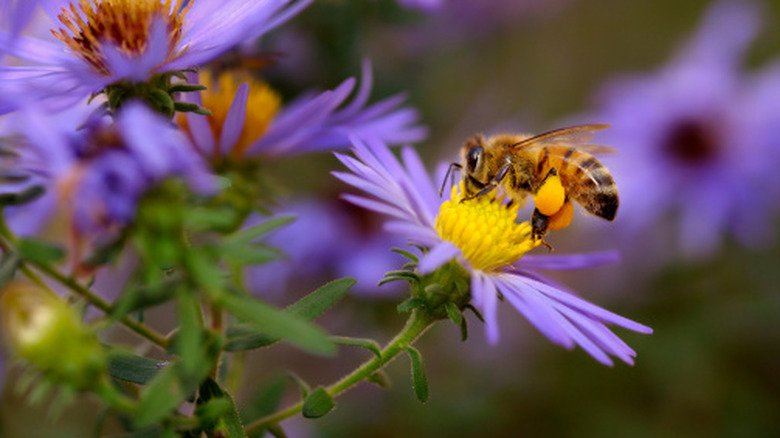
You may be familiar with the aromatic, golden-brown seasoning cumin (Cuminum cyminum), but do you know about black cumin? The seeds of the black cumin flower (Nigella Sativa), while not actually a cumin, are used as a zesty spice in Middle Eastern, North African, and Indian cooking, and the plant is a therapeutic herb with a variety of wellness applications. In the garden, it's a colorful flowering annual herb that pollinators also like adding to their foraged meals. Honeybees are the main pollinators of black cumin flowers, likely due to the plant's abundant and accessible pollen-covered stamens and numerous, long-lasting star-shaped blossoms ranging from blue to white. But it's not just honeybees; small pollinators like ladybugs, butterflies, and bumblebees also will visit black cumin flowers.
Many pollinators, especially honeybees, will forage for nectar and pollen on a single type of flower each time they leave the hive. For that reason, plant black cumin in patches throughout your garden. This makes its flowers easier to find and allows picky pollinators to move efficiently from one flower to another. Plant clusters near flowering vegetables and plants that also need pollinators — peppers, squashes, and tomatoes — and you'll give the bees a reason to come back for more visits. If you struggle with aphid infestations, avoid toxic pesticides that harm pollinators and instead plant a black cumin patch nearby to attract ladybugs, a natural aphid predator. It's also good planning to establish black cumin in areas where it can expand: Black cumin can self-seed and spread if given the chance. Plant in areas where it won't outcompete other plants, thin as needed in the spring, and remove seed pods after a plant matures and use the seeds in your cooking, or remove blooms before they go to seed to control propagation.
How to grow and maintain black cumin
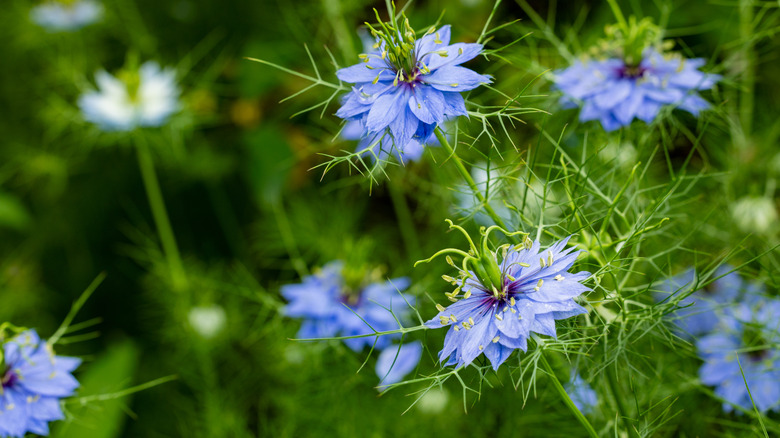
Black cumin prefers warm, well-draining soil and full sun. For growers in the U.S., black cumin can be grown as an annual in USDA hardiness zones 3 through 9, reaching maturity in 90-100 days. The seeds can be sown directly into the garden two to three weeks before the last frost date, or after frost danger has passed. Just be sure the length of your growing season (the number of frost-free days) is long enough for the plant to complete its life cycle.
If you have a short growing season, start your black cumin seeds indoors four to six weeks before your last frost. Sow the seeds close to the surface, with just slightly covering them with soil, and don't skip the crucial step of keeping your starts warm. Once the young herbs are outdoors and growing with earnestness, give them 12 inches of space. Mature plants have multiple branches, becoming slightly bushy, and reach 12-18 inches in height. Sow or transplant multiple successions every 3-4 weeks for continuous pollen production.
Black cumin has a strong taproot, making it drought-tolerant and only requiring moderate watering (aim for once a week) except during extreme heat when you may need to pay more attention. Flowering time varies based on climate and conditions, but expect buds to open 60 to 70 days after germination and last 2 to 3 weeks. Black cumin isn't too fussy with soil either, just as long as it isn't too soggy, causing the taproot to rot. Overall, it's a great low-maintenance, fuss-free herb that beginners can confidently grow, and a wide variety of pollinators can rely on.