

Stop Guessing: Here's How To Pick The Perfect Type Of Hydrangeas For Your Yard
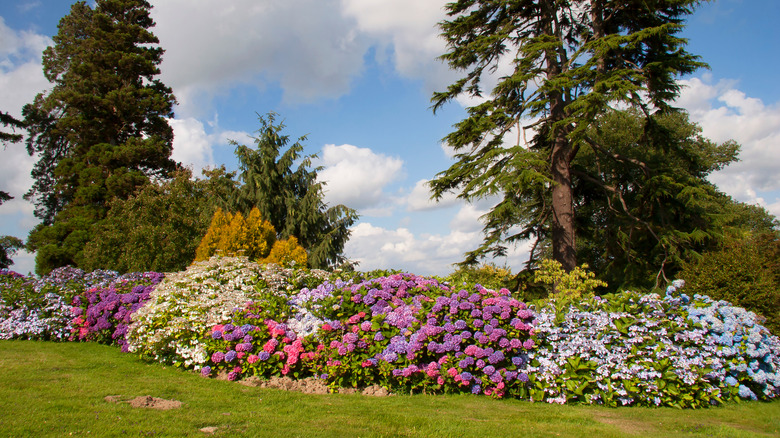
One of the most popular flowering shrubs found in homeowners' gardens and yards are hydrangeas with their large, puffy blooms in bursts of pink, purple, white, and blue. Gardeners use these colorful shrubs to make a statement by planting hydrangeas with this stunning ground cover, provide accents in a flower bed or container garden, or even to create a hydrangea privacy hedge. But not all hydrangea varieties are alike, when it comes to whether they'll thrive in your area, when they bloom, or how you want to use them.
Before you plant any hydrangeas, you'll want to take several factors into consideration. The best hydrangea for your yard will depend on the size of the area you are planting, the amount of sunlight a planting area receives, your USDA plant hardiness zone and climate, and of course personal preferences. Your garden goals also play a part in choosing the right hydrangeas. Do you want something that can climb trellises, or that thrive in containers? Are you looking for tons of color? Would you rather prune hydrangeas in late winter or the end of summer? There is likely a hydrangea type for every goal and growing situation you have in your garden.
Choosing the right hydrangeas for your growing conditions
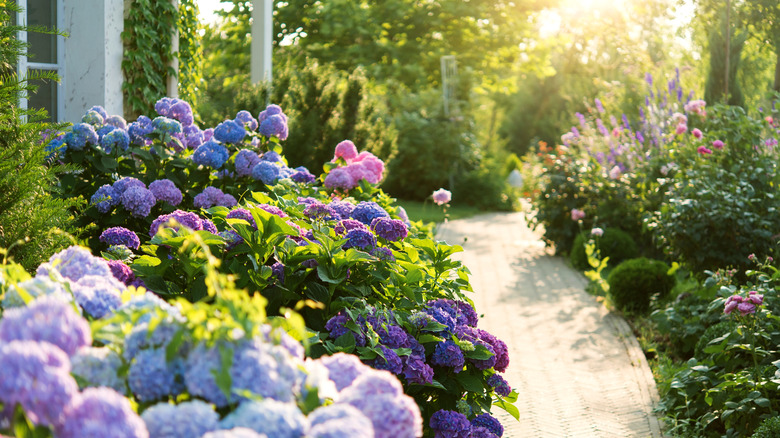
The growing conditions in your region and yard might be the most influential factor on which hydrangeas you choose. This includes the overall climate in your part of the world, microclimates, and specific sunlight and shade patterns in your yard. If you live in a warmer region, such as the southern parts of the U.S., choose heat-tolerant options, like smooth hydrangeas (Hydrangea arborescens zones 3-9) and the even more heat-tolerant bigleaf hydrangeas (Hydrangea macrophylla zones 6-11). While bigleaf varieties will grow in colder climates, extra chilly winters may stunt spring blooms, since they grow on old wood starting in early fall. Afternoon shade will likely be a hydrangea's best friend in warm, dry climates, especially during the hottest months of the year. This can influence which side of the house, or under which trees, you'll do your planting.
On the other hand, in cooler climates, plant cold-tolerant hydrangea varieties from among the panicle (Hydrangea paniculata zones 2-8) and smooth (Hydrangea arborescens zones 3-9) species. Some varieties can handle temporary temperature drops as low as -30 degrees Fahrenheit, making them ideal for cooler areas in the northern part of the U.S. Plant in well-draining soils with access to plenty of sun.
Some yards just don't have areas that receive full sunlight. Don't despair; many hydrangeas thrive in partial shade or under dappled sunlight. These shade-loving perennials brighten up these corners of your garden. Species that like to stay of the sun include oakleaf hydrangea (Hydrangea quercifolia zones 5-9), bigleaf hydrangea (Hydrangea macrophylla zones 6-11), and climbing hydrangea (Hydrangea petiolaris zones 4-8). These plants don't mind cool, moist soil and can even bloom longer than their sun-loving counterparts.
Size and function can decide what you plant
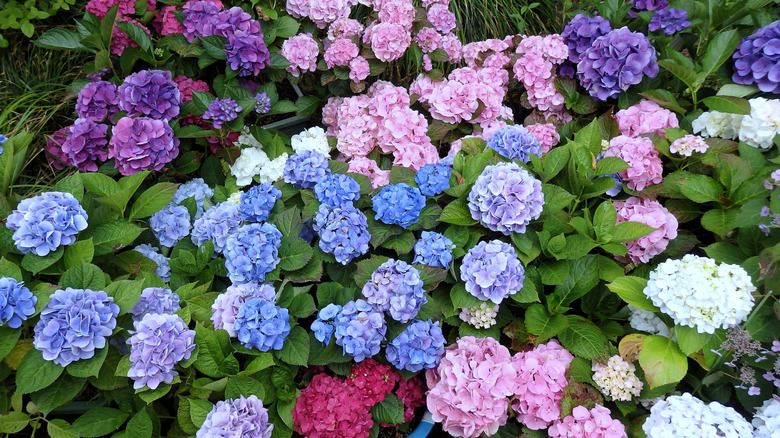
Other factors to consider when choosing hydrangeas are the size of the planting area and what purpose the plant serves in your yard, garden, or flower bed. For example, will it be merely decorative, or is it serving as a hedge? Do you have a lot of room to fill, or just a small patio?
If you don't have enough space for a large hydrangea bush, you can still enjoy the beauty of hydrangeas by planting compact varieties and cultivars. Many compact varieties come in at about 3 to 5 feet wide and similarly tall. Dwarf hydrangeas are even more compact, growing 2 to 3 feet tall, and work well in containers. Prune occasionally to keep them compact, and water regularly, especially on hot days, as plants in containers dry out more quickly than those in soil.
If your goal is to attract more pollinators, concentrate on lacecap hydrangeas. The "mophead" types of hydrangeas often have many sterile florets, where the lacecap's fertile florets are easily accessible. These are a huge hit with pollinators, as their blooms are also more open and separated than mopheads, making it easier for bees, butterflies, and hummingbirds to reach the nectar and pollen.
When it comes to creating a living privacy hedge, there are several varieties that work beautifully. Panicle hydrangeas (Hydrangea paniculata) are a popular choice, as they are low-maintenance and can reach astounding heights of as much as 15 feet. Some varieties can even reach 25 feet! The 'Limelight' cultivar creates a dramatic 6-foot hedge, boasting color-changing flowers that bloom bright lime-green in spring, transforming from white to a rich, dark pink by fall.