

Simple Tips To Help Your Orchids Thrive When Growing Them Outdoors
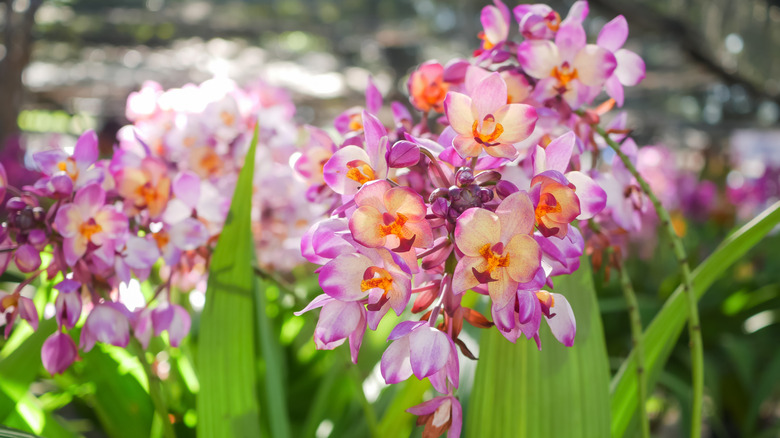
There are few plants as spectacular as an orchid. With approximately 28,000 different species of these elegant flowering plants, there are plenty of options. While more famously one of the best plants to grow in your greenhouse or indoors, orchids can grow well outside, given the right attention. They are a great addition to your garden, where they can attract more pollinators. Orchids such as Phaius, Cymbidiums, Spathoglottis, and more can thrive outdoors under the right conditions and with proper care; you just have to know how best to treat them. In fact, when outdoors, orchids receive better air circulation and natural light, which promotes beautiful blooms, and can help ill plants heal faster.
The first thing to take into account when caring for orchids outdoors is to make sure your orchid can actually survive in your climate. If you live in a warm, humid climate in USDA plant hardiness zones 8 and up, there are many orchids you can successfully plant outdoors, as most are tropical plants. If you live outside these zones, you may be able to plant a cold-hardy orchid instead, such as Cypripedium — hardy down to zone 2 — or Calanthe, hardy to zone 6.
You can also grow almost any orchid outdoors in a container, bringing it inside when temperatures gets too cold or hot. For example, for Cymbidiums, as long as the temperature is between 40 and 90 degrees Fahrenheit, your orchid should be fine outdoors (with proper sun and watering conditions). For most other non-cold-hardy orchid species, including Spathoglottis and Phaius, nighttime temperatures must remain above 55 degrees Fahrenheit for the plants to survive outside. Essentially, in many parts of the country, you can set these plants outdoors from about late spring to mid-fall.
Caring for your outdoor orchids
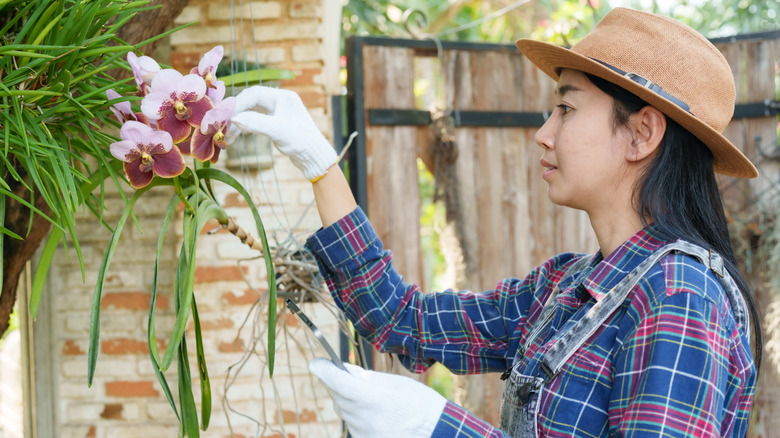
Regardless of the orchid species you're growing, some outdoor care needs are consistent. First, you have to find the perfect place for them. Typically, you should place your orchids in a shady spot, as most orchids need either half or full shade. If you don't have natural shade in your garden, protect your shade-loving plants from the harsh sun with an artificial shade made from old fabric or shade cloth. Additionally, you should place your orchids in a spot that's well-protected from wind, as strong gusts can damage the branches or flowers. Generally, you're looking to avoid extremes: Not too wet, not too much harsh sunlight. Lastly, consider adding some sort of structure, such as a trellis, to hold your orchids off the ground and provide support. If you want (and if your climate is warm enough to do so year-round), you can try growing epiphytic orchids directly on trees, as they grow in the wild.
For orchids grown in soil, it should be well-draining with plenty of nutrients mixed in, so incorporating organic material, like bark chips, is a good idea. Once your orchids are planted outside, regular maintenance is needed to keep them happy and healthy. First, you should check the soil daily and water when it feels dry 1 to 2 inches down. Additionally, monitor the humidity with a hygrometer. If the humidity is below 40%, try using an automated misting nozzle to provide the correct conditions. Orchids in container pots should be watered daily, or sometimes twice each day in drier climates. In addition to staying on top of your outdoor orchid's moisture needs, regularly inspect your plant for damage, infection, or pests so you can treat any issues promptly.