

Think Twice Before Planting These Popular Berries Together In Your Garden

It's easy to think of red raspberries and black raspberries as similar enough to plant wherever they thrive and wherever you like. Both red and black raspberries are delicious and healthy, offering fiber, antioxidants, and vitamins C and K. In the garden, they are each types of plants that attract a more diverse variety of birds. But as good as they are mixed together in a dessert or salad, one place red raspberries and black raspberries don't belong anywhere near each other is in the garden. While these two plants have similar growing needs, they don't do well as garden companions, mainly due to the risk of diseases that red raspberries can transmit to black raspberries.
Red raspberries are susceptible to a number of viruses and fungal infections, so much so that some gardeners may consider planting other berries instead. In fact, they can host latent infections, showing no signs or symptoms, that can be transmitted to healthy plants. In the meantime, black raspberries are not only susceptible to inheriting these unseen infections, it impacts them more severely than their red counterparts, and you will not have seen any signs that there was even a problem until it's too late. Instead of planting a big hedge of black and red raspberries, you want to space them very far apart.
How to grow black and red raspberries successfully
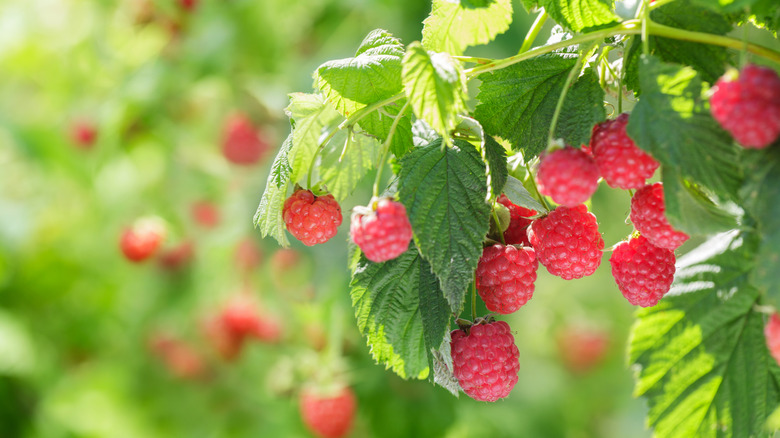
If you want red raspberries and black raspberries in your garden, you will have to plant them in two totally different places. Plant nurseries recommend keeping these two plants at least 100 feet apart for the best and safest growing results for both berry bushes. It is better for the health of the black raspberries to plant them upwind of the red raspberries since plant viruses can be transmitted by aphids and pollen in the air, which can be blown from one plant to another. In fact, a 2022 study out of the Czech Republic found that wind-borne aphids and nematodes are the most serious transmitter of plant viruses from red raspberries. You can help by banishing aphids from your garden with two kitchen ingredients: Water and pure Castile soap. Inspecting your red and black raspberry bushes daily can catch problems before they turn into infestations.
It's not just the two raspberry plants you need to pay attention to. Plant red raspberries far from established blackberry bushes which can spread curl virus. Clear any wild bushes before planting red or black raspberries to further reduce the spread of unseen infections. Finally, don't plant raspberry bushes where nightshades like tomatoes, potatoes, or eggplants were planted the previous year.
When you have pruned or worked with one type of berry bush, it is important you clean and disinfect garden tools before moving to others, even if they are 100 feet or more apart. Cross-contamination can happen via pruning shears, trowels, and other gardening tools. Using this household staple makes disinfecting garden tools a breeze and ensures the health and safety of your berry bushes.