

How To Prevent Bottom Rot On Your Homegrown Tomatoes
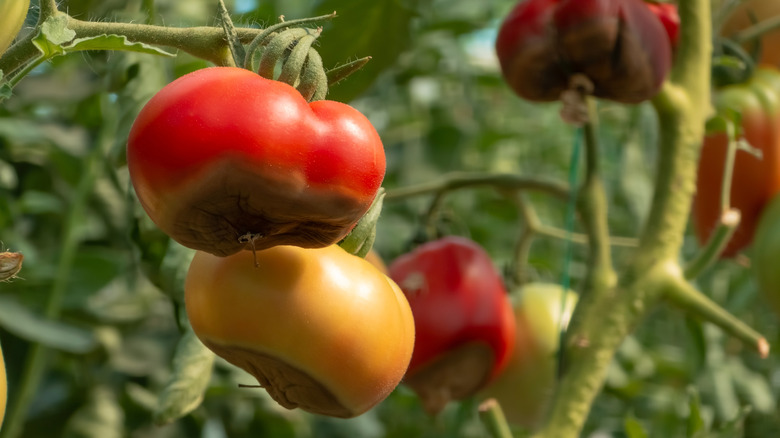
Tomatoes are one of the most commonly grown vegetables in a garden, and for good reason: they are delicious and can be used in a variety of dishes, both right off the vine and cooked. Unless they're all black, squishy and moldy looking on the bottom or inside. There are many different varieties of tomatoes, and they can be finicky, so choosing the best tomato plant for your garden is an important first step. But even when you've got the right plants, your tomatoes can still suffer blossom end rot (BER) if you don't take certain precautions throughout the growing season. Also called bottom rot, these black or brown, sunken spots on tomatoes are generally caused by a calcium deficiency in your plants, usually caused by inconsistent watering inhibiting calcium absorption. So, while disappointing, BER is an issue that can be fixed, often before the next round of fruit is ready.
Essentially, tomato plants draw calcium (which is water soluble) from the soil, but the nutrient needs to move through the plants to the leaves and fruits consistently in order to build healthy cells and maintain strong skins. Calcium also aids in healthy plant growth and regulates transpiration for proper internal moisture control. Without all this going on regularly, the cell membranes of the fruit collapse and you get bottom rot.
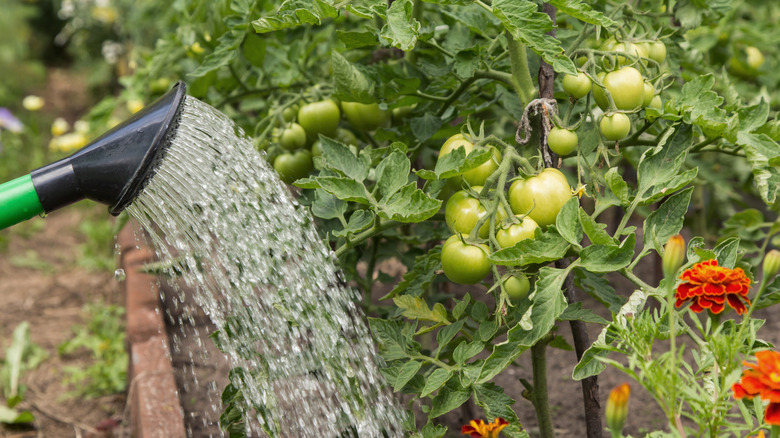
While BER can stem from a lack of calcium in the soil, more likely, it's the result of one of the major mistakes made when watering your garden: over- or underwatering. The right amount of water is a big factor in preventing BER; during the fruiting stage, tomatoes need about 1½ inches of water each week. Besides the right amount, a consistent watering schedule is critical.
Amending your soil in advance can help prevent bottom rot
Beyond a careful watering routine, there are several maintenance measures you can take to prevent BER from destroying your tomatoes. The soil's pH level is important — despite the fruits themselves being mildly acidic, the plants prefer a near-neutral soil. Keeping it between 6.2 and 6.8 is key for most varieties, and calcium helps increase the pH of acidic soil. You can have the soil professionally tested, or use a highly-rated pH tester that gardeners love. Based on the results, you can add high-calcium or dolomitic lime to the soil in recommended amounts two to four months before planting tomatoes, or try eggshell water, a two-ingredient at-home calcium amendment. After planting, use a nitrate fertilizer to feed the plant, avoiding over-fertilization that can burn plants.
It may sound like tomatoes are fragile and difficult to grow, but this is simply not the case. When you know what to do to prevent BER, the likelihood of it developing is greatly reduced. That said, there are other common instigators of BER to watch for, including drought stress, overfertilizing, low (acidic) pH levels, and root damage, all of which can reduce the amount of calcium the tomato plants are receiving and using. Some tomatoes also seem to be more vulnerable than others to BER. For example, heirloom varieties and San Marzano-style plum tomatoes seem to be more susceptible, whereas cultivars like 'Mountain Spring,' 'Mountain Fresh,' and 'Mountain Delight' are reportedly more resistant.
Finally, remove BER-afflicted tomatoes as soon as you spot them, so the plant can divert its energy to providing more fruit. If you've made the proper corrections early enough, you'll have plenty of healthy new fruit in the same season.