

How To Prevent Bottom Rot On Your Tomatoes Before It Ruins Your Plants
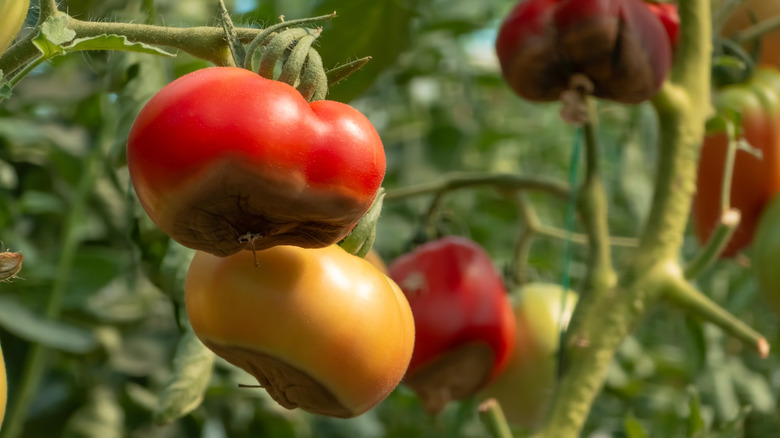
Tomatoes are one of the most commonly grown vegetables in a garden, and for good reason: they are delicious and can be used in a variety of dishes, both right off the vine and cooked. There are many different varieties of tomatoes to choose from, like Sungold cherry tomatoes, a tasty and easy-to-grow tomato that you should consider for your garden. But one thing all tomatoes have in common is that they can get blossom end rot (BER). Also called bottom rot, these brown, sunken spots on tomatoes are caused by a calcium deficiency in the plant.
BER is not necessarily from the soil around the plant having too little calcium. More likely, it's the result of one of the major mistakes you can make when watering your garden, like overwatering or underwatering. Other common causes of BER can include drought stress, too much nitrogen in the fertilizer, low pH levels, and root damage, all of which can reduce the amount of calcium the tomato plants are getting. Hot temperatures and too much sunlight can also lead to prime conditions for BER development. It may sound like tomatoes are fragile and difficult to grow, but this is simply not the case. When you know what to do to prevent BER, the likelihood of it developing is greatly reduced.
How to prevent blossom end rot from attacking your tomatoes
There are several things you can do to prevent BER from destroying your tomatoes. You can also use these measures to protect other susceptible fruits and vegetables in your garden, such as watermelons, cucumbers, eggplants, and peppers. First, know that the pH level of the soil is important to the health of your tomato plants — keep it between 6.0 and 6.5. Before bringing your seedlings outdoors, don't forget this important step: testing the soil's pH. Based on the results, apply high-calcium or dolomitic lime to the soil in the recommended amount about two to four months before you plant your tomato plants. Then, after planting, use an amount of fertilizer that also corresponds to the original test results.
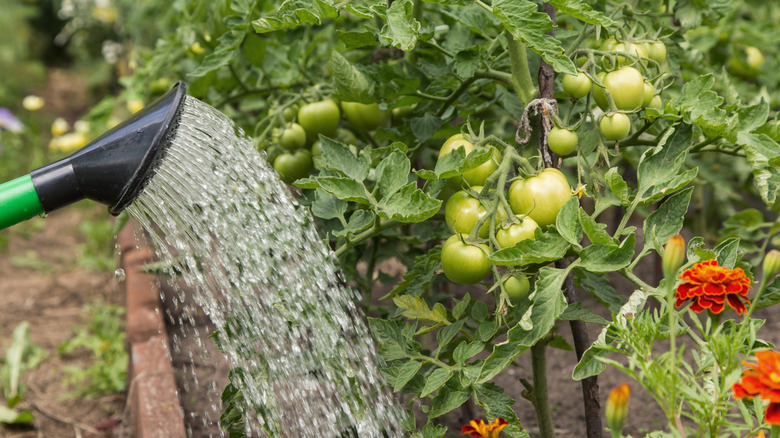
The right amount of water is a big factor in preventing BER; during the fruiting stage, tomatoes need about 1 and 1/2 inches of water each week. Besides the right quantity of water, a watering schedule is another critical factor. Keeping to a regular watering schedule can eliminate fluctuations in the moisture levels of the soil, a common cause of BER, so get into the habit of checking the soil for dryness to keep moisture levels as stable as possible. Another important thing to realize is that some tomatoes seem to be more vulnerable than others to BER. For example, heirloom varieties and tomatoes with a plum or pear shape seem to be more susceptible, whereas Mountain Spring, Mountain Fresh, and Mountain Delight cultivars are apparently more resistant.