

Add Privacy To Your Shady Yard With This Stunning Spring-Blooming Hedge
We may receive a commission on purchases made from links.
There are many simple tips, tricks, and ideas that'll add more privacy to your backyard, but one of the best, and prettiest, is to plant rhododendron, a visually stunning hedge that will add plenty of privacy and is perfect for the shady areas of your yard. This hedge is capable of growing to very large proportions, up to 10 feet high and as much as 11 feet wide, making it one of the clever methods you can use to add extra privacy to your chain link fence.
Rhododendrons thrive in partial shade, which makes them well-suited for yards that receive filtered sunlight rather than full, direct sun. They love areas with morning sun and afternoon shade, or even in spots where light is dappled through tree canopies. This makes them a strong option for planting along shaded fences, under trees, or on the north or east side of a home where sunlight is limited.
If you love vibrant color, rhododendron is a great choice for your yard. Beautiful blooms in pink, purple, white, and cream, plus the green foliage, add bursts of color to your yard, along with creating that coveted privacy. This popular and well-known flowering shrub is also a big pollinator attractor, especially bees and hummingbirds. That said, it's important to note that the seeds, leaves, nectar, and flowers of the rhododendron are very toxic to livestock, pets, and humans, even in small amounts, so extra care needs to be taken if your yard is bustling with human or animal activity.
How to plant and care for your rhododendrons in shady yards
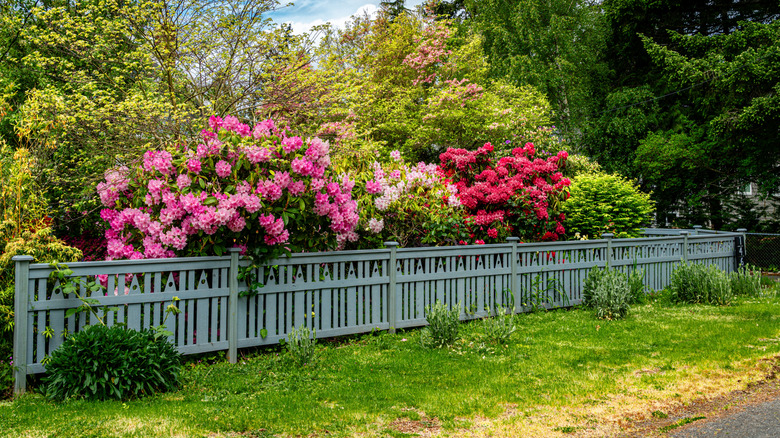
If your yard has a lot of shade or some shady areas, that is the perfect place to plant your rhododendron. While rhododendrons can tolerate some sun (2-4 hours a day is the minimum requirement for producing flowers), too much direct sunlight can stress the plant and scorch its leaves. If you give these plants consistent shade and pair it with acidic soil, you're on your way to healthy growth and abundant spring blooms.
In general, this shrub prefers lots of rainfall and humid conditions. Once you determine what plant hardiness zone you live in, you can make plans to plant your rhododendron at the right time. For warm climates, you can plant any time, but if you live in cooler climates, plan on planting in early spring, or early fall if you prefer. Make sure to plant your plants in well-draining soil with a pH of 6 or lower, and add plenty of organic matter to the soil before planting.
Fertilize the rhododendron after it blooms and use something that's slow release, like this GARDENWISE Slow Release Plant Fertilizer. Heavy fertilizing can burn your plants, so add it with a light hand. Rhododendrons have shallow roots, so you will need to water frequently during dry periods and in very hot weather. Planting impatiens as a companion indicator plant for your rhododendron can help you determine when to water them. Rhododendron doesn't really need to be pruned, but you can remove dead branches and blooms at any time to keep the plant neat looking and beautiful. The size and density of these amazing shrubs make them the perfect choice for adding needed privacy to your yard while helping area wildlife and filling your yard with gorgeous color.