

Transform Leftover Kitchen Scraps Into A DIY Fertilizer For A Thriving Garden
We may receive a commission on purchases made from links.
If you seek to nourish your garden and cut down on food waste, the first thing that probably comes to mind is composting. That approach works wonderfully for many gardeners, and there are some easy ways to DIY a compost bin for your garden. However, it isn't the best fit for everyone. Composting sometimes has an unpleasant smell, and there are usually things you should never compost, like meat and bones. An interesting alternative that deals with these issues and more, is one you might not have heard of: bokashi. It's a specialized Japanese method that uses the power of fermentation to create fertilizer.
On the surface, parts of the process look similar. Food scraps are placed in a bin, and they become fertilizer for your plants. In a compost bin, food is decomposing as microbes break it down into smaller and smaller pieces, until it looks more or less like dirt. In bokashi, the same materials ferment, meaning different microbes use the food scraps to produce types of acids. Fermentation is the process used to make sourdough and kimchi, so bokashi is like making a tasty batch of slaw for your plants. The pickled food scraps can later be added to compost or used to enrich barren soil, although it's too acidic to be applied directly to your plants. The primary goal of the anaerobic process is the liquid produced, which is a fantastic fertilizer!
One of the benefits of bokashi is the smell. Or rather the lack of unpleasant smells. Finished compost typically smells like rich soil, but it can get stinky along the way as food is decomposing. Bokashi smells more like pickles or vinegar, which means you can also add scraps to bokashi that can't go in a compost bin, such as meat and bones, that generally really stink.
Starting your own bokashi bin
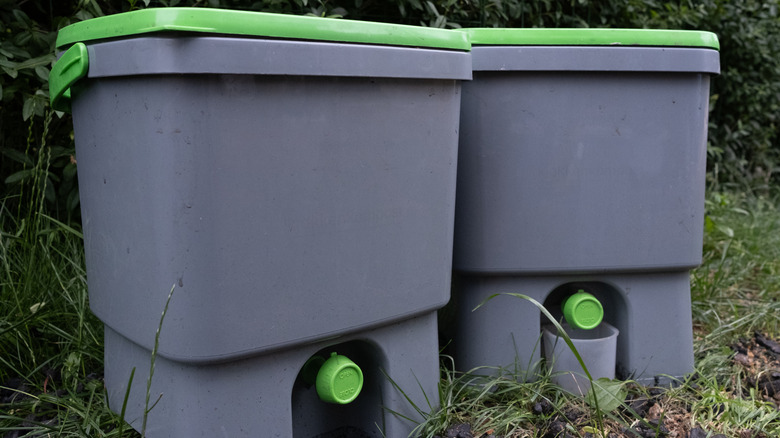
To be effective, your bin needs to be airtight and possess a spigot at the bottom to drain out the bokashi liquid. If you have a bucket with a tight-fitting lid, you can cut a hole on one side and attach a spigot to it, or you can buy a pre-made system like the All Seasons indoor composter starter kit from SCD Probiotics. You'll also need a host material to introduce microbes to the bin like bokashi bran. Store-bought options make this process simple. You can also make your own out of wheat or rice bran, molasses, chlorine-free water, and an effective microorganisms (EM) mix. Since you'll need to add more bokashi bran throughout the process, making your own can save money, but it does take time to make and the EM mix can be tricky to find.
To use your bin, add food scraps and a light layer of bokashi bran. Press the mix down to remove excess air, repeat the process until the bin is full, then close the lid tightly. You can expect to see fermented bokashi liquid after a few days if the food scraps are fresh; if they're dry it may take longer. Bokashi liquid is acidic and very concentrated, so applying it without dilution can harm some plants. If you're using it once a week, dilute it to a ratio of 1 part bokashi liquid to 100 parts water. For more frequent use, dilute it to 1:200. The diluted solution becomes a liquid fertilizer that's safe to use in hot weather you can then use to water your plants with. After a couple of weeks, scraps are ready to use for compost, and you can start the process over from the beginning!