

Why You Should Reconsider Using Dish Soap As An Ice Melt Alternative
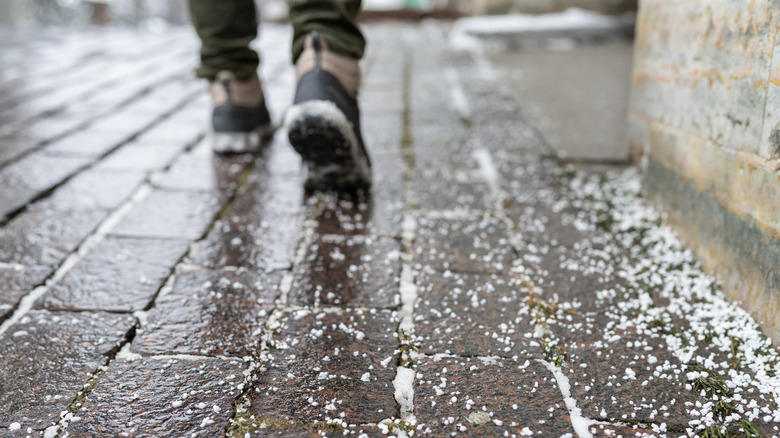
When winter weather strikes and walkways become coated in slippery ice, it's tempting to reach for anything on hand to restore some traction. If you're prepared, you'll likely spread rock salt, sand, or calcium chloride pellets, a salt alternative that makes removing snow easier. Those who get blindsided by a winter storm may turn to the web for common household workarounds. One of those, dish soap, pops up on social media, as an ingredient in a simple DIY solution touted for snow removal in a pinch. It sort of makes sense: dish soap often contains alcohol and glycerine, a component of anti-freeze. Even on its own soap can lower the freezing point of water, meaning ice won't form until the thermometer drops below about 15 degrees Fahrenheit. Unfortunately, the dish soap method can cause more harm than good, and pales in effectiveness compared with more traditional anti-ice or deicing strategies.
The ice-melting cocktail calls for a mix of hot water, rubbing alcohol, and a few drops of soap to act as a surfactant. Since dish soap is the least present ingredient in the mix, referring to it as the dish soap method is something of a misnomer. Poured on steps before things ice over, it does seem to act as an anti-ice agent, preventing ice from forming. Hot water, of course, melts existing ice, as does alcohol. Dish soap is a surfactant, helping to convert ice into slush. In that way, it seems as effective as any other technique. Still, this method does little to compete with traditional rock salt, and may even pose a serious hazard to your garden or nearby planter beds.
The trouble with dish soap as a de-icer
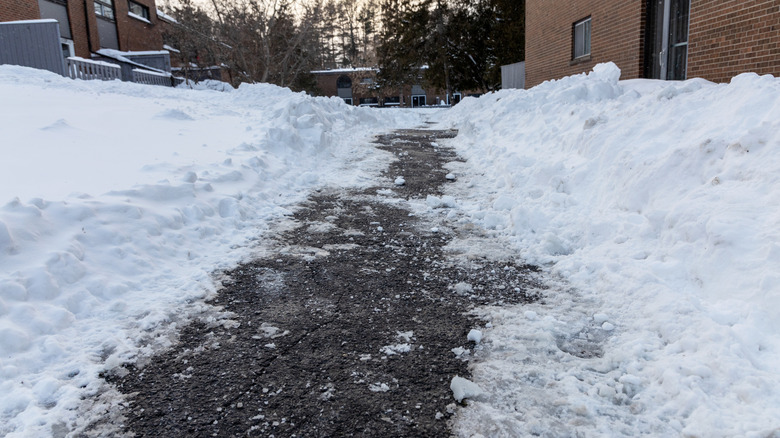
One key reason why dish soap makes a poor de-icing option can be observed on a chemical level. Most dish soaps are designed to break down grease by stripping oils. These same properties have been known to dehydrate plant roots, damage foliage, and disrupt the overall health of your soil. Even though your plants probably aren't blooming in the dead of winter, the environmental impact of repeatedly spraying a soapy concoction all over your driveway will almost certainly seep in. Soapy water is also known to negatively impact birds — essential oils in their feathers help keep them waterproof and pliant, and the de-greasing agents in dish soaps can strip that protection.
More importantly in the moment, the soap mixture only sort of works and you need a lot of it. Thoough rock salt and to a lesser degree calcium chloride carry similarly negative environmental impact baggage, these options melt through ice faster and more thoroughly than the dish soap concoction, meaning you use less in the long run. The hot water mixture requires multiple gallons to de-ice a whole driveway over the course of a storm. Furthermore, those who employ the soapy water will still need to scrape at the asphalt to clear excess snow with a metal or plastic snow shovel. You also can't rely on soapy water to serve as a long-lasting anti-ice measure in the hours preceding a snowstorm. Hot water cools down, and alcohol evaporates quickly. This means that you'll have to return to the frigid outdoors to reapply your mixture several times if snow and freezing temps persist. Ultimately, it seems as though the dish soap method is technically viable as a last-ditch effort, or to de-ice a small area.