

Why It's Time To Ditch The Landscape Fabric (& The Best Alternative To Use Instead)
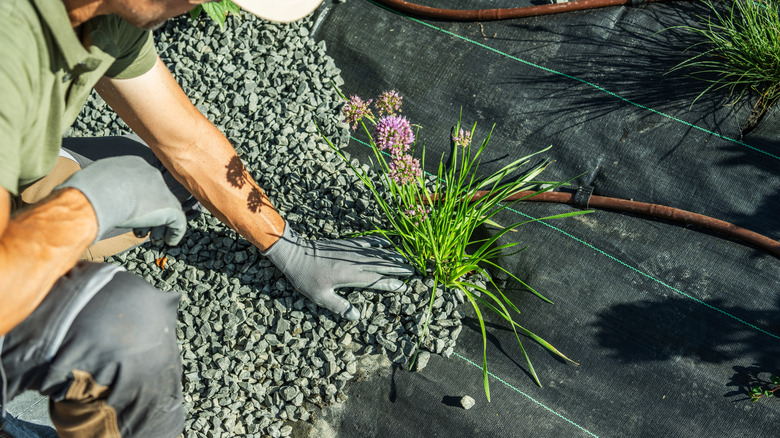
If you are looking to keep your flower beds or gravel areas in your yard weed-free, you've likely heard that using landscape fabric is the best way to do so. However, you may not have heard about some of the potential downsides to using landscape fabric, which range from degrading the soil composition to restricting your growing plants. Not to mention that even during its period of peak performance, it's not as effective as other solutions that are less harmful, and isn't the permanent solution it's often touted to be. If it feels like it's time to ditch the landscape fabric, the good news is there are alternatives. Which one you should choose depends on how you intend to use it.
When it comes to issues with landscape fabric, they are many. First off, it is made of plastic, therefore it is not biodegradable. Over time, it becomes punctured both intentionally, as you plant bulbs, for instance, and unintentionally in a variety of ways. Each of these holes not only reduces its effectiveness, but it also leaves you with a flower beds or other landscaped area strewn with plastic strands. On the flip side, plants often outgrow the holes that are purposely made in the landscape fabric to accommodate them, effectively choking them off.
It's not just these new holes that can make landscape fabric ineffective: The tiny mesh holes that make the fabric permeable and breathable quite often become clogged with soil and decomposing manner. When this happens, water and oxygen are no longer able to reach the soil beneath. Even when the fabric is in good condition, nutrients and fertilizers can't make their way deeper into the soil, and beneficial earthworms can't access the soil from above.
The best alternative may depends on your goals
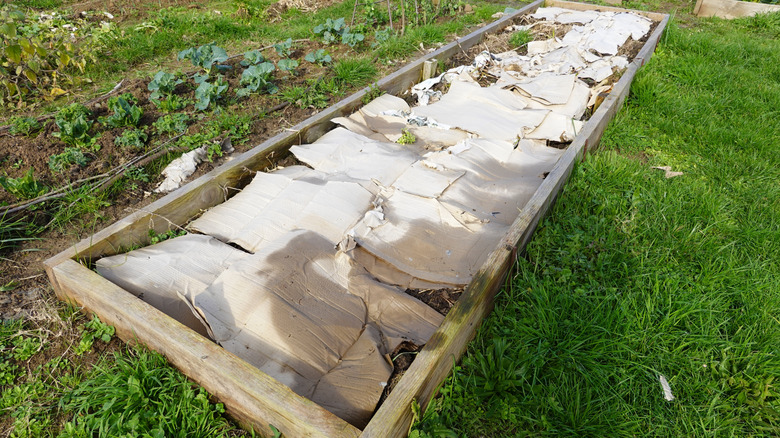
People turn to landscape fabric for various reasons. It can be laid down at the bottom of a raised bed or under the soil in an in-ground bed. It's often used beneath a gravel walkway or driveway, both to prevent weeds and to keep gravel from sinking into the soil. Another common method is to use it as a layer atop garden soil in lieu of mulch. How you intend to use landscape fabric will determine the best alternative to meet your needs.
If you're using it as a sublayer beneath an adequate amount of soil in a garden bed or as a base in a raised bed, cardboard is a good option. Cardboard is just as, or even more, effective than landscape fabric at preventing weeds. Unlike landscape fabric, it is biodegradable and will enhance the soil as it does so. Additionally, you can also cover your beds with sheets of cardboard during the non-growing season to keep weeds at bay, then remove them when it's time to plant. You can typically find and repurpose plenty of cardboard for free, saving you money as well.
When using landscape fabric as mulch, the best choice is biodegradable mulch. A couple of inches of mulch is as good as landscaping fabric at preventing weeds. But mulch allows water, air, and nutrients to reach the soil and, like cardboard, enhances the soil as it decomposes through time. If you are looking for a base beneath garden rock, try newspaper. It is biodegradable and will decompose, but provides stability before it does. Finally, if you want weed suppression beneath a gravel drive or walkway, a properly compressed subgrade will usually render landscape fabric superfluous.