

2 Hydrangea Plants You Should Prune In Late Winter (And 5 You Shouldn't)
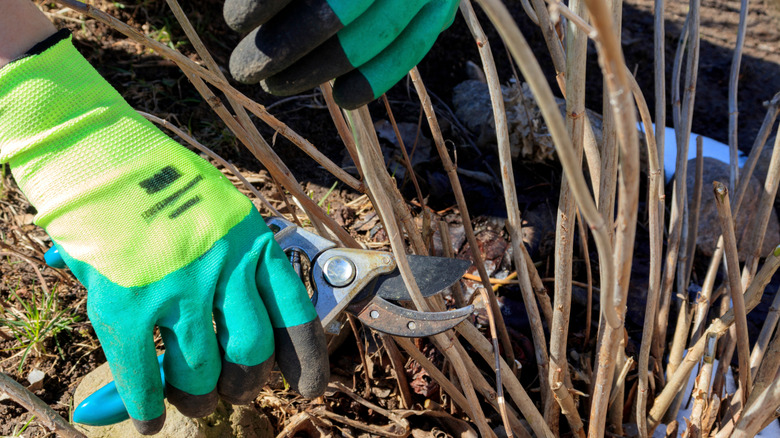
When it comes to caring for your hydrangea plants during winter, you may be wondering if you should prune them. The short answer is, it depends on the type of hydrangeas you have. There are some varieties that do well pruned before spring and some you definitely should not prune in the winter months. In fact, it turns out there are more varieties you shouldn't prune in December through February or March than those you should.
Essentially, it comes down to whether your variety blooms from old wood or new growth. You don't want to cut the growth hosting new buds, or you'll get no flowers come spring or summer. As a rule of thumb, avoid pruning hydrangea plants that bloom from old wood during late winter. Instead, these plants should be pruned as soon as they stop blooming in late summer. Actually, these types of hydrangeas don't even need pruning to thrive. If you're pruning to give them some shape, late summer is the time to do so. Wait too long, and you may end up cutting off the buds which have already emerged for the following season's blooms.
Hydrangeas that bloom from new growth, on the other hand, should be pruned in late winter or very early spring. The key is to prune them before any new growth starts, and knowing where that new growth will sprout. The best way to avoid pruning your hydrangeas at the wrong time is to know the name of your variety. If you are uncertain, there are a few identifying characteristics of each.
Panicle hydrangea
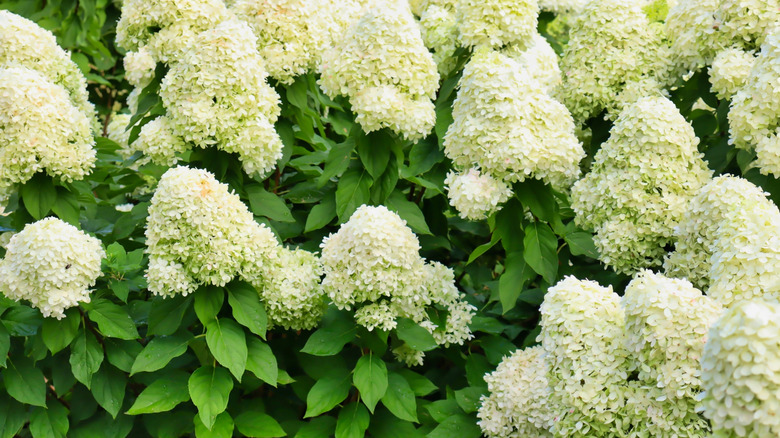
Panicle hydrangea (Hydrangea paniculata) is sometimes called peegee, hardy, or Limelight hydrangea. The low-maintenance, sun-tolerant plant is distinguished by very large, conical-shaped flower blooms. It blooms from new growth and can be heavily pruned in fall, winter, or spring. Many people leave the conical flower heads in place well into winter, pruning them just before the new growth begins.
Smooth hydrangea
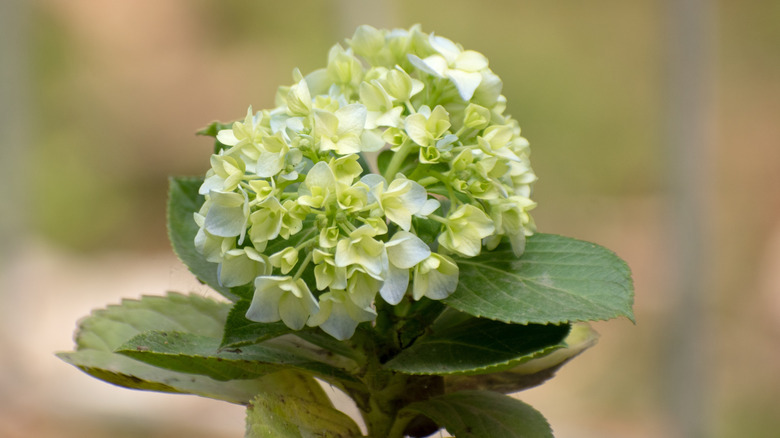
Smooth hydrangea (Hydrangea arborescens) is another new wood variety that can be vigorously pruned in late winter. Native to the eastern United States, the cold-hardy species (also known as Annabelle or wild seven bark) is most recognizable by its large, round head of small white, pink, or green flowers. Cutting it back also helps avoid drooping blooms in summer.
Big leaf hydrangea
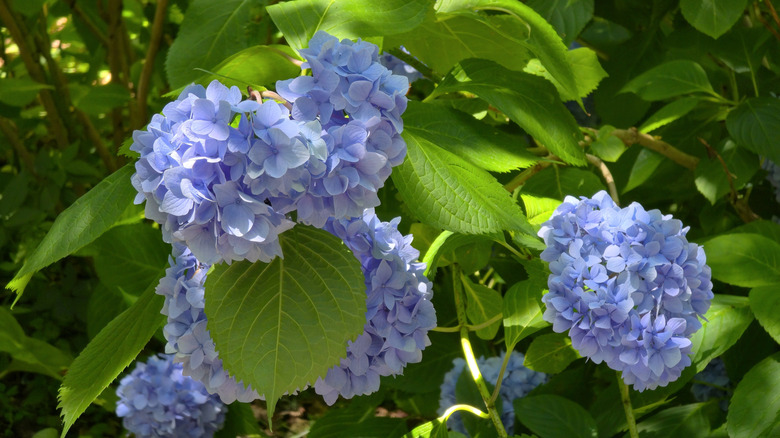
Big leaf hydrangea (Hydrangea macrophylla) is an old wood variation that should be pruned by late July and definitely not during winter. This recognizable hydrangea with many cultivars can have either mophead or lacecap type flower heads, sporting blue or pinkish-blue blooms. Fans of partial shade, they also feature distinctive large, oval leaves.
Oak leaf hydrangea
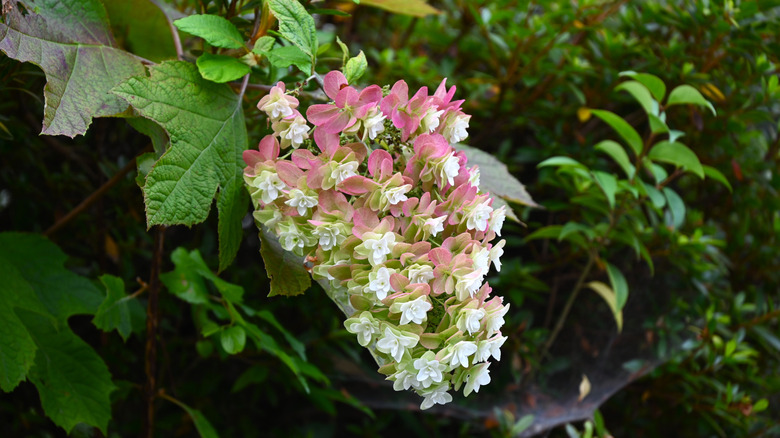
Oak leaf hydrangea (Hydrangea quercifolia) is another old wood variety that should not be pruned over winter. Instead, prune when blooming is done (prune damaged or diseased stems in early spring). This plant has large, white lacecap flower clusters that turn pink or brown later in the year. Their oak tree-like leaves, turn colors in the fall.
Mountain hydrangea
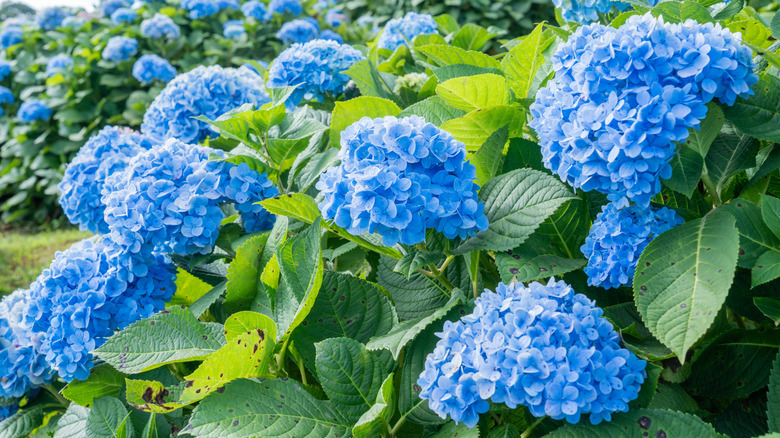
Mountain hydrangea (Hydrangea macrophylla) are sometimes confused with the big leaf variety, as they have a close resemblance. However, despite also having serrated, oval-shaped leaves, their flowers are pink, red, or purple. Like big leaf, mountain hydrangea are an old wood variety and should be pruned before the end of July, not winter.
Climbing hydrangea
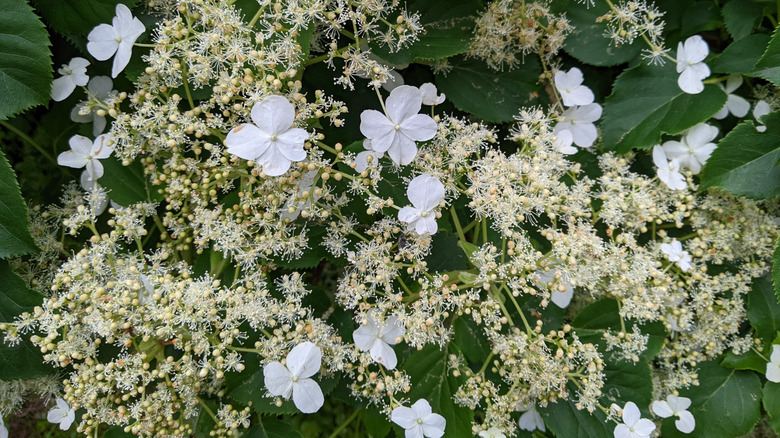
You can tell climbing hydrangea (Hydrangea petiolaris) from other varieties because, well, it climbs. It can climb pergolas adding shade, as well as trees, and other vertical structures. It has relatively sparse white flowers, enjoying both sun and shade. As an old wood variety, it should be pruned in summer after it finishes blooming, not in winter.
Reblooming hydrangea
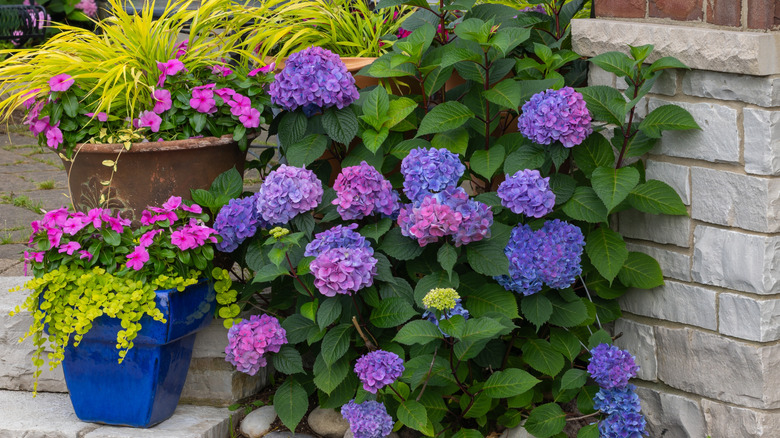
Some hydrangeas bloom on both old and new wood. These are known as repeat blooming, or reblooming, hydrangea. 'Let's Dance' and 'Tuff Stuff™' are two popular cultivars. In general, they don't need heavy pruning: Deadheading and removing damaged branches is sufficient. For major pruning or shaping, treat them as old wood varieties and trim during late summer.