

Don't Throw Away Onion Scraps, Use Them For A Simple DIY Fertilizer
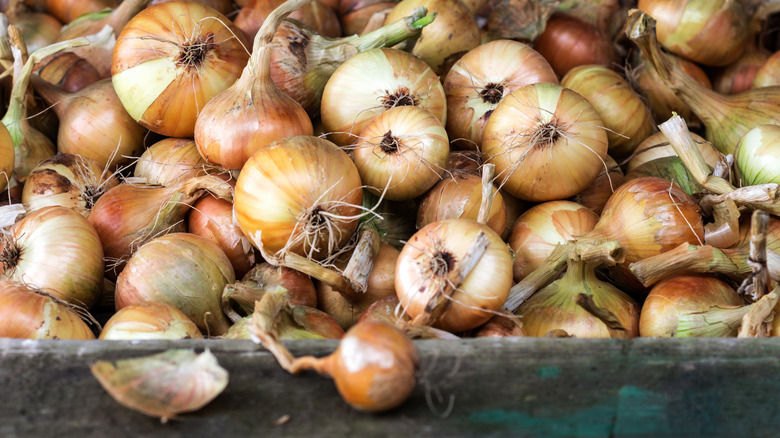
Onions are kind of magical. Not only do they enhance almost any dish when cooking, onions are the key to a clean grill. But those papery bits on the outside of an onion — often called the skin or peel — are also surprisingly useful. The proper name is tunica, and like a tunic, it protects the desirable parts of the onion. Speaking of tunics, the skins from both red and yellow onions have long been used to make fabric dye. A similar, but much simpler process also creates a fertilizer tea using onion peels that's ideal for garden plants rather than clothing. This trick is a lot like other DIY liquid nutrient boosters for your garden in that it repurposes plant scraps in a way that's beneficial to new plants. How's that for a circle of life?
Onion skins are high in sulfur compounds, potassium, and phosphorus, all of which benefit the plants in your garden and potted plants on your patio. The sulfur content helps keep plants healthy thanks to its antimicrobial and anti-fungal traits, potassium boosts plant health as a whole. and phosphorous supports strong roots. Of course, if you're revitalizing your garden with an NPK fertilizer, and need nitrogen, you'll want to find a way to supplement that nutrient (you might consider coffee grounds or composted manure). Onion peel fertilizer tea also contains numerous vitamins and minerals that help a plant grow while boosting its immunity to pathogens and bacteria.
Making a liquid fertilizer from onion skins
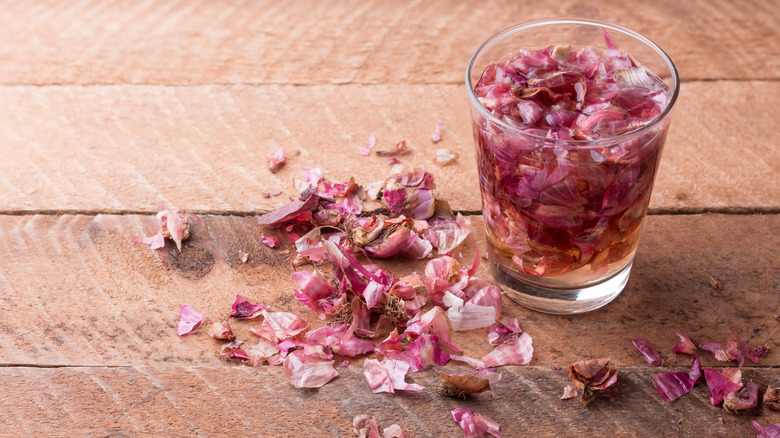
Making fertilizer from onion skins is about as easy as it gets. Save them up and keep them in a dry place. Discard any that have mold or rot, as those could be pathogenic. When you have enough to fill any sized jar halfway, place the skins in the jar, then cover them with water. Let the mixture sit for a day or two. You may want to stick it in the garage or somewhere the smell won't bother anyone.
During this time, nutrients seep out into the water, turning it into a concentrated fertilizer. Strain out the onion skins and reserve the liquid. Or let it sit and ferment for up to a week to create microbes that are beneficial to the soil surrounding your plants (you'll definitely want to stash this stinky concoction out of the way). If you do ferment, you'll still want to strain the skins afterwards. The liquid will keep in a cool, dark place for about 2 weeks.
Dilute liquid fertilizer with an equal amount of water or up to 10 parts water before applying it on or near plants. Use more dilute versions if your plants seem extra delicate to avoid burning them. Pour the liquid around the base of the plants, to be ultimately absorbed by the plants. Spraying your mixture directly on leaves can also help plants that need a nutrition boost, but test it on just a leaf or two first. Apply the liquid every three weeks or so for improved garden and plant health. Onion skin fertilizer can be used in combination with other DIY fertilizers. For instance, banana peel tea boosts potassium for plants that need it.