

Say Goodbye To Pests In Your Garden With This Popular Kitchen Essential
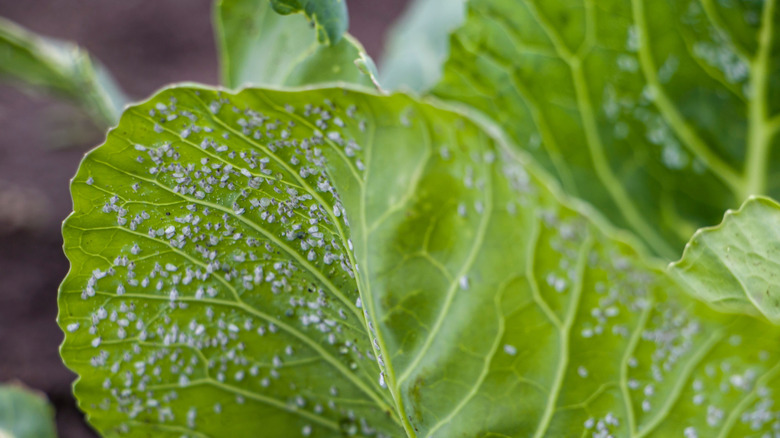
Few things in life are more frustrating than having your vibrant garden overrun by aphids, whiteflies and similar pests. These bugs are tiny, but they multiply quickly and pack a punch that can destroy plants and gardens when left unchecked. Chemical insecticides are often marketed as a quick solution, but many gardeners prefer less abrasive, more budget-friendly ways to banish aphids from their gardens. Luckily, one method gets rid of these petite pests using nothing more than a splash of water, and one common household staple: milk. This surprisingly effective option actually works both as a natural fungicide and a pesticide for certain critters, without the use of toxic chemicals that could harm your precious pollinators. It's easy to use, inexpensive to make, and helps keep the garden all-natural.
There is both anecdotal and scientific evidence for the benefits of milk when it comes to plants. Many sources and gardeners report that milk's calcium and vitamin B content helps the soil and encourages root growth and fertilization, though some skeptics feel the nutrients may not be present in large enough quantities. They also note that any quality organic matter — compost, manure, or paper — will provide many of the same soil and plant benefits.
What has been pretty well demonstrated is that milk has effective anti-fungal and pesticidal properties. Particularly in preventing powdery mildew and in killing a wide variety of aphids, perhaps via a different fungus found in milk, called Cladosporium cladosporioides. Some argue that the fat content in whole milk also suffocates aphids — and other pests like mealybugs and whiteflies — especially when applied daily or every other day. Of course, milk isn't a miracle cure, and there are caveats to take into consideration before you go dumping gallons into your garden.
How to use milk to fight off pests in your garden
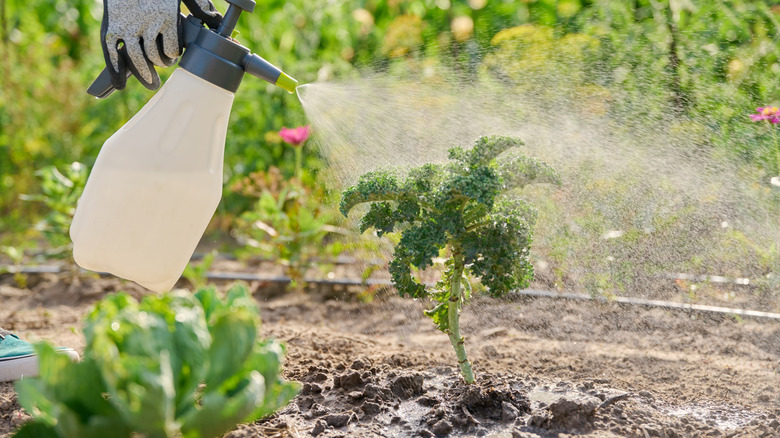
As with any home remedy, utilizing milk in your garden requires a bit of trial and error. Dilution guidelines vary wildly, ranging from 50/50 milk and water, to 30% milk, all the way to a mixture that's 90% water. Some say you should rely on whole, full-fat milk, as the higher fat and protein content is ideal for suffocating the bugs. Others say whole milk smells worse as it ages, and can leave fatty residue on plants, which could actually harm them, thanks to the same Cladosporium fungus that might be killing the aphids. These sources recommend 2% or low-fat milk. Generally speaking however, any milk — skim to whole, organic or not, fresh or spoiled — will help with your aphid problem.
Once you've got your mixture combined in a spray bottle, apply it liberally, especially if you've got plants that are known to attract pests. You'll want to get the underside of leaves, where aphids like to hide, as well as petioles and stems where they often cluster. Spray your plants in the morning or late evening, avoiding the hot sun which can burn wet leaves and evaporate all your hard work. Let the mixture sit for about 30 minutes, then gently wipe any excess residue off the leaves. After a few days of spraying, you should find the aphids have died off, leaving behind their lifeless husks. Feel free to brush these off, or rinse them off while watering, re-applying your milk mixture twice a week or as needed.