

The Pre-Snow Technique That Makes Removing Driveway Snow And Ice Easier Than Ever
We may receive a commission on purchases made from links.
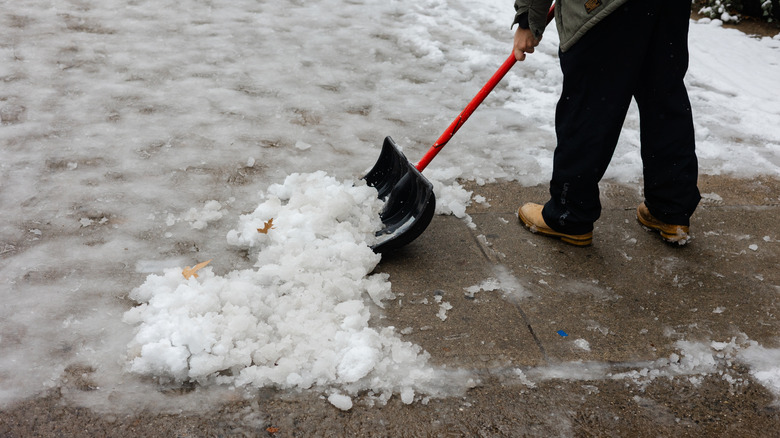
In the winter, snow and ice, and even the infamous wintry mix, all create a mess on your driveway. As a result, whenever freezing weather and/or snow is in the forecast, its time to gather up the tools needed to make snow removal easier, including shovels and blowers. However, rather than simply waiting to remove whatever snow and ice piles up on your driveway, you can take steps to prevent it from accumulating in the first place. This pre-snow technique helps prevent ice and snow from sticking to pavement, making removal easier than ever. The key is treating your driveway with liquid ice melt before freezing conditions and snow arrives. Though most people are familiar with the granules or crystals, ice melts come in both solid and liquid forms.
Chloride-based ice melts work because they lower the temperature at which water freezes. This is the case whether you're using calcium chloride, sodium chloride, or magnesium chloride. Depending on when they're applied, these products can also either prevent or loosen the bond between solid surfaces such as driveways and snow or ice.
While solid ice melt pellets are usually scattered over icy patches or snow-covered areas to melt them, the liquid version can also be effectively used to pre-treat areas before the arrival of snow. Liquid ice-melt is considered the better choice for pre-treating a sidewalk or driveway before freezing conditions happen, because they give more even and complete coverage. This makes them better at preventing ice and snow from sticking. Liquid ice melts also continue to be effective for a longer period of time and use less salt per application as it's diluted with water. On the down side, it won't melt existing ice as quickly as solid deicer if you didn't get the chance to pre-treat a surface.
Liquid ice melt can be used as an anti-icing agent
Liquid ice melts may be made from several types of chloride salts and other compounds. Those made from magnesium chloride, such as Petra Pet Safe ice melt, are typically considered the best choice: It takes less product to effectively cover an area; it's pet safe; and it maintains its effectiveness longer. However, even then, timing is critical. Put it out too late, and its effectiveness is limited. Put it out too early and it may wash away or simply degrade over time. Additionally, if rain or freezing rain is forecast, pre-treatment with liquid ice melt doesn't work, since the brine will wash away.
But if you time it right, liquid ice melt is very effective at preventing snow or ice buildup. Unlike preparing your roof for snow, which can be done weeks in advance, the window for pre-treating your driveway with liquid ice melt should be within 48 hours before the snow falls. To achieve peak effectiveness, it is best to apply it just a few hours before the first snowfall, as liquid ice melt activates immediately since it is already a brine. As a bonus, liquid ice melt sticks around and helps prevent a refreeze if there's fresh snow the next day.
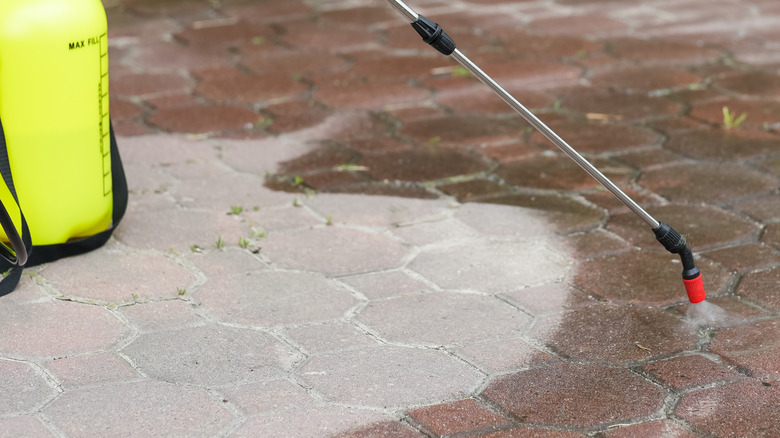
To apply liquid ice melt as a preventative or ant-icing agent, it is best to use a handheld or backpack sprayer. Once the mixture is ready, make sure your driveway if clear of any residual ice or snow, then spray an even coating across the entire surface.(4) Keep in mind, some snow may still pile up on your drive. However, with a coat of liquid ice melt applied ahead of time, it should not stick and will be much easier to clear away.