

Attract Cardinals To Your Yard With This Simple Winter Trick (No Bird Feeder Needed)
We may receive a commission on purchases made from links.
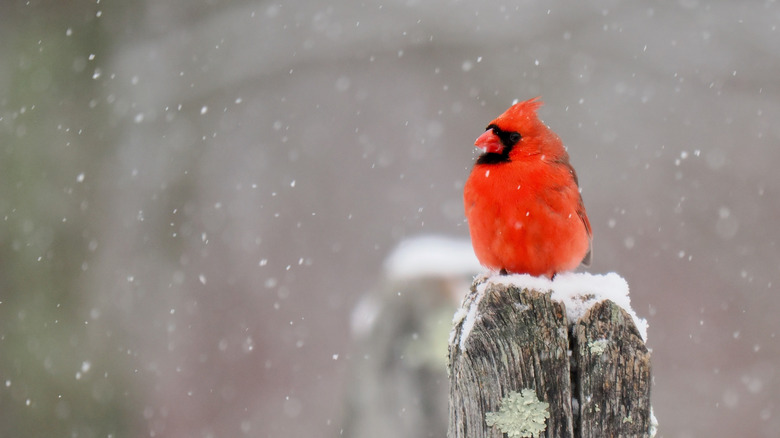
There's something almost magical about seeing cardinals against a snow-filled backdrop: It's like they're nature's colorful symbols of hope at an often dreary or monochromatic time of year. While you could attract more cardinals in winter by offering high-energy food such as black oil sunflower seeds, you don't necessarily have to use food to draw them in. Offering items that cardinals use as nesting materials — straw, pine needles, or grass clippings — is another way to keep cardinals nearby during the winter. The mama-to-be cardinal uses all of these soft materials to line her nest, stomping them down inside the twig structure to make a cozy space for herself and her forthcoming eggs.
Cardinals start building nests earlier than you might think: Some begin as early as late February, building for around a week, and using the nest only once. Some cardinal couples have more than one brood of babies per year. This means they'll build a new nest later in summer, offering you another chance to help them out with additional materials later in the year.
Set nesting materials near where they're feeding
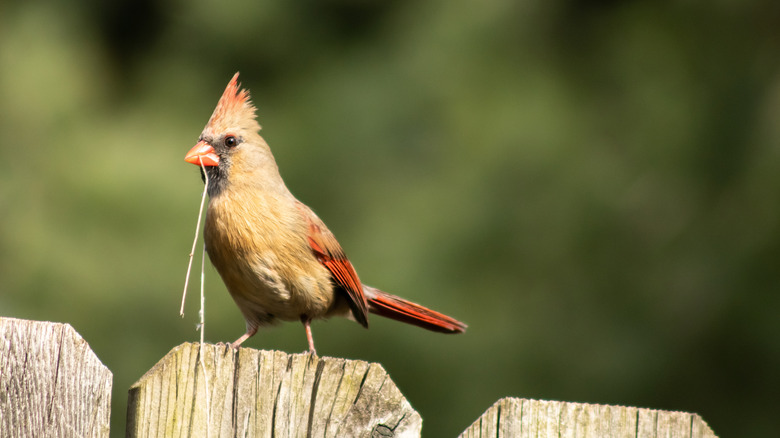
Cardinals shelter and nest in well-protected areas. They prefer dense shrubs and bushes to birdhouses, for safety and privacy. They keep their nests relatively low, building nests 5 to 15 feet off the ground. You may find them hanging out in junipers or arbor vitae, and in dense shrubs near your house. Adding native trees and shrubs will keep the birds coming to your yard all winter long as they seek shelter. In addition, various easy-to-grow plants will draw cardinals to your yard. Consider sunflowers or flowering trees like dogwood or crabapple.
Winter brings its own complications, like blustery storms: An empty, cage-style suet feeder offers a solution that keeps materials in place on windy days, until a bird comes by to use them. You can also use something like a classic refillable wild bird nesting ball from Sara Setzer Feltworks. Fill either with gathered pine needles, raw untreated wool, or dried grass, then hang it somewhere within a bird's sight line — near feeders or natural feeding areas works well.
While the colorful birds love including animal fur in their nesting mix, only use pet fur you're sure hasn't been treated with chemicals like flea powder or shampoo, for a safer nest. Avoid leaving human hair, as not only is there the same risk of chemicals and dyes, but long strands can be dangerous, wrapping around young chicks. Once cardinals start scoping out a place to build their nest, give them space. Don't get too close to their project, as you don't want to scare them away.